


Personal, challenging, and future-focused
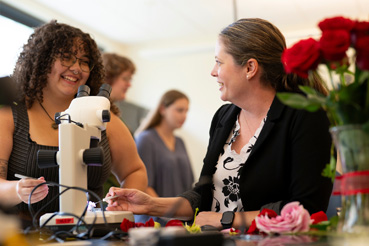
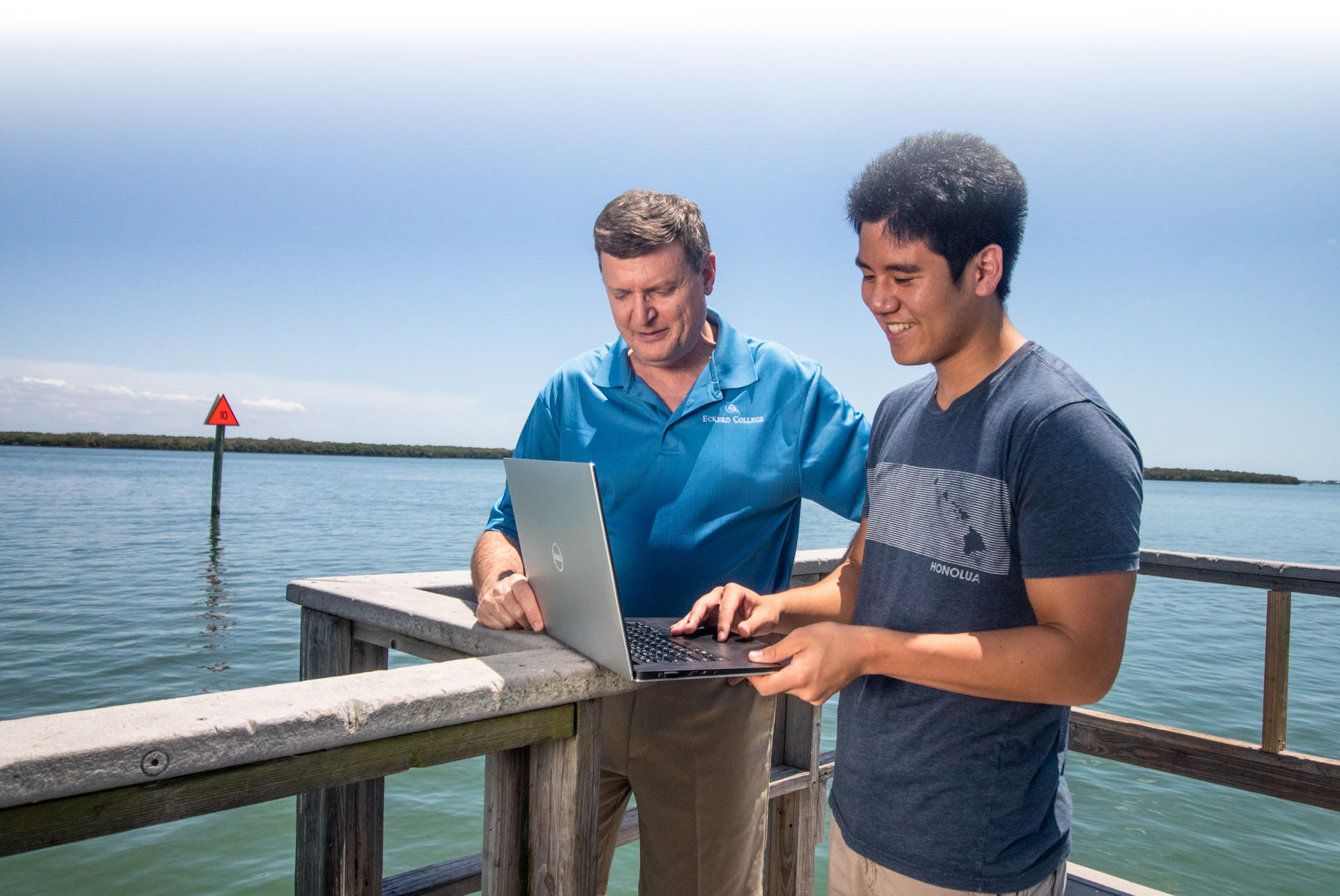
Our students work closely with faculty, explore ideas through research and projects, and develop the skills and confidence to tackle complex problems.
Our goal is not only to prepare students for today’s jobs—but for the industry they will enter after graduation. That’s why our program here in Florida combines traditional computer science training with emerging technologies shaping the field now. By integrating these technologies into projects and problem-solving workflows, students graduate with a strong foundation and the ability to adapt to the evolving landscape of computing.
Our graduates move on to impressive next steps—roles in industry, admission to strong graduate programs, and innovative ventures—demonstrating that a small program can have a big impact.
Only@Eckerd
Personal attention, real depth
Small classes mean students work directly with professors and peers on challenging problems—from algorithms and systems to data, software engineering, and interdisciplinary applications.
A strong foundation that lasts
Technology changes quickly, but core computer science principles endure. Our curriculum emphasizes computational thinking, problem solving, and the fundamentals that allow graduates to adapt throughout their careers.
Opportunities to build and explore
Students engage in research, projects, internships, and collaborations across disciplines—an approach that reflects the spirit of a liberal-arts education.
In Their Own Words
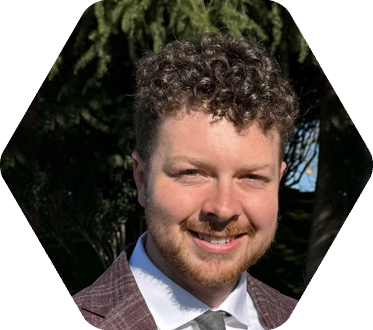
“The intimate nature of the department is conducive to building strong relationships with faculty and peers alike. I had the great pleasure of working with each computer science professor on software and research projects. Their availability and willingness to encourage and support the pursuit of knowledge in and out of the classroom has been a prominent catalyst in the journeys of many students, including mine.”
—Morgan Bauer ’25, MSE Robotics candidate at University of Pennsylvania GRASP Lab
Beyond the Classroom
- Morgan Bauer ’25 explored the use of Large Language Models (LLM’s) to automatically generate live accompaniment for jazz musicians.
- YuHan Burgess ’23 worked on the development of an app for iPhones that allowed Eckerd students and staff to track their use of single-use plastic, with the goal of reducing plastic consumption.
- Mark Yamane ’22 developed machine learning algorithms for identifying gopher tortoise individuals in trail camera images. His algorithms were used in an analysis of tortoise interactions that showed gopher tortoises form social networks. Mark won a prestigious Goldwater Scholarship was also awarded a National Science Foundation Graduate Research Fellowship.
- Thomas Haines ’20 used computational linguistics to analyze how children learn languages. He analyzed simplified systems of languages to understand their structure, and then applied the results to more complicated systems, using Ruby to program a learning algorithm.
Got a special interest? We encourage students to seek out a professor who will sponsor their independent project. Here are just two recent study topics:
Machine learning in wildlife management
Eckerd students are building smart systems that analyze video to identify animals and better understand their behavior. Working with biology professor Dr. Jeffrey Goessling, students are studying the social interactions of gopher tortoises, a keystone species currently under threat. The pattern on the carapace (upper shell) of each tortoise is unique, allowing for creation of a “tortoise recognition” system similar to the facial recognition systems used to identify individual humans.
Art restoration using 3D printing
In collaboration with the Museum of Fine Arts, St. Petersburg, Dr. Michael Hilton and students are using 3D scanning and printing to recreate missing pieces of a hand carved, 500-year old Jain shrine.
Computer science internships can take you to places in Florida and beyond. For example, you could be a:
- Software engineering intern at BuzzFeed
- MATLAB programming intern at the United States Geological Survey
- Software intern at Raymond James
- GIS and Python intern at the United States Geological Survey
In the past, Computer Science students have spent three-week terms or entire semesters at:
- Kansai Gaidai University, Japan
- Griffith University Gold Coast, Brisbane, Australia
- Xiamen University, China
Popular classes
Computer Programming Concepts
Learn basic problem solving and algorithm development using Python as the programming language. Use a simple graphics library to draw and display images and then create a game as a final project.
Data Science Using R
This class introduces the methods, processes, algorithms and tools needed to extract knowledge and insights from data in various forms. Explores contemporary problems in science, business and public policy, including how data science is revolutionizing our understanding of the world.
Outcomes
Students who study computer science at Eckerd College regularly go on to strong roles in technology and competitive graduate programs.
In recent years, graduates have pursued advanced study in robotics, artificial intelligence, and computational science at universities such as the University of Pennsylvania, Brown University, UNC Chapel Hill, Georgia Tech and the University of Central Florida. Others have launched careers as software developers, data engineers, analysts, and data scientists in both private industry and government research environments.
The variety of paths reflects a core goal of the program: preparing graduates who can apply computing in many fields and adapt as the technology landscape evolves.
What can I do with a computer science degree?
- Database administrator
- Network technologist
- Programmer
- Systems developer
- Software designer
- Teacher
- Technical support specialist
Where our computer science majors go to graduate school
- Florida State University
- Georgia Institute of Technology
- Pennsylvania State University
- University of Central Florida
- University of Maryland
- University of North Carolina Chapel Hill
- University of Pennsylvania
- University of South Florida
Where our computer science majors go to work
- AgileThought
- Amazon
- Artis Tech, Inc.
- Ceridian
- Citigroup
- Computil
- Copper Key Technologies Inc.
- Duke Energy
- Elavon
- Emerald Data Solutions
- FranklinTempleton Investments
- Genentech/F. Hoffmann-La Roche Ltd
- General Dynamics
- Getronics
- Hanson Of America
- Hewlett Packard
- Honeywell Inc.
- Hyatt Vacation Ownership
- Microsoft Corporation
- Motorola
- Netflix
- Nielsen Online
- Omnipoint
- Oracle USA
- Phillips
- Qualcomm
- Raymond James
- Raytheon Systems Company
- Seaworld Parks & Entertainment
- Siemens Energy & Automation
- Softkind, Inc.
- Sun Microsystems
- Toshiba
- Udacity
- Unity Mobile
- Verifone
- Verizon Communications


