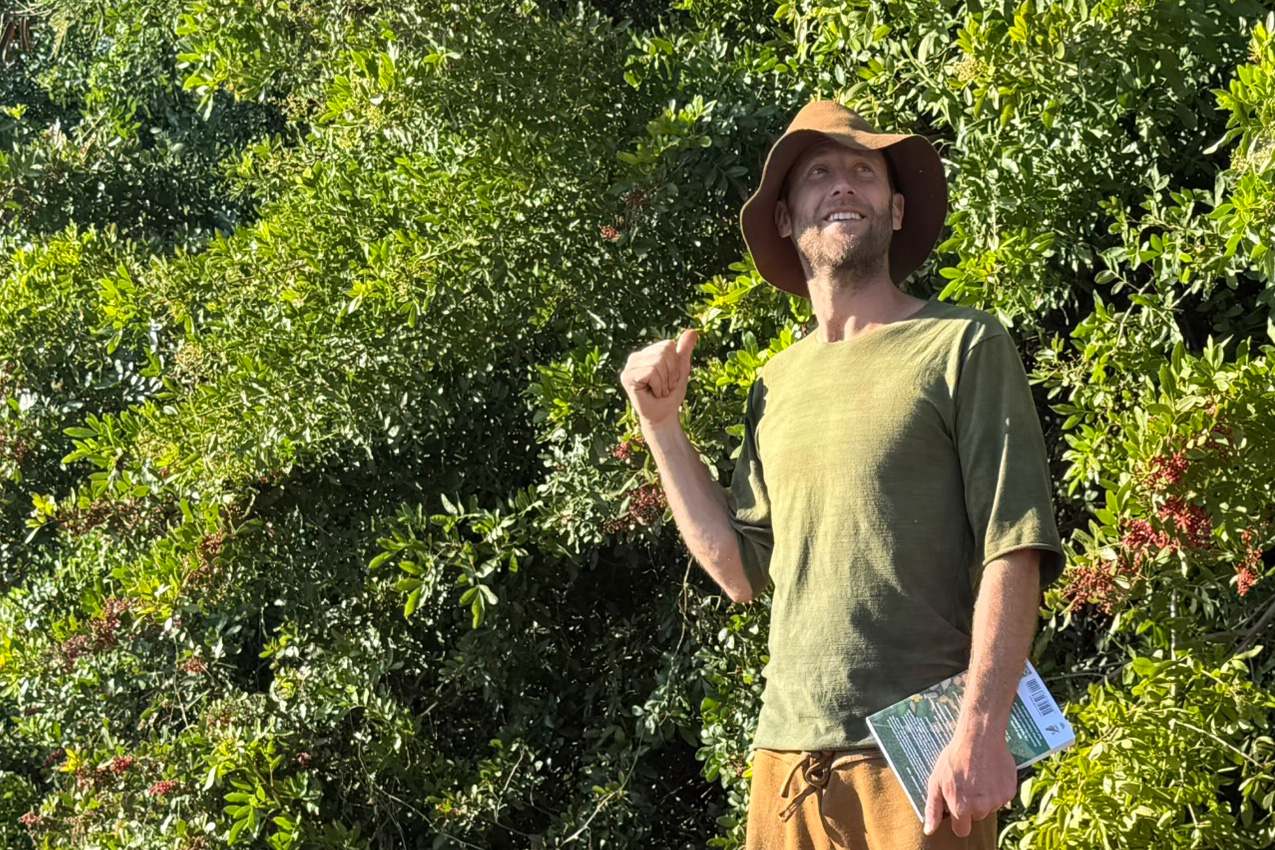
Robin Greenfield came to Eckerd College on Feb. 11 as a part of a national tour to spread awareness about the viability of foraging. Photo courtesy of Izzy Wild Merl ’28
Environmental activist Robin Greenfield led a plant walk at Eckerd College’s Community Farm on Feb. 11, 125 days into eating only what he can forage from the Earth.
He showed up for the walk barefoot and eating weeds to show students and locals that what many dismiss as unwanted plants are, in fact, edible, nutritious, and abundant.
Greenfield, who is originally from northern Wisconsin, is currently undertaking a year-long commitment to forage 100% of his food.
“Today’s day 125,” Greenfield said. “I’m getting all my needs met–calories, the fat, the protein, the vitamins, the minerals–and it’s a beautiful experience that the Earth is providing me with everything that I need.”
During the walk, Greenfield pointed to plants growing naturally around the EC Community farm, including Bidens alba–often referred to as Spanish needles–a plant many students recognize as an annoyance when seeds cling to clothing. But according to Greenfield, the plant is not only edible, but nutritious and important to the ecosystem.
“It’s covered in bees, so it’s important here at Eckerd to leave the Bidens alba for the pollinators,” he said. “But also, there’s plenty of it for us to eat. You can eat the flower, you can eat the leaves.”
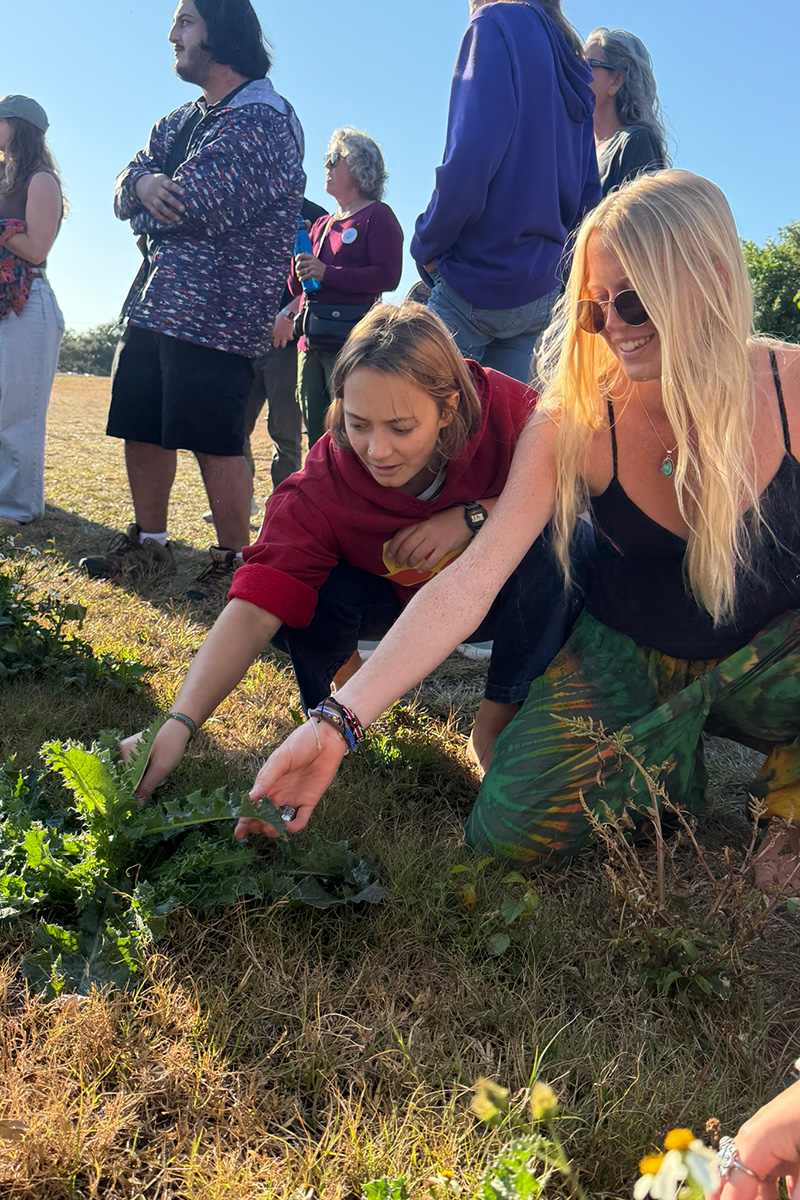
Greenfield invited students and community members on a plant walk through the Eckerd College Community Farm to sample the snacks that weren’t being cultivated.
For Greenfield, foraging is about more than food; it’s about questioning habits and reconnecting with the natural world.
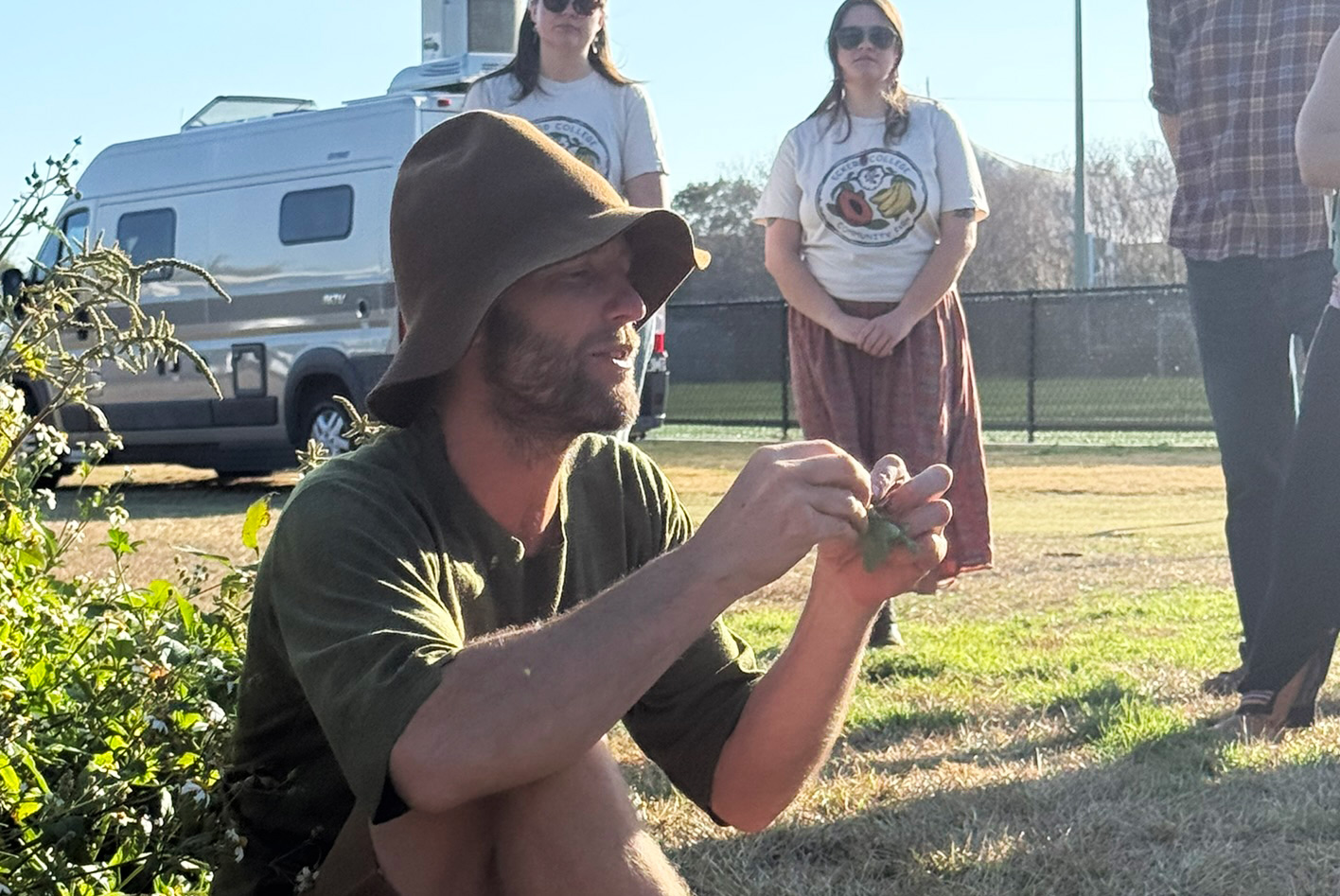
Greenfield showed the community the nutritional value of invasives and other wildflowers that are common to Florida’s natural landscape.
“It’s a gateway into critical thinking,” he said. “It’s a gateway into questioning our societal norms and structures. It’s a gateway into just living a more connected life.”
“We live in a time of great separation, where we spend so much of our time looking at screens. There is so much eco anxiety and despair. Foraging is an act that you can take that helps to build that connection, create meaning and purpose in your life, and help to just make life more joyous.”
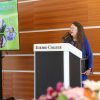
Greenfield further elaborated on his mission in a public lecture later that day to a crowd of attendees, many of whom had participated in the plant walk. He has spoken at Eckerd before, and while he has shifted his focus from gardening his food to foraging for it, Greenfield’s mission remains the same: “to entertain, educate, and inspire.
What began as little more than a curiosity about alternative living has blossomed into a movement. Greenfield travels across the country, leading plant walks, and holding speaking engagements. This pursuit culminated in the release of Food Freedom: A Year of Growing and Foraging 100% of My Food in 2022. The book details his journey away from the food industry and into nature.
In keeping with his message, all profits from the book are donated to Liberation Gardens—an organization that supports indigenous and black-led sovereignty initiatives.
Ashlyn Porter ’28 contributed to this report.