
Assistant Professor of Marine Science
Galbraith Marine Science Laboratory (GMSL) 106
Education
- Ph.D., Florida Institute of Technology
- M.S., Florida Institute of Technology
- B.S., Florida Institute of Technology
Research interests
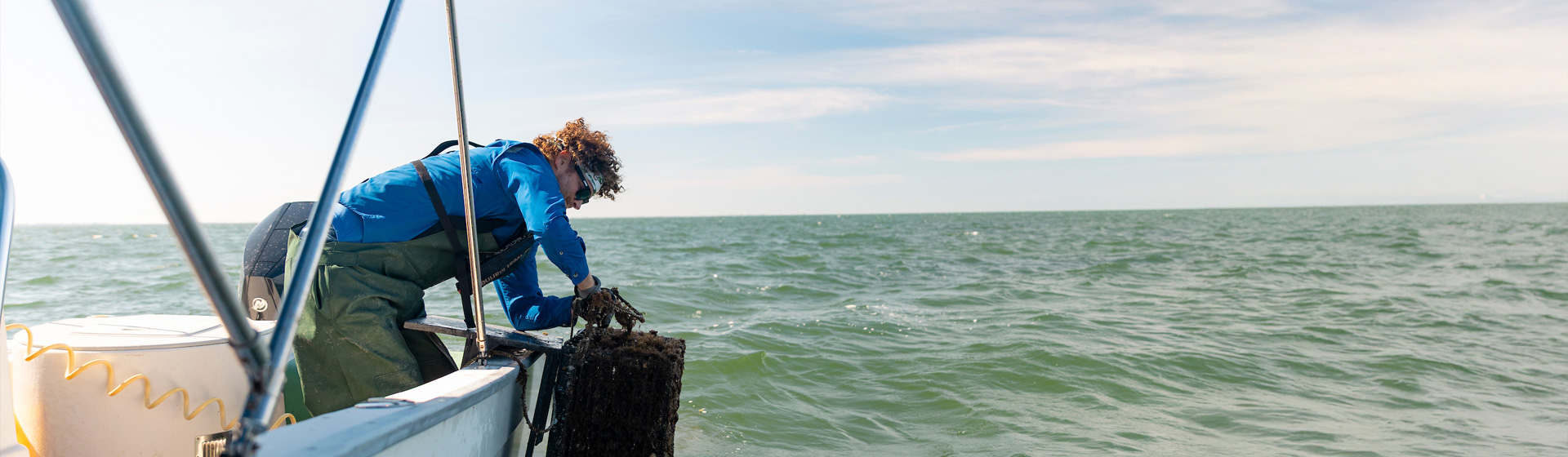
My research interests are aimed at determining how both singular and simultaneous environmental stressors like ocean acidification, elevated temperature, hypoxia, and toxic algae (red tide) impact the early life history stages of marine invertebrates. Specifically my research focuses on understanding how these environmental stressors may affect the larval physiology and behavior of Florida’s commercially and ecologically important crustaceans including stone crabs, spiny lobsters, and the Caribbean King crab.
Courses taught
- Biological Oceanography
- Comparative Physiology
Selected publications (student author names in bold)
- Gravinese, P.M., Craft, H.E., Douwes, A., Faraci, G., Jarrett, M., Perry, S., Potts, C., Rosser, E.C., Smith, A.L., Trevillian, A.R., Moore, C., and Yates, K.Y. 2026. Variable pH habitats could help prepare stone crabs for coastal acidification. Marine Biology. 173, 83. https://doi.org/10.1007/
s00227-026-04846-1 - Spadaro, A.J., Queen, T., McFadden, J. and Gravinese P.M. 2026. Chemical cues affect the survival and settlement behavior of the Caribbean king crab (Maguimithrax spinosissimus). Mar Biol 173, 75. https://doi.org/10.1007/
s00227-026-04814-9 - McNelly, T., Branton, L., and Gravinese, P.M. 2026. The physiological responses of the Florida stone crab to changes in salinity. Journal of Experimental Marine Biology and Ecology. 595: 152171.


