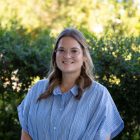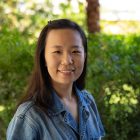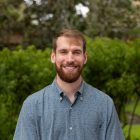
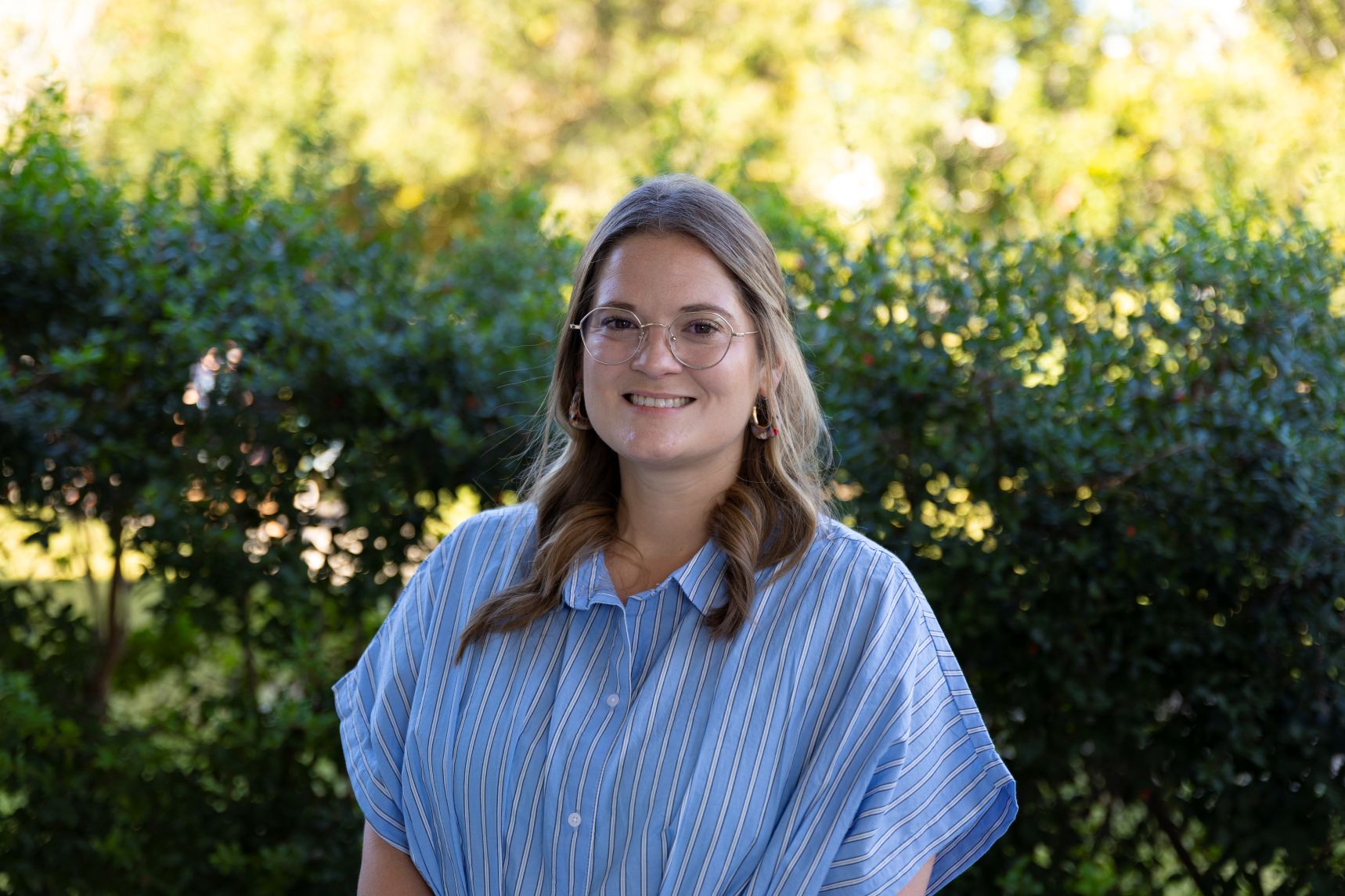
Carly Chak, Ph.D., joined the Eckerd College faculty this fall after completing her doctorate at the University of California, Santa Barbera. Photo courtesy of Penh Alicandro ’22
“What distracts us?” asks Carly Chak, Ph.D., Eckerd College’s new assistant professor of cognitive psychology.
Attention, how prior learning influences learning new information and individual differences in what we encode are among Chak’s research interests, which she will bring to the classroom. Beginning this fall semester, Chak will teach courses like Methods I: Research in Psychology and a uniquely designed course called Individual Differences in Cognition. In this class, students will investigate themselves as they change over time.
Chak foresees her past research findings and approaches being incorporated into the classroom.
“My research really started with what distracts us and how we prioritize attention. I wasn’t thinking about it in the context of the classroom, but as I started teaching, it became very apparent how this could be quite useful,” she says.
Chak is originally from Tampa and earned her master’s degree from the University of South Florida, then set off to California to continue her education. As a doctoral student at the University of California, Santa Barbara, Chak fell in love with teaching as she mentored undergraduate students. Chak also conducted a project with older adults and became passionate about engaging the community, especially with older generations. At Eckerd, she hopes to find a way to foster connection between students and older adults. This isn’t a one-way street, she says. They can learn from one another.
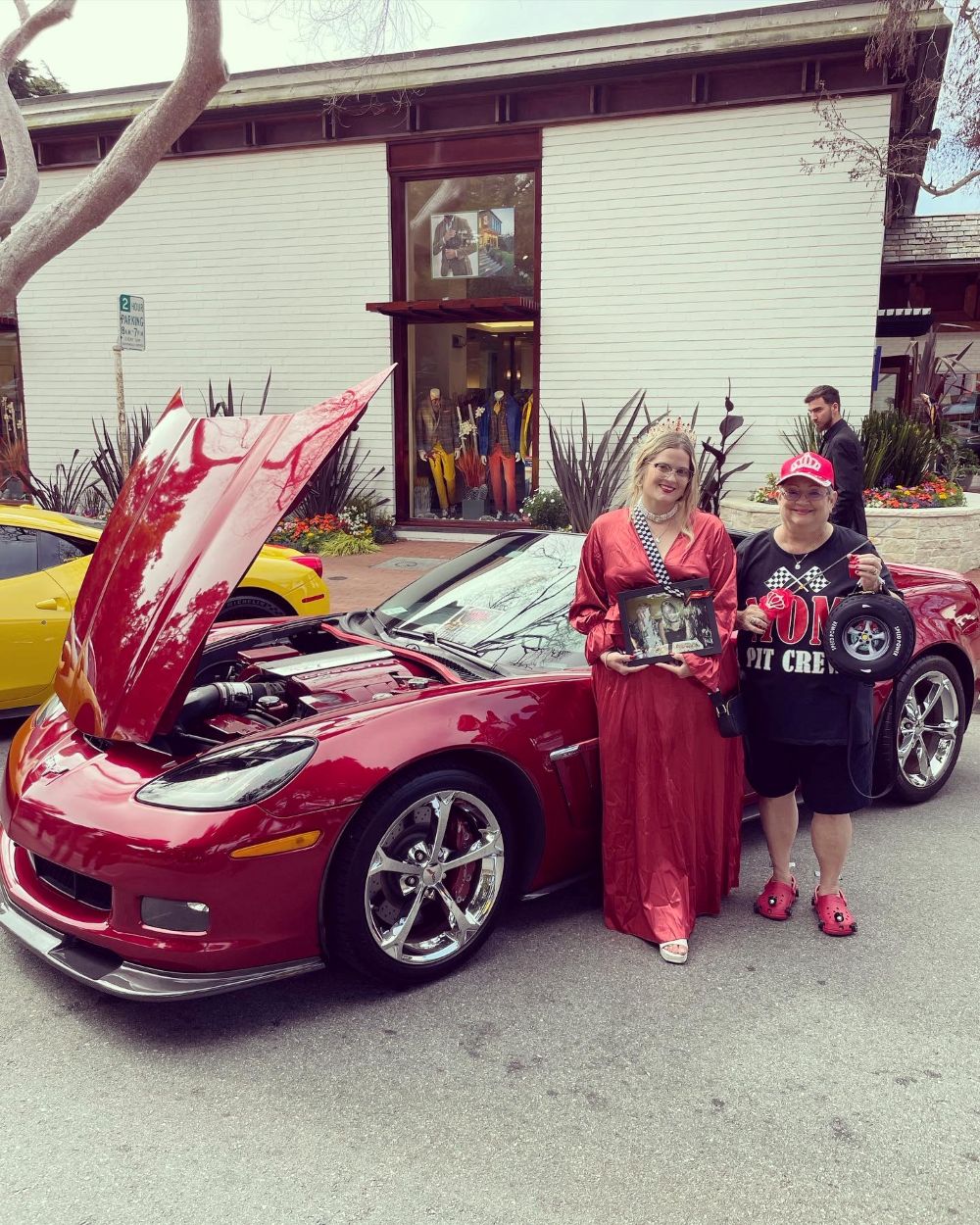
Dr. Chak with her mother at Monterrey Car Week 2023, posing with the award-winning red Corvette. Picture courtesy of Carly Chak.
Aging and attention are of interest to Chak for personal reasons too. Her father, Mike Horner, died in 2023 of an unidentified neurological disease that left the doctors looking for answers. The 65-year-old man experienced several strokes, and his brain mysteriously aged decades in a few weeks.

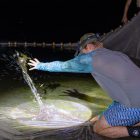
Growing up in Tampa, Dr. Chak is familiar with the local waterways. She is pictured here with her brother and father, boating on Boca Ciega Bay. Picture courtesy of Carly Chak
“It drove me to want to pay more attention to older adults in general. And it made me realize that it takes a lot to care for an older adult and we have a very rapidly growing aging population,” Chak says, and she hopes to assist in making the “aging process a little more graceful.”
She questions if there might be a way to find simple tests or biomarkers that alert us to something more significant later on. Many dementia tests focus on memory, but maybe something else could be caught by more closely observing attention, evaluating the ability to focus, watch, listen and understand, she says.
Her father would often play guitar in the mornings, which Chak recalls waking up to.
“It was just such a wonderful sound that I miss so much. Some of my favorite memories are just how silly he was, he was honestly–he was just hilarious,” she says.
Horner was a car enthusiast, too. One was always in the shop. Chak inherited his red Corvette. When Chak lived in Santa Barbara, she entered into a competition at Monterey Car Week. And she won with her father’s red Corvette. It’s now her daily driver.
By focusing her work on aging, Chak hopes to see younger people more comfortable interacting with the older population and being gentler when it’s time to be their caretaker.
With the semester approaching, Chak is excited to get to know her students. Most importantly, she says, she hopes they’re excited about the work they do.
Just as she will incorporate her research into the classroom, Chak wants to hear her students’ ideas and help turn them into reality.
“I know I’m probably speaking like a brand new faculty member,” Chak says, but she wants to make the (feasible) research ideas happen. She encourages diverse and interdisciplinary concepts, from women’s health and the impact of exercise on attention to collaborating with the computer science discipline on technical aspects, like eye trackers.
Outside the classroom, Chak is settling in with her husband and dog, Lana, after a road trip from California. She enjoys playing board games, especially Great Western Trail, and listening to live music, which reminds her of her father.
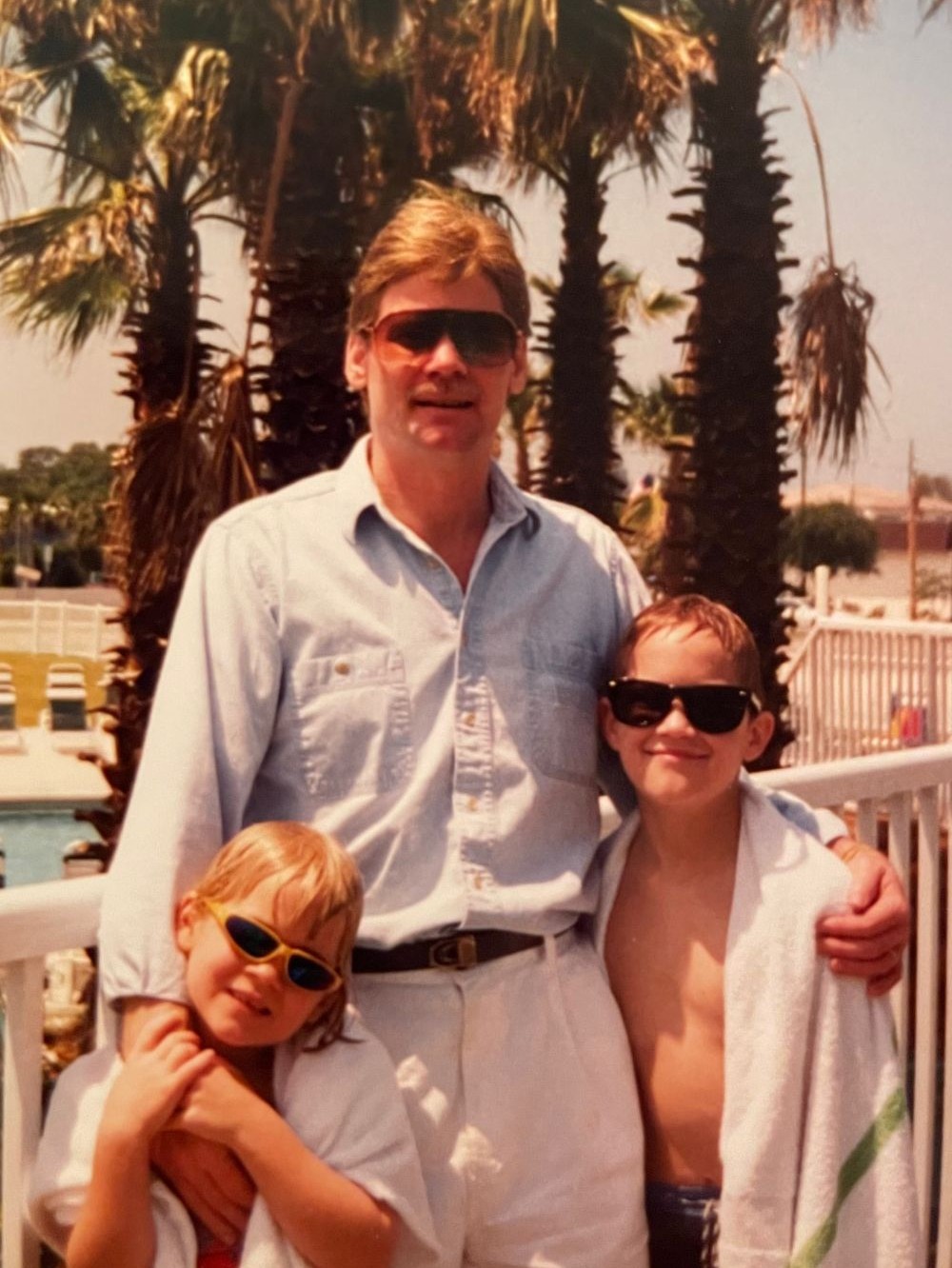
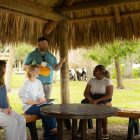
Part of Dr. Chak’s motivation for pursuing cognitive studies is her experience with her deceased father’s own neurological disease. Picture courtesy of Carly Chak
Having grown up in Tampa Bay, she has long been familiar with Eckerd. It’s difficult to find a school that is smaller and still does research, Chak says. Not only does Eckerd embrace both teaching and research, but walking students through the research process and helping them grow more broadly is emphasized too, she adds.
“Eckerd was just kind of the perfect fit in that way.”