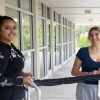
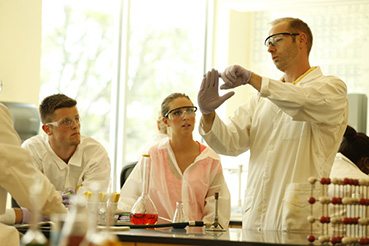
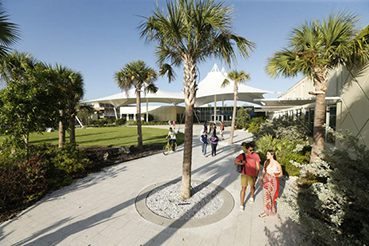
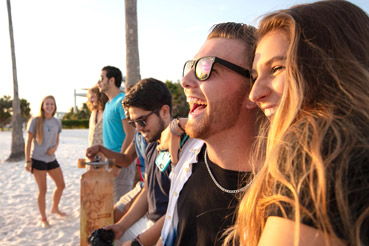
Seventeen first-year and transfer students got the ‘Autumn Term’ experience in winter through a new course designed to blend Eckerd College’s unique orientation and mid-year enrollment. Photos by Penh Alicandro ’22
First-year students at Eckerd College begin their journey with a unique tradition—a three-week Autumn Term orientation. The students take one course, get to know their faculty and peer mentors, bond as a class, and because upperclass students haven’t returned yet, they have the campus pretty much to themselves.
But what about new first-year students who, for whatever reason, prefer to start college in mid-year? Could Eckerd’s signature three-week Winter Term, which offers students a chance to study abroad or on campus, provide a glidepath?
Yes.
For the first time, Eckerd College allowed new first-year students to start in January, alongside transfer students who already had the opportunity. It’s a Winter Term–Autumn Term mix.
To get the initiative started, Visiting Assistant Professor of Marketing Nina Bergbrant recently finished teaching a Winter Term course that combined academics and orientation. The course, titled Organizations and Storytelling, attracted 17 students—11 first-years and six transfers. All of them were starting mid-year. “And I was happy to be the guinea pig for this new course offering,” Bergbrant says with a chuckle.
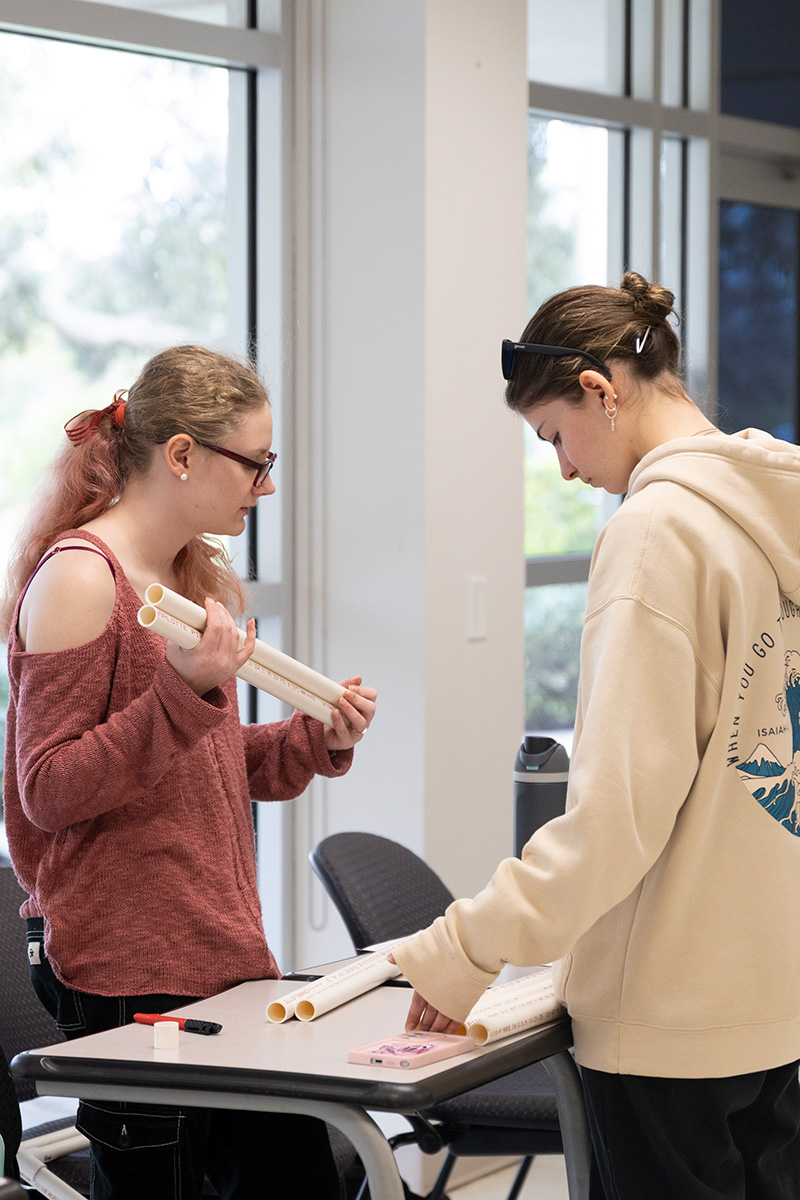
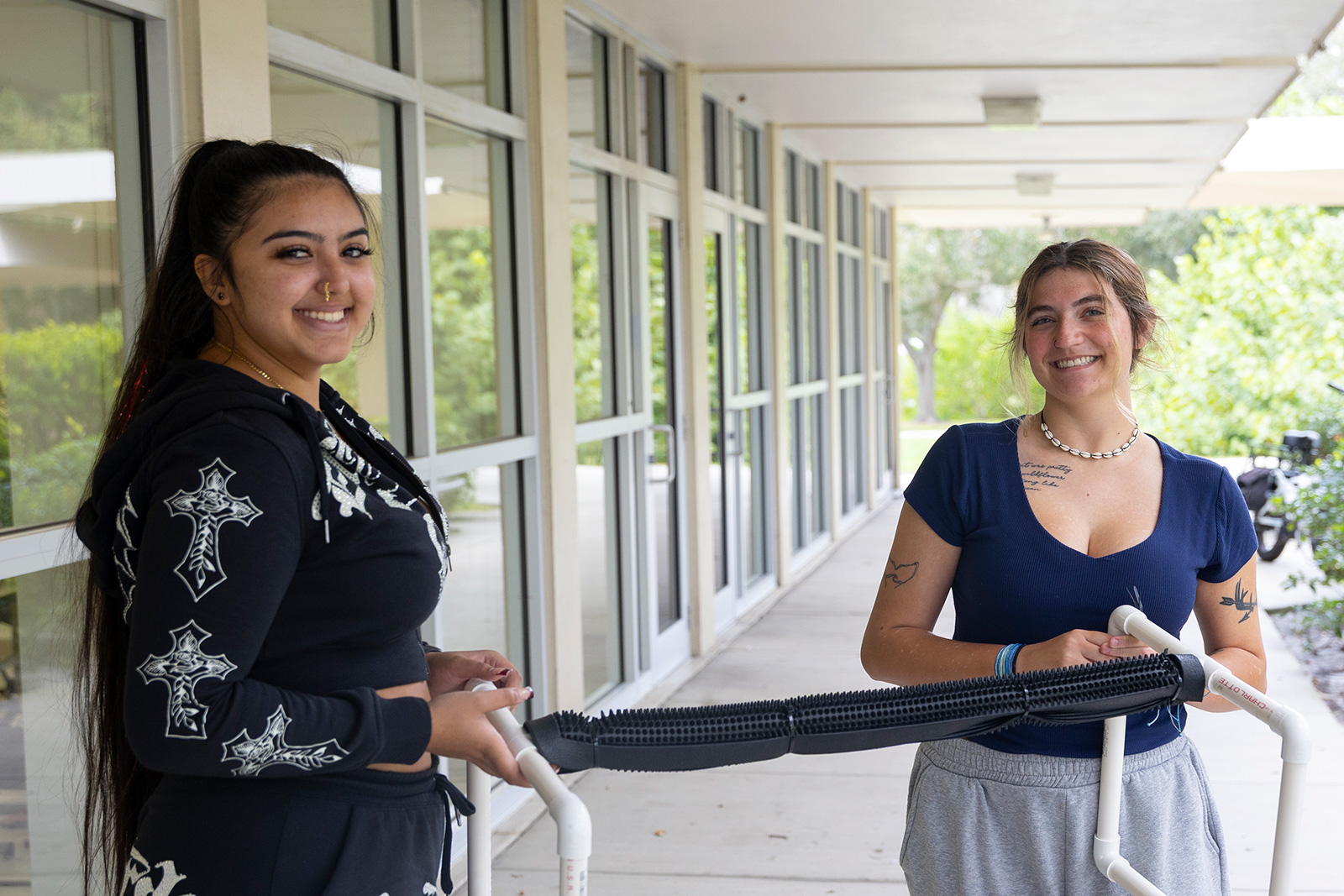
The course included a Reflective Service Learning project of building new perches for birds being cared for at the Seaside Seabird Sanctuary.
Along with coursework, Bergbrant’s students took part in an orientation similar to what Autumn Term students receive. The course also had a 20-hour Reflective Service-Learning component built in, allowing students to learn from and work with two local non-profits: the Seaside Seabird Sanctuary, a wildlife rescue service; and Tampa Bay Watch, a group dedicated to fostering a healthy Tampa Bay watershed. Students built perches and helped with cleanup at the Seaside Seabird Sanctuary, and they visited Tampa Bay Watch’s Discovery Center, took a cruise on one of the organization’s boats, and took part in a vertical oyster garden workshop.
To help with expenses, the course received an Intergenerational Learning Grant from the Academy of Senior Professionals at Eckerd College.
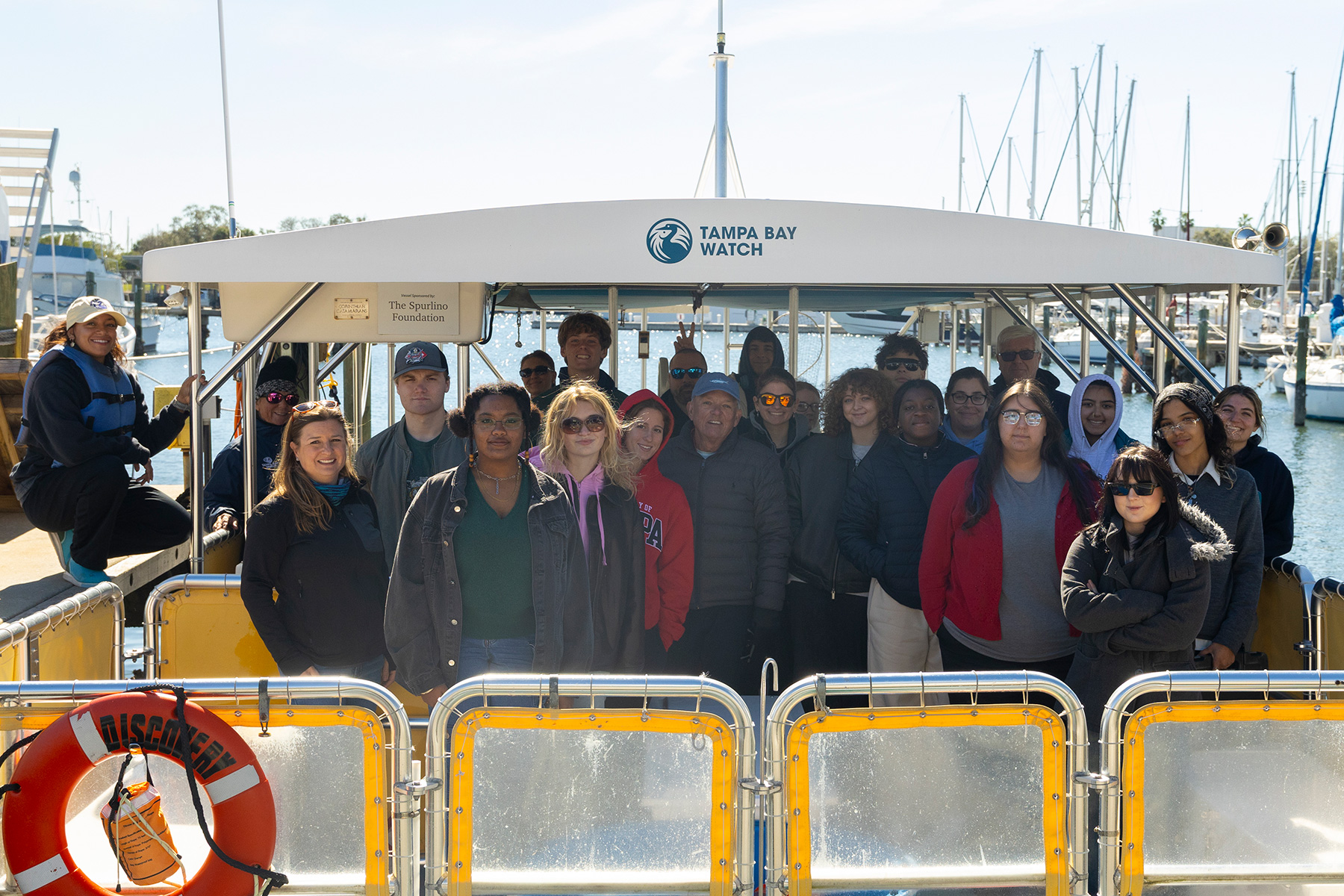
Students also got to tour the area by boat with Tampa Bay Watch, a local non-profit.
“While we were visiting and working with the non-profits, I had students take photos and create designs for social media posts,” Bergbrant says.
“They had to ask themselves what kind of post can create value to the organization, and who would they reach with the post? I’m going to provide their social media post designs to the Seaside Seabird Sanctuary and Tampa Bay Watch so they can utilize them to create social media content.
“The course was a fantastic way for the students to not just find their way at Eckerd College, but to have their first academic experience as well,” Bergbrant adds. “They were able to see how any organization can use storytelling to reach their audience. And they incorporated sustainability and conservation to help connect with the nonprofits we were working with.”
“Allowing students the opportunity to start mid-year opens doors and allows students to come who can’t come in the fall. Maybe they don’t want to wait a whole year.”
Michael Llanes didn’t want to wait. A sophomore animal studies student from Riverview, Florida, Michael served as a Chief Marine Science Technician in the U.S. Coast Guard for 23 years. His job was to lead Coast Guard responses to disasters from oil spills and chemical releases, to hurricanes. He is a first-year transfer student from College of The Albemarle in North Carolina.
“I really enjoyed how Professor Bergbrant mixed things into the class—volunteering at Tampa Bay Watch, helping with the seabirds, and getting to know the campus,” Michael says. “It was really worthwhile. But the hands-on opportunities that she organized for us was the most valuable part of the course for me. Getting people out of their comfort zone, going out into the community and actually helping, and understanding more what the process is, actually seeing and touching it.”
Makaylah Martinez, a first-year student from Apollo Beach, Florida, says her time on the Tampa Bay Watch boat was transformative. “I got the opportunity to get hands-on experience by recording the data collected from the work they did on our boat ride. Getting the chance to work alongside this amazing boat crew of smart women and see how they help each other and work together.
“It motivated me in a way I can’t fully explain. It made me so excited to work in this career field and hopefully someday work alongside Tampa Bay Watch. This class taught by Professor Bergbrant introduced me to more experiences in a month than I’ve gotten in years.”
The job of finding the right faculty member to teach the College’s first Winter Term orientation course fell to Heather Vincent, Ph.D., associate dean of faculty for general education, associate professor of classics and head of the College’s General Education Committee. “Professor Bergbrant has created an orientation course that is designed to help students make a strong academic start at Eckerd College,” she explains. “In the Winter Term course Organizations and Storytelling, students not only learn about the power of stories for branding, marketing, and creative expression, they also become acquainted with all aspects of the Eckerd experience.
“What Autumn Term does for our traditionally matriculating students, Professor Bergbrant’s course does for students who join us mid-year, and that is no small feat. Joining a college between semesters can be a profoundly alienating experience. After all, the year is well underway, and most students have already found their niche–they have met the faculty, joined the clubs, and made their friends.
“It can be like jumping on a roller coaster that has already gained full speed. I think that Nina Bergbrant has a great deal of empathy for students in that situation and has designed an experience that will help them make the leap. And, on a personal note, what I like most about her course is the way that it brings together such a diverse group of folks; some are traditional-aged students, while others are coming from the workforce; some are transfers, while others are brand new to college. Somehow, they all find common ground, and I think that’s the essence of our community.”
Vincent says the College hopes to offer the course again next year. “It would, of course, depend on the number of mid-year matriculating students, and that can be unpredictable,” she adds. “But what we can say for sure, though, is that we have a course that we would very much like to repeat in future years.”