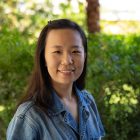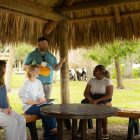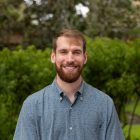
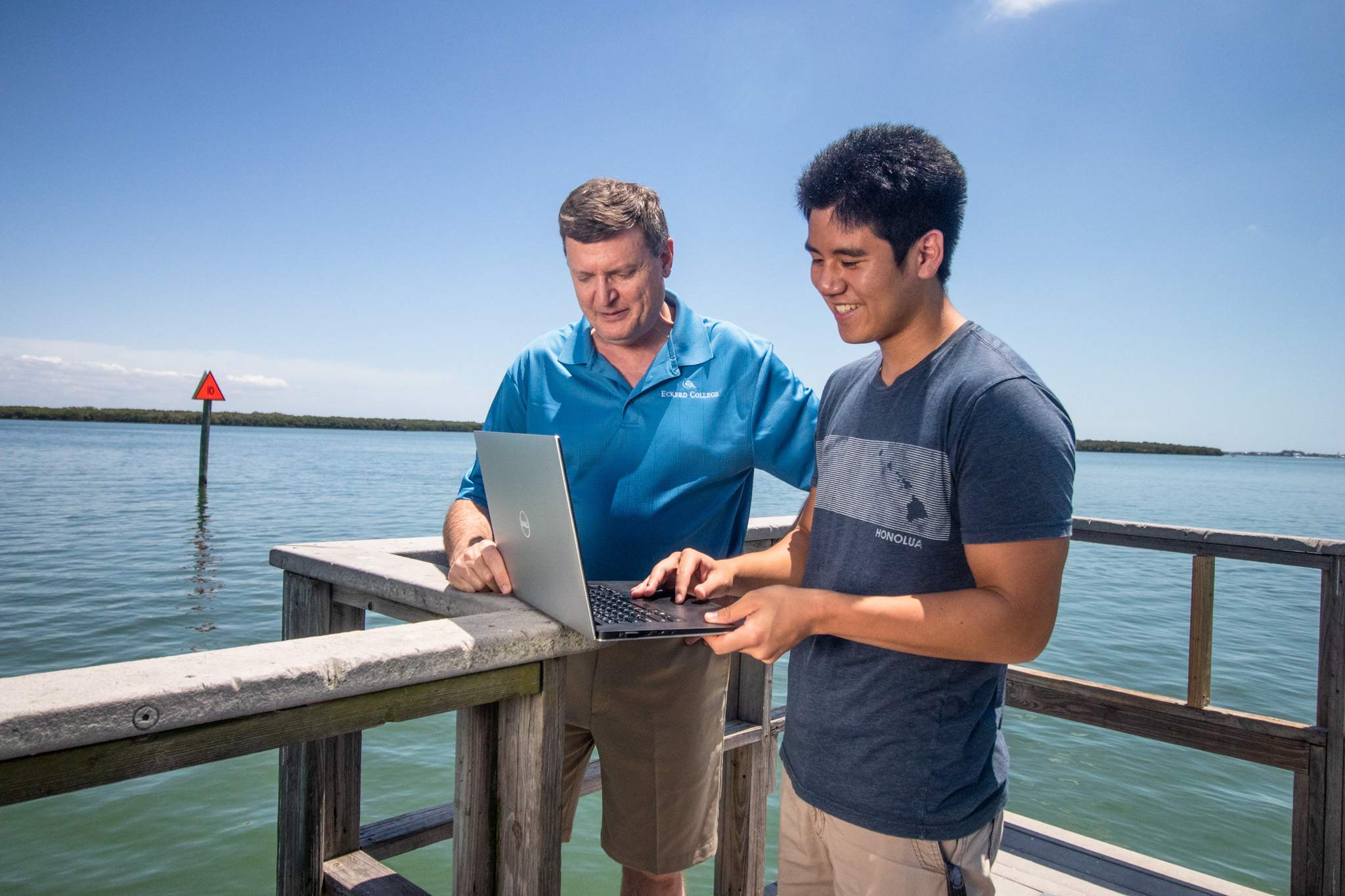
Associate Professor of Computer Science Michael Hilton and Mark Yamane ’22 worked together during Mark’s undergraduate years on research. Mark was recently one of five Eckerd College alumni to be awarded the National Science Foundation Graduate Research Fellowship. Photo by Angelique Herring ’19
While many people prefer eating oysters—on the half shell with mignonette, dressed up Rockefeller-style, or fried with lemon wedges and tartar sauce—AJ Gross ’23 much prefers studying them.
A graduate student at the University of South Florida’s College of Marine Science, Gross is researching how pollutants like pesticides and forever chemicals, along with pathogens such as norovirus and Vibrio bacteria, accumulate in oysters across Tampa Bay.
“People care about what’s in the foods they eat and how chemical pollution is affecting us and the environment around us,” says Gross, who studied biochemistry with a minor in marine science during his time at Eckerd College.
This year, Gross is among five Eckerd alumni recognized through the National Science Foundation Graduate Research Fellowship Program.
One of the country’s most competitive honors for emerging STEM researchers, the program selects approximately 2,500 students each year from a pool of nearly 14,000 applicants and provides up to three years of financial support for graduate studies and research. Since its founding in 1952, the program has supported more than 70,000 researchers, including dozens of Nobel Prize winners.
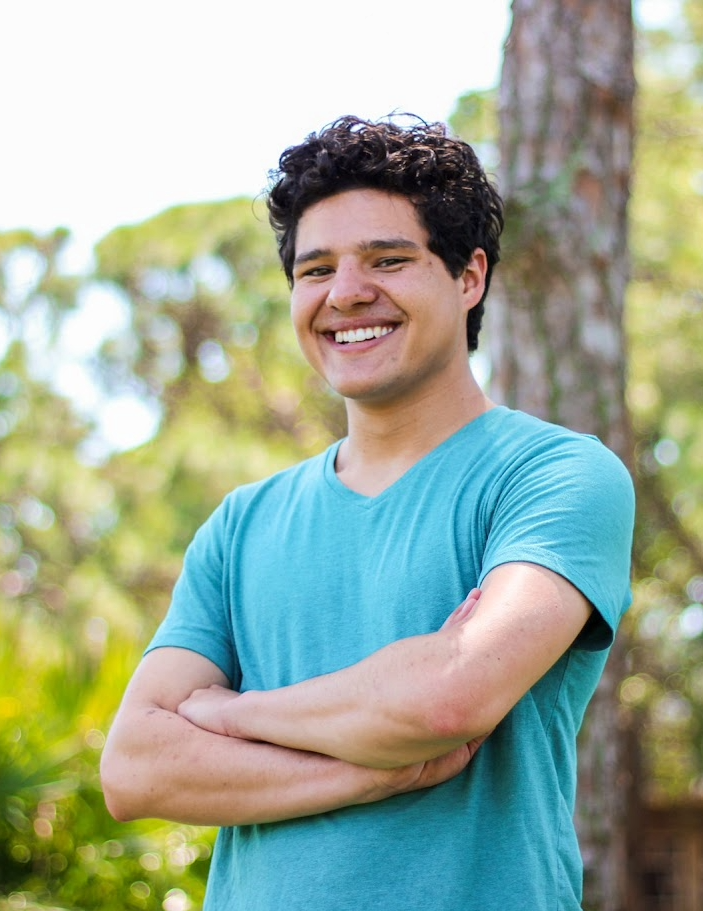
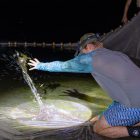
Hudson Filas ’23 took his Eckerd College research experience to the Marine Biological Laboratory in Woods Hole, Massachusetts.
Gross is joined by Mark Yamane ’22, who studied marine science and computer science at Eckerd and is now a graduate student at the University of Washington; Elizabeth Oliver ’25, who studied marine science at Eckerd and is now a graduate student at the Virginia Institute of Marine Science at William & Mary; Hudson Filas ’23, who studied marine science at Eckerd and is currently a research assistant at the Marine Biological Laboratory in Woods Hole, Massachusetts; and Karin Ebey ’25, who studied biology, chemistry and mathematics at Eckerd and is now a graduate student at the University of Georgia.
(Adalena Band ’23, who studied marine science at Eckerd and is now a graduate student at the University of Georgia, and Elizabeth Susan Pellegrini ’26, a marine science student at Eckerd, both received honorable mentions.)
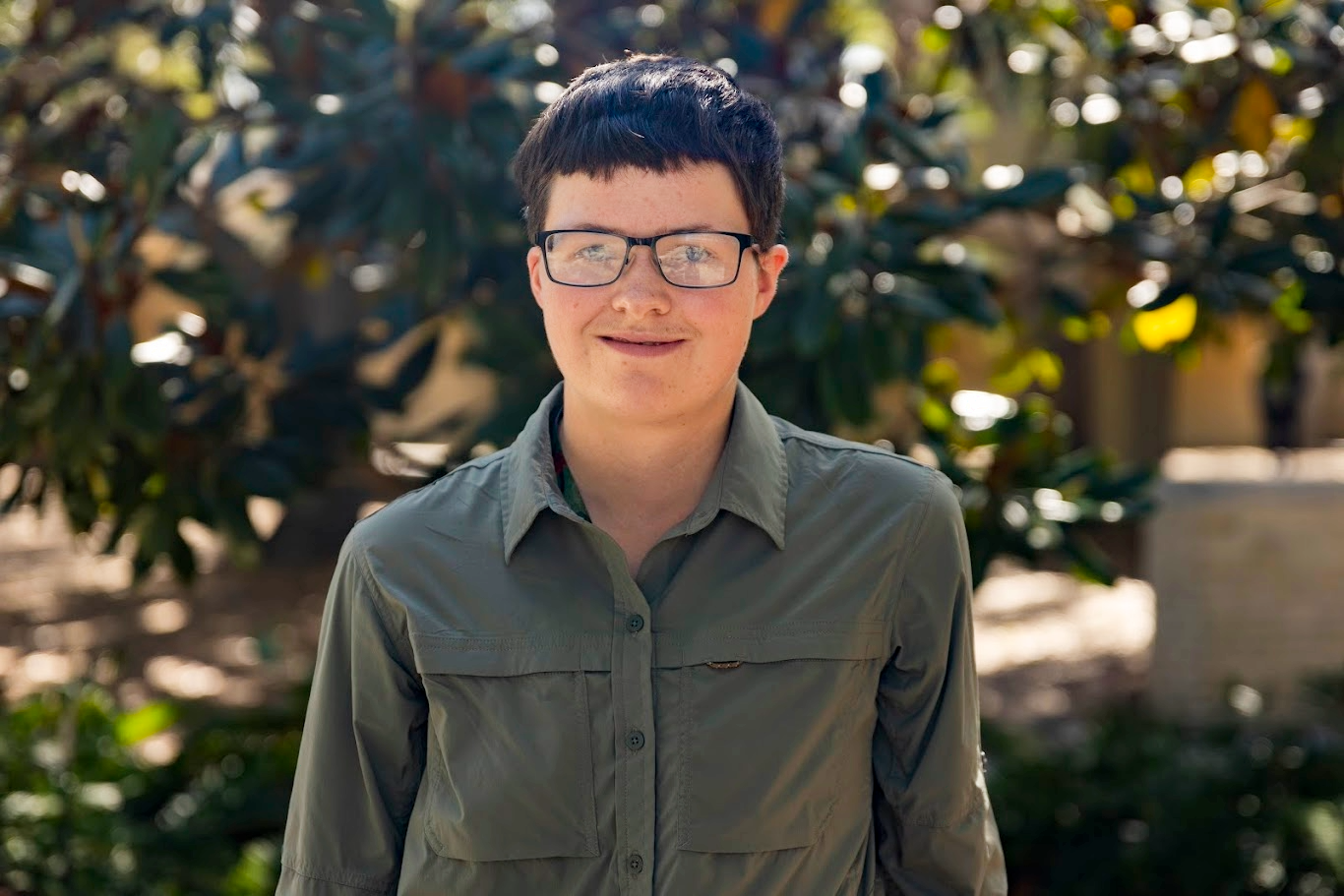
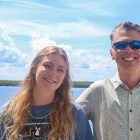
Karin Ebey ’25 is continuing research at the University of Georgia. At Eckerd, Karin won numerous awards including an Ernest F. Hollings Scholarship.
The recognition places Eckerd among a select group of institutions producing multiple fellowship recipients, putting it in the company of Ivy League universities like Yale and Harvard, as well as highly selective liberal arts colleges such as Swarthmore and Oberlin.
“We’re definitely punching above our weight,” says Kathleen Robinson, Ph.D., associate dean of faculty for student success.
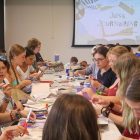
Robinson credits much of that success to Eckerd’s emphasis on early and sustained research opportunities for its undergraduates. Through opportunities like first-year research associateships, students begin working alongside faculty early in their academic careers, gaining hands-on experience in labs, in the field and across disciplines.
“Our students are doing research from the minute they arrive at Eckerd,” Robinson says. “They’re asking the kinds of questions that graduate students and scholars are asking.”
For Elizabeth Oliver ’25, that hands-on experience was central to her development as a researcher.
Now a first-year master’s student at the Virginia Institute of Marine Science at William & Mary, Oliver is studying the indirect effects of climate change-driven species migration. Her work focuses on the fiddler crab, a burrowing species that has expanded its range into the Gulf of Maine. Because the crab alters sediment and plant systems, Oliver is examining how its presence could affect carbon storage, plant biomass, and salt marshes’ ability to withstand sea level rise.
She credits her time at Eckerd with laying the foundation for that work. Through hands-on experience in the college’s marine science labs and coursework in fields like ecology and parasitology, Oliver developed the critical thinking and technical skills she now applies in graduate school.
“The faculty at Eckerd College have had a profound impact on my education,” she says.
Mark Yamane ’22 is another fellowship recipient whose work centers on marine ecosystems.
After graduating from Eckerd, he spent three years working as a research software engineer in a fisheries acoustics lab at the University of Washington before transitioning into the school’s aquatic and fishery sciences graduate program. His current research compares acoustic data collected from autonomous underwater gliders with data gathered from traditional ship-based surveys—work that could help make long-term ecosystem monitoring more cost-effective and accessible.
Yamane credits his time at Eckerd with helping him build the interdisciplinary skills needed for this work. Through on-campus research, he gained field and lab experience analyzing water samples and manatee gut contents for microplastics, and conducted independent research for his computer science thesis, applying the full scientific method and developing machine learning models.
Looking ahead, Yamane says the fellowship will allow him to focus more fully on his research before sharing it with the broader scientific community.
For Gross, the fellowship offers an opportunity to continue asking questions that connect environmental science with everyday life.
“This fellowship will allow me to pursue my Ph.D. and expand my research into new areas,” Gross says. “I’m particularly interested in how chemical contaminants may alter oyster microbiomes, and how those contaminant ‘communities’ show up in other organisms, like fish and seagrass, around Tampa Bay.”