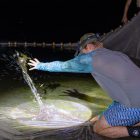

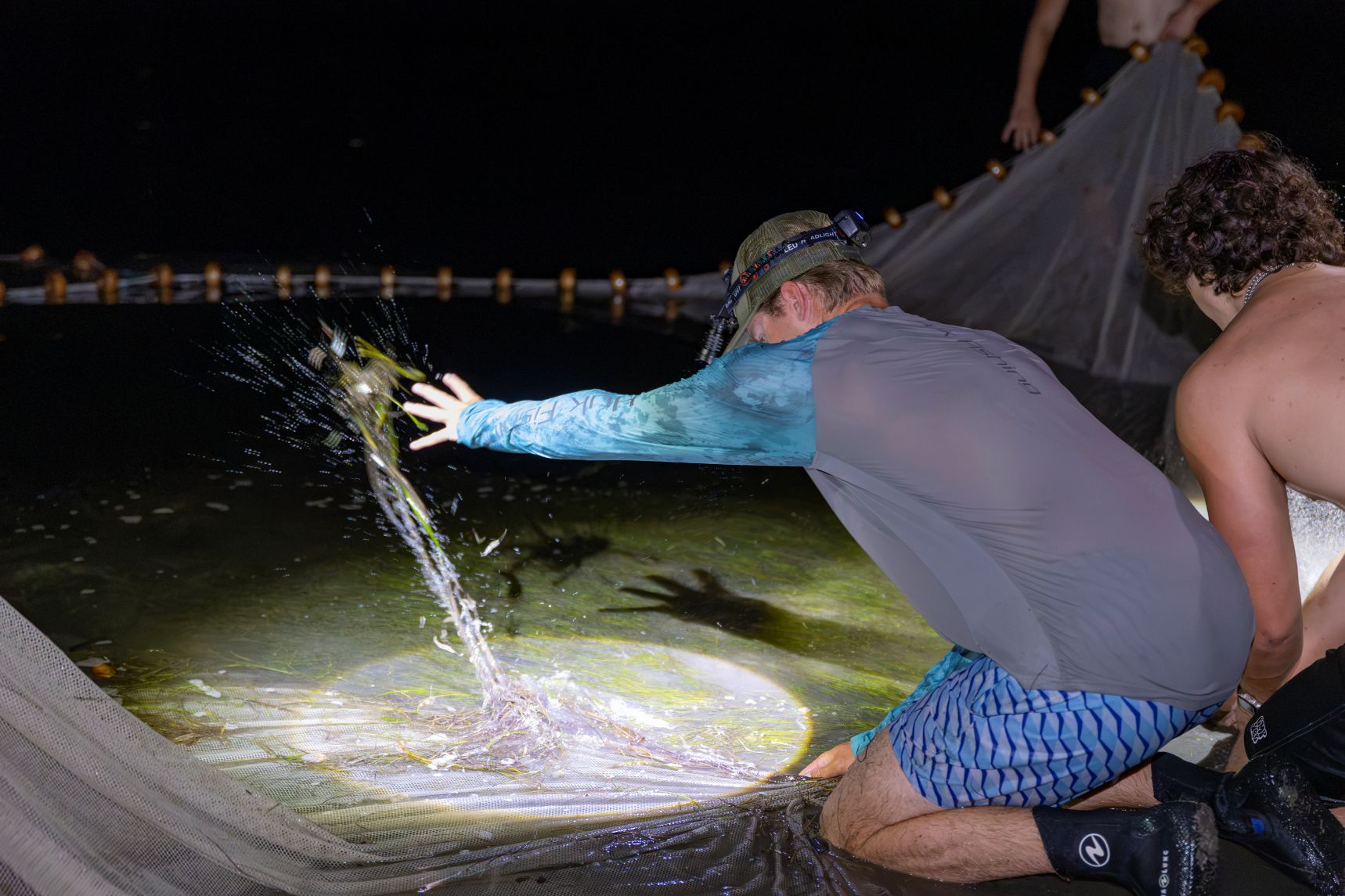
Eckerd College students drag a seine net in Boca Ciega Bay to catch overlooked organisms. Photo by Penh Alicandro ’22
Students in a recent Autumn Term course learned about species that—due to their size, nocturnal habits or human bias—are often overlooked.
Visiting Assistant Professor of Marine Science David Durieux ’11, Ph.D., had his students collect pond water samples to analyze under microscopes, gather insects during a nighttime activity and learn about biodiversity on Eckerd’s campus and in the broader community. The course, Under Our Eyes: Exploring the Natural World, revolves around plants and animals we don’t always notice.
“That diversity just doesn’t cross people’s minds unless they’re actively exposed to it,” Durieux says.
As he develops biodiversity projects, Durieux has noticed a data bias. There’s often stronger data on birds than insects, one reason being birds are easier to spot and photograph. If that bias exists in the research world, it’s even more likely to exist among the general population, Durieux says.
By engaging students with overlooked species and having them contribute to the citizen science platform iNaturalist, they’re building a connection to Eckerd and the outside world.
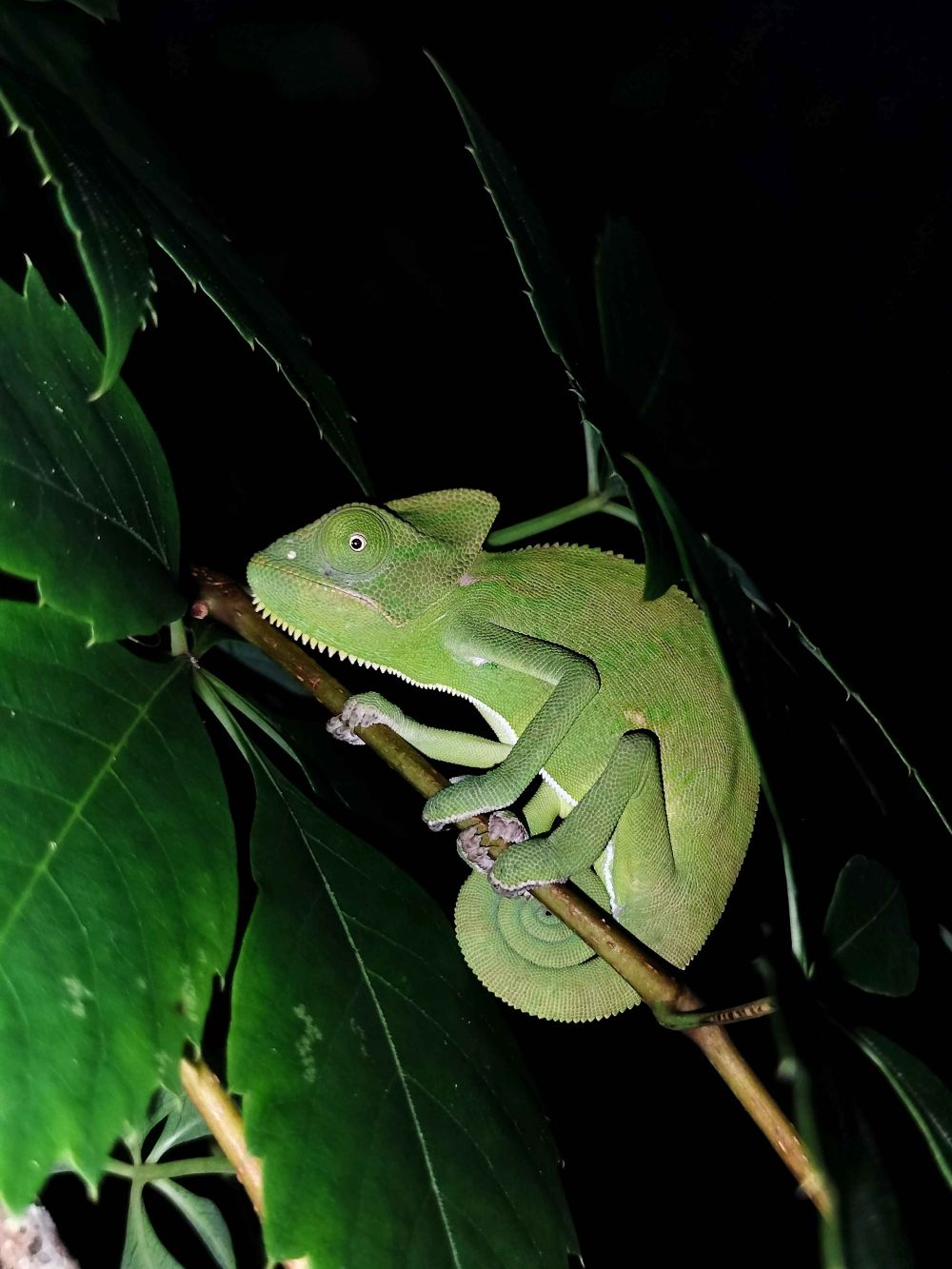
A chameleon conceals itself among the plant life on the Eckerd College campus. Photo provided by Marsh Wrathmell
At the beginning of each class, Durieux displays the observations students have made with iNaturalist and shows how many students have helped identify the species.
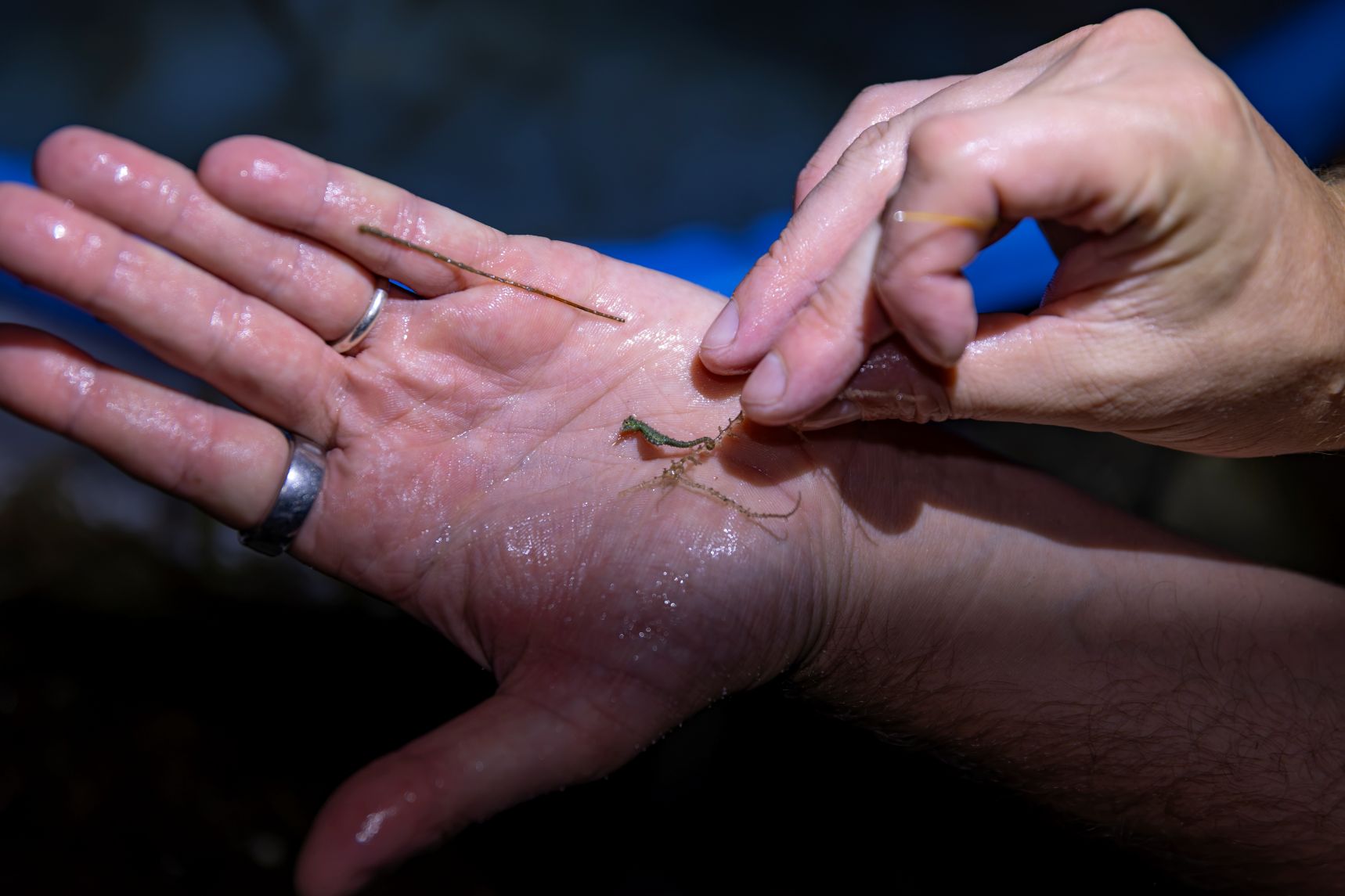
An Eckerd student holds a tiny seahorse in the palm of their hand during a night lab with David Duriex ’11, Ph.D. Photo by Penh Alicandro ’22
“Highlighting that shows us that making a picture of a bug on campus actually has broader impacts in the community, because other people are involved with the identification process. Other people might be using that observation later for research,” they explain.
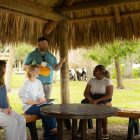
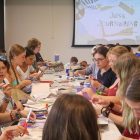
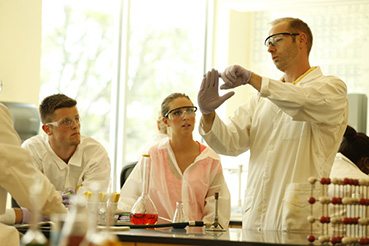
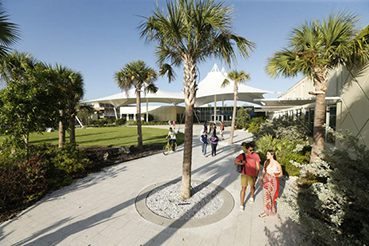
Outside of class, students explored the Palm Hammock on campus. They spent an hour doing a nature scavenger hunt, working in small groups. The class traveled off campus to local natural areas like Boyd Hill, where they were exposed to other ecosystems and nocturnal animals during night excursions. On lab days, students looked at their collections under microscopes.
“The overarching word would be insightful,” says Marsh Wraithmell, a first-year student in the class from Tallahassee, Florida, planning to study biology.
The course has helped Marsh become more observant. During the Boyd Hill trip, the class stopped in a sunflower field near the water. Marsh turned their attention to a nearby species of small stature: a praying mantis. It was resting on a flower.
If she’d been walking faster and not inspecting the environment, Marsh says she wouldn’t have noticed as much as she did.
Marsh is a self-described “wild person,” being referred to as the “wasp kid” in high school. A Hunter’s Little Paper Wasp tattoo adorns their leg. Marsh’s parents work in environmental jobs; their mom, Julie Wraithmell, is the vice president and executive director of Audubon Florida.
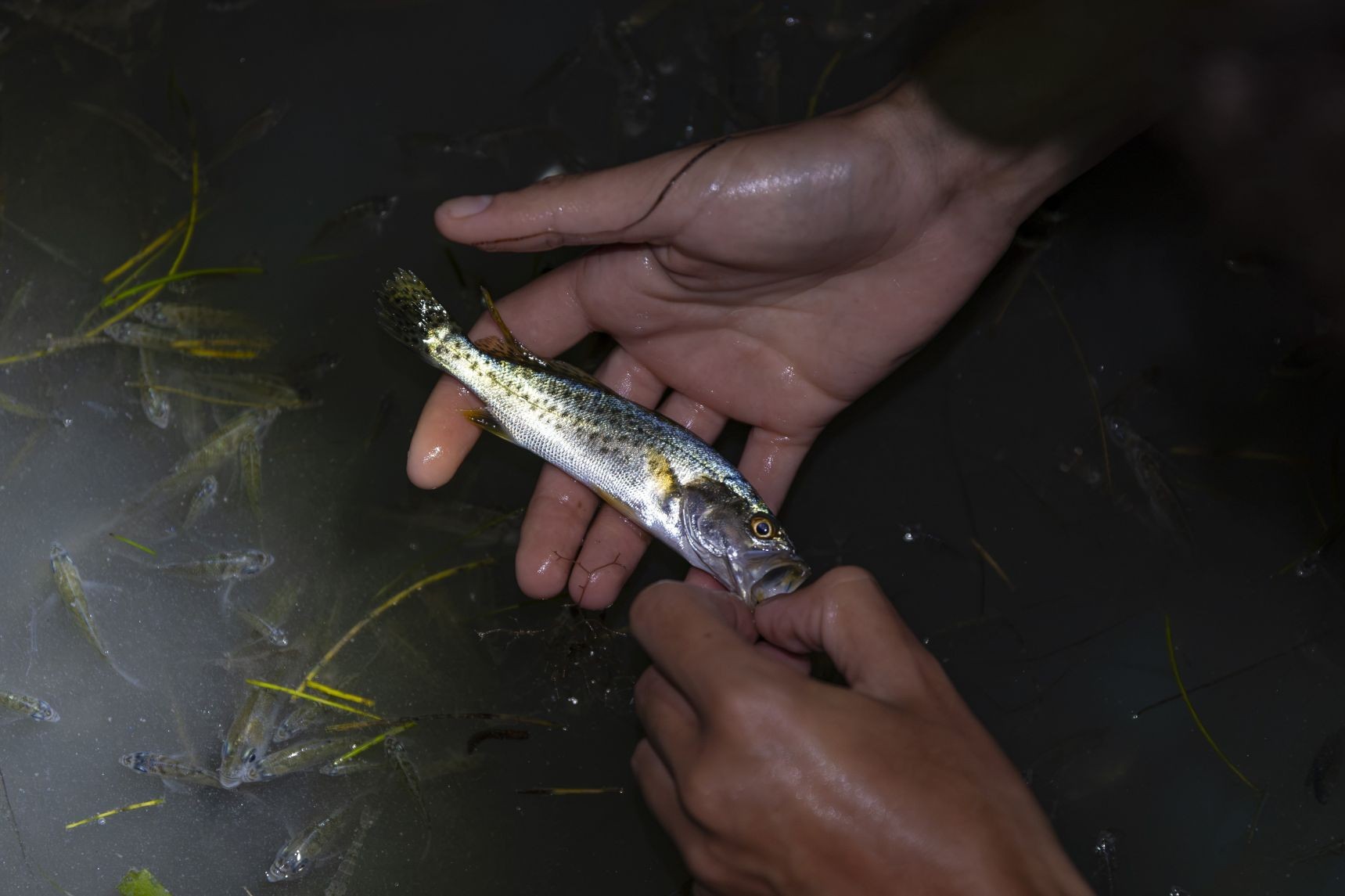
Whether because of size or nocturnal habits, many organism in Eckerd College’s biodiverse environment are routinely overlooked. Photo by Penh Alicandro ’22
Now, Marsh walks around Eckerd’s campus with animals she’s collected. Particularly chameleons.
“I’m now the chameleon kid. And people are just, like, ‘hey, you’re the chameleon person, right? Can I go look for chameleons with you?” Marsh says.
Regardless of what students are interested in, Durieux wants to offer an opportunity to go down the rabbit hole. If students want to deepen their knowledge about insects, they can do that. If they prefer a general overview of biodiversity and familiarizing themselves with the campus, that can be the student’s goal.
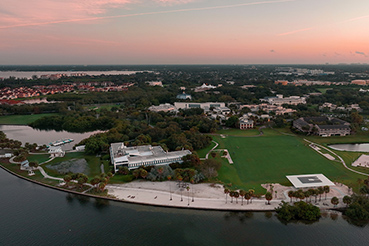
On one hand, the class learned the importance of biodiversity and the relevance of overlooked species. On the other hand, Durieux has introduced them to the history of Eckerd’s land, both natural and artificial. The course isn’t solely nature-oriented or history-oriented.
“It’s Eckerd-oriented,” Durieux says.