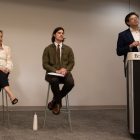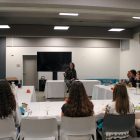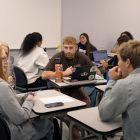

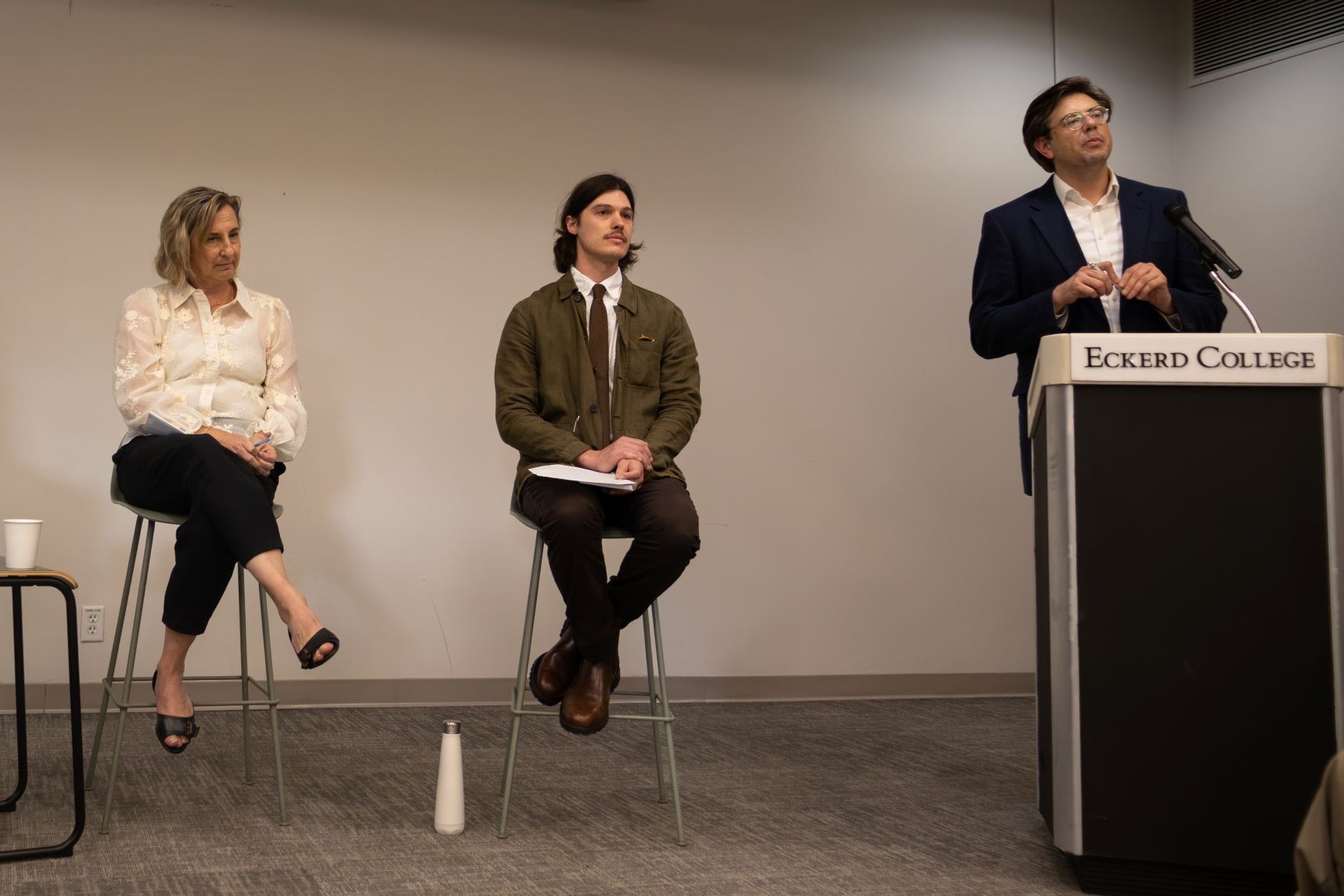
Chaplain and Director of the Center for Spiritual Life Robert Galloway leads a Q&A session with a panel of scholars on religion, politics and public life. Photo courtesy of Madison DeVore ’25
“It’s always the right time to talk about American religion and politics,” says Assistant Professor of Religious Studies Charles McCrary, Ph.D.
To spark this conversation, McCrary invited Elizabeth Shakman Hurd, Ph.D., Northwestern University professor of political science and religious studies, and Tazeen Ali, Ph.D., assistant professor of religion and politics at Washington University in St. Louis, to visit Eckerd’s campus. The panel hosted a discussion on religion, politics and public life in the U.S.
Each scholar introduced themselves and their work before answering questions posed by Chaplain and Director of the Center for Spiritual Life Robert Galloway and the audience. Hurd specializes in political theory and international relations.
“What I’m going to suggest is that the divisions between the religious and the political are not as clear as we often treat them, and that this matters,” said Hurd.
Hurd, whose book “Heaven Has a Wall: Religion, Borders, and the Global United States” explores borders as a political—and religious—object, raised national security as an example.
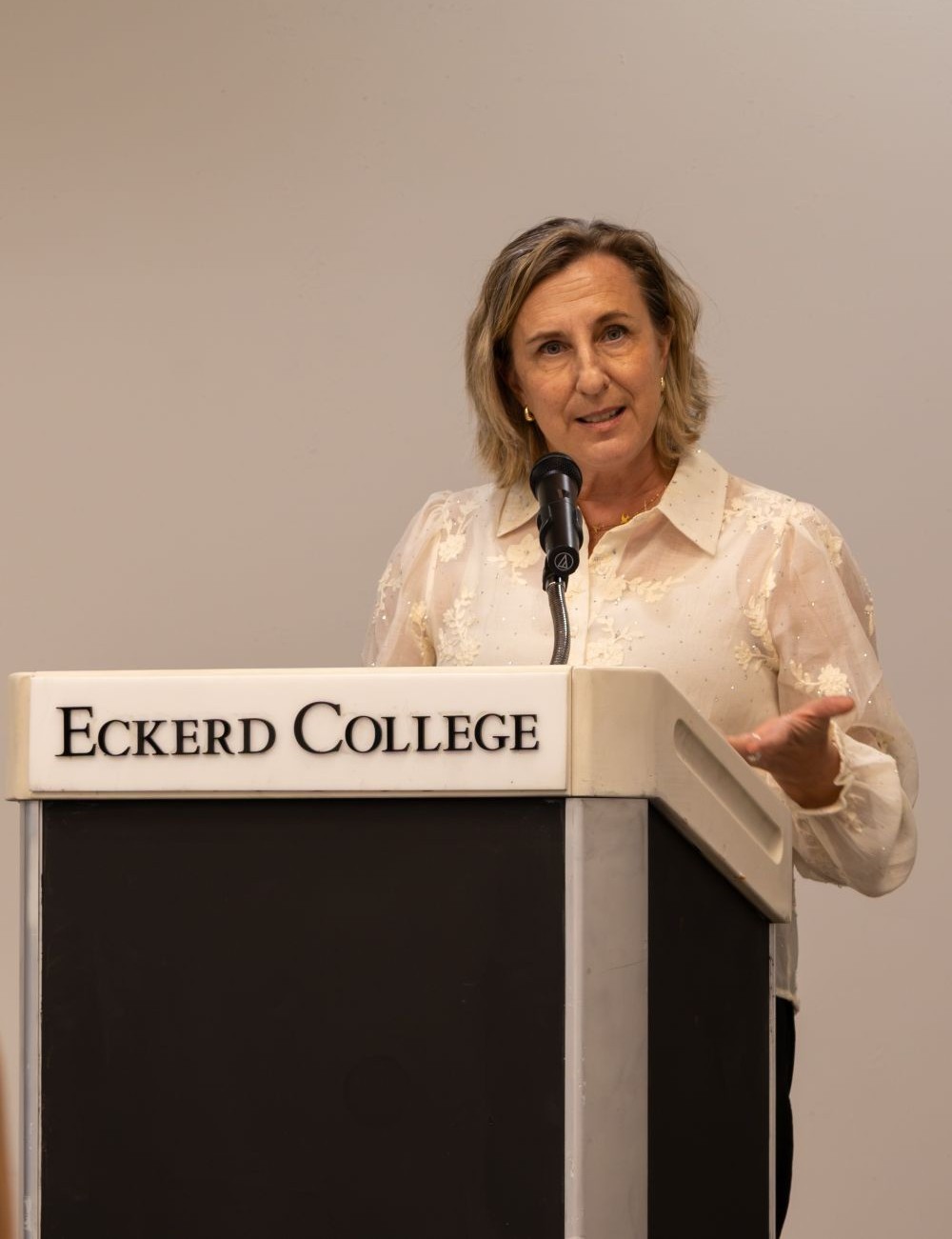
Elizabeth Shakman Hurd, Ph.D., professor of political science and religious studies at Northwestern University, spoke on the intersection of politics and religion in national security.
Americans treat security as sacred, or above the reach of the law, Hurd suggested. Citing religion scholar Kathryn Lofton, Ph.D., Hurd explains that religion isn’t just something you can join, but it’s something you may become ensnared by.
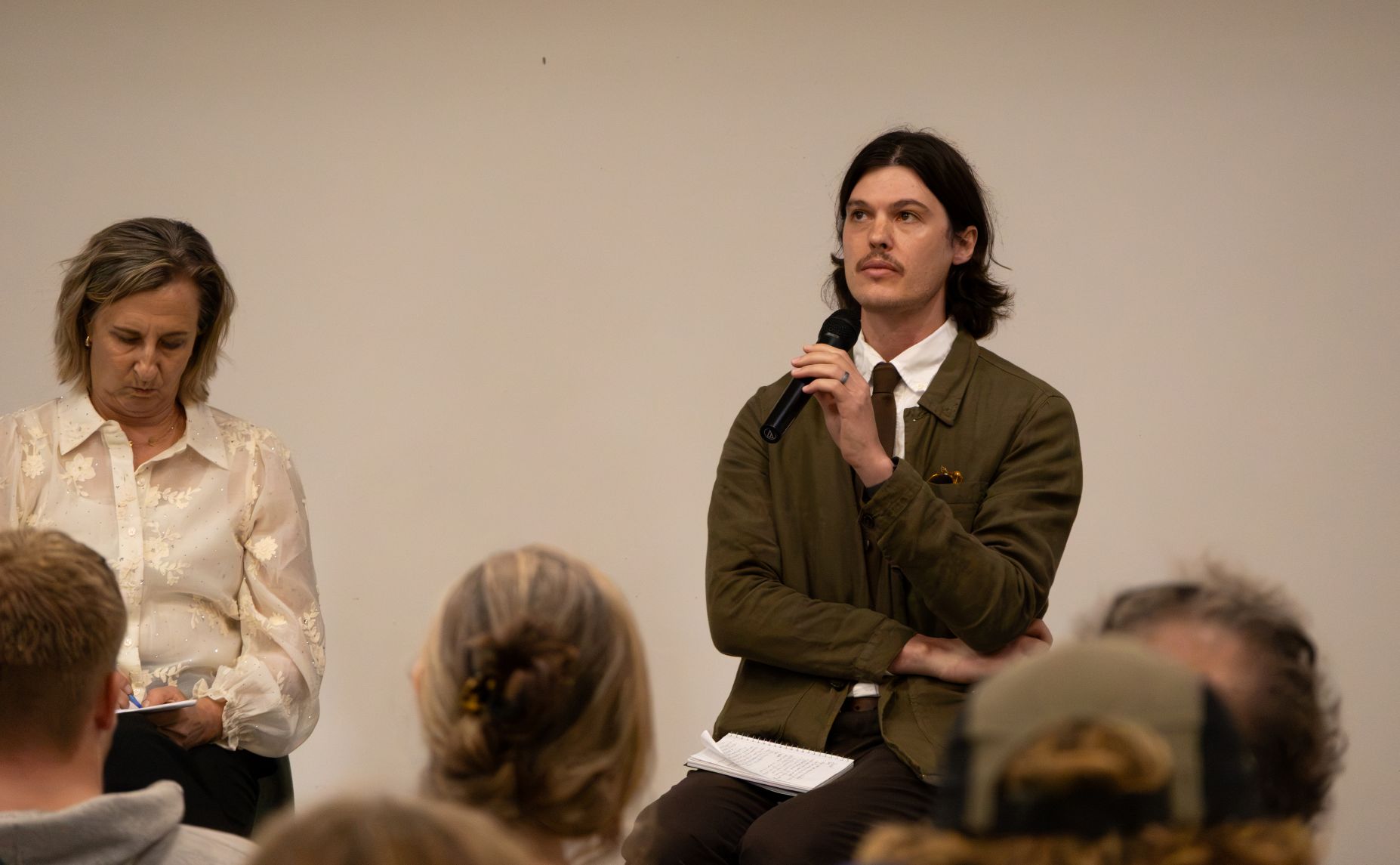
Assistant Professor of Religious Studies Charles McCrary, Ph.D., organized and participated in the panel discussion with a pair of visiting scholars.
“Like both politics and religion, national security draws you into something bigger,” Hurd said. “You’re compelled to participate.”
Ali stepped up to the podium next, highlighting her current research on television as a site where religion or Islam is being actively constructed. Ali studies Islam and gender and is currently working on a book tentatively titled “Muslims on Screen: Racism and Sexuality in Anglo-American Islam.”
To frame her research concepts, she pointed to recent events in American politics. She referred to Michigan Democratic Senate candidate Abdul El-Sayed, who responded to a public question about disavowing the Muslim Brotherhood with “I’m not running to be a Muslim senator. I’m running for U.S. Senate and happen to be Muslim.”
“This shows us something important about this changing place of Muslims in American public life,” Ali said.
She encouraged the audience to consider how developments in television might help us think differently about the growing visibility of Muslims in electoral politics.
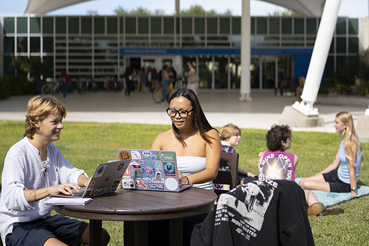
Lexi Davis, a junior religious studies and humanities major from Mountain View, California, and Jasmine Fernald, a junior anthropology major from New Carlisle, Indiana, had quite a few takeaways from the event.
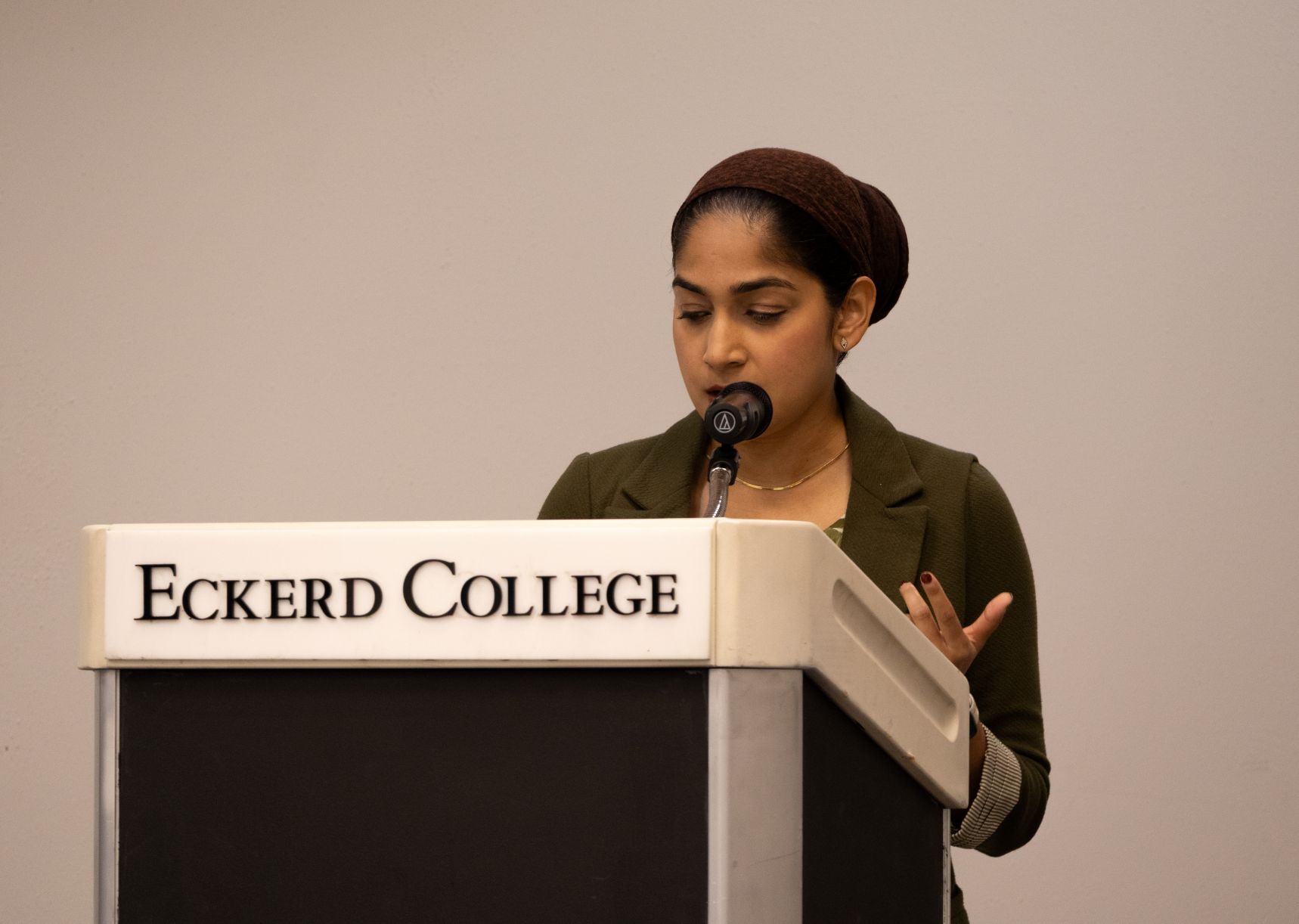
Tazeen Ali, Ph.D., assistant professor of religion and politics at Washington University in St. Louis, addresses the audience.
Lexi is thinking about the category of religion itself and considering how to dismantle the predetermined definition of religion in her mind. She’s also thinking about potential hidden ties between religion and culture and how it’s impacting us.
“If we can discern these tiny bits of religion in everyday American culture, what will that tell us about America?” Lexi asks.
As an anthropology major, Jasmine thinks a lot about their own point of view and how we often know less than we might think. Similarly to Lexi, Jasmine was interested in recognizing her own idea of what religion is.
“We like to say that religion and government are separate, but they are so intertwined,” Jasmine says.
McCrary wants students to develop new questions and lenses for viewing the religious ideas saturating politics and life. He adds that religious ideas are present on both ends of the political spectrum, from Christian nationalists on the right to a seminarian hoping to flip a Texas Senate seat blue.
“If you don’t really know what you’re looking for, you’ll miss it. And I would like people to start looking for it and stop missing it,” McCrary says.