


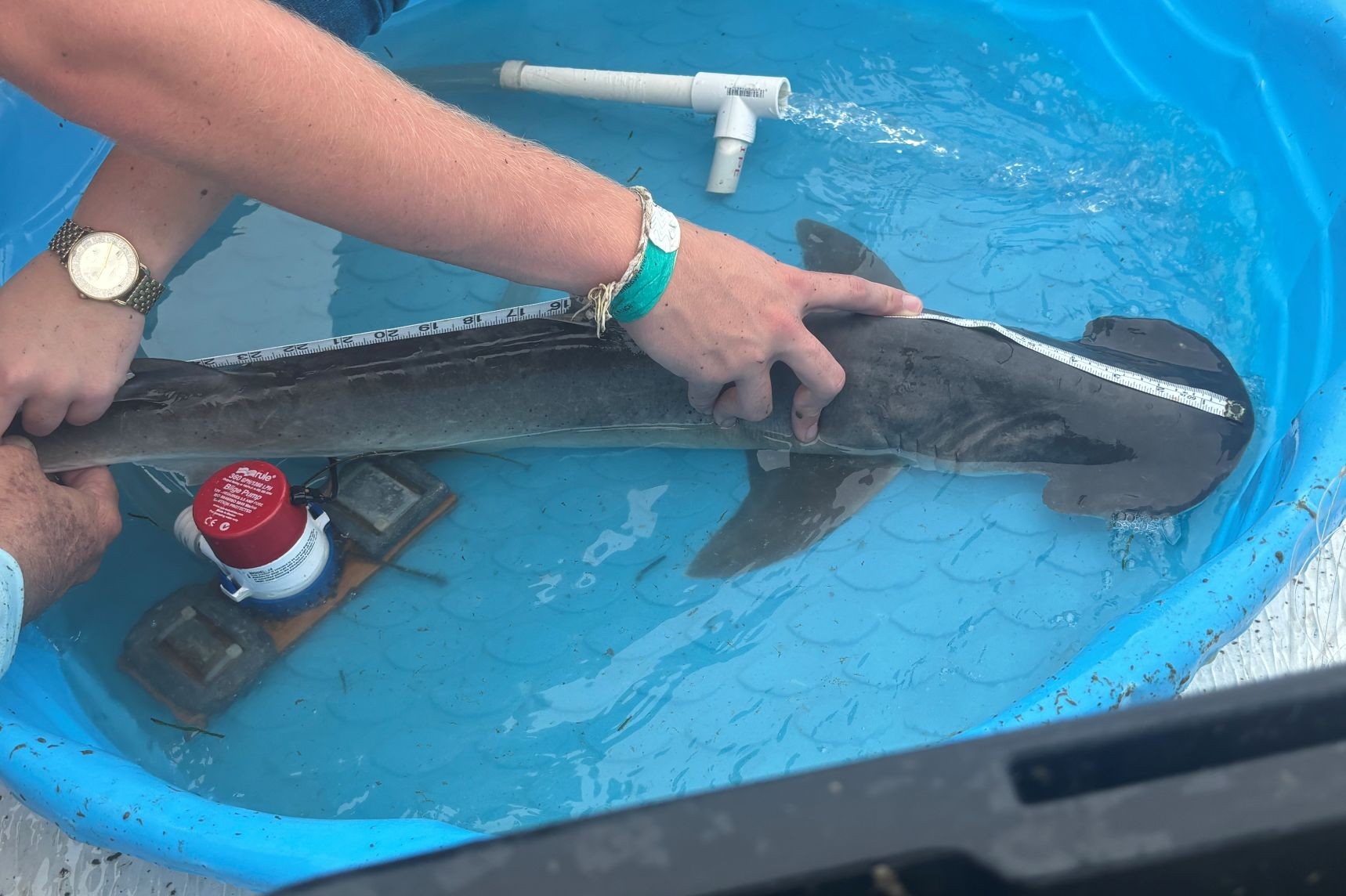
Students measure a bonnethead shark. Photos provided by Emily Clayton-King ’27
One of Eckerd College’s newest faculty members, Assistant Professor of Marine Science John Hlavin, Ph.D., contributed to a project designating Biscayne Bay as an Important Shark and Ray Area. He sees potential for similar work in Tampa Bay.
ISRAs are portions of a habitat important for one or more species that have the potential to be managed for conservation. Its main purpose is to attract the attention of policymakers and decision makers in response to the status of sharks and rays in that area, according to the International Union for Conservation of Nature Shark Specialist Group.
The Biscayne Bay ISRA fact sheet was authored by the IUCN Species Survival Commission SSG, with Hlavin as a contributor. He also recently contributed a report on ISRAs in the North American and Caribbean Atlantic regions.
“You don’t have to go halfway around the globe to find a unique habitat that has all of this amazing biodiversity in need of our help,” Hlavin says.
Hlavin became involved with this effort as a graduate student, under his advisor, Catherine Macdonald, Ph.D., director of the Shark Research and Conservation Program at the University of Miami. Using research techniques from shark tagging to analyzing resource and habitat use, they met criteria for 11 shark and ray species.
Many shark and ray areas are species-specific, so showing the importance of Biscayne Bay for so many species sets it apart, Hlavin says. One of the bay’s key roles is as a reproductive habitat. Pregnant sharks use it as a sort of “maternity ward” where they’re sheltered and speed up the growth and development of their pups in utero, Hlavin explains. The area is also used as mating grounds and a nursery habitat.
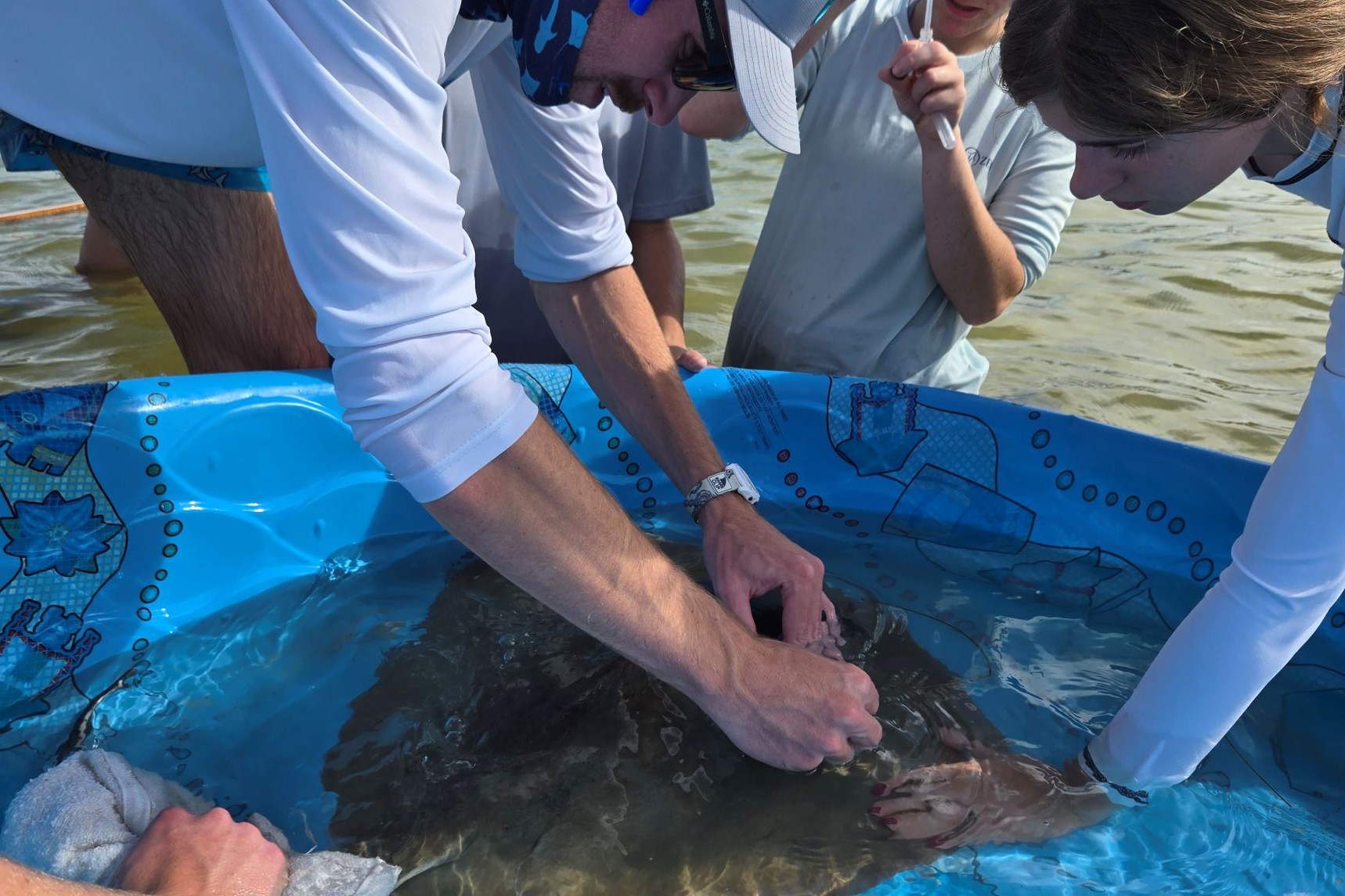
Dr. Hlavin and students extract a muscle biopsy from a bluntnose stingray.
“You have the full life cycle going on around Biscayne Bay and across so many different species,” he says.
During his first semester teaching at Eckerd, Hlavin has already recruited students to be a part of his Shark Conservation and Predator Ecology lab. The primary research focus of the SCAPE lab is untangling predator-prey relationships, reconstructing dietary niches and monitoring food-web dynamics.
Emily Clayton-King, a senior marine science major from Saint Paul, Minnesota, is a researcher in Hlavin’s lab. Emily does hands-on field work, going on the water and taking muscle samples from sting rays. The rays are captured and put in a small pool while the sample is taken, it’s scanned for parasites and then released back into the water. From the sample, Emily can analyze chemical isotopes to determine the ray’s diet. The two ray species they’re focusing on—Atlantic stingrays and bluntnose stingrays—are an important food source for sharks too.
“If you can conserve these areas for nursery grounds or food, like prey sources,” Emily says, “It can help a lot with conservation and preserving these species.”
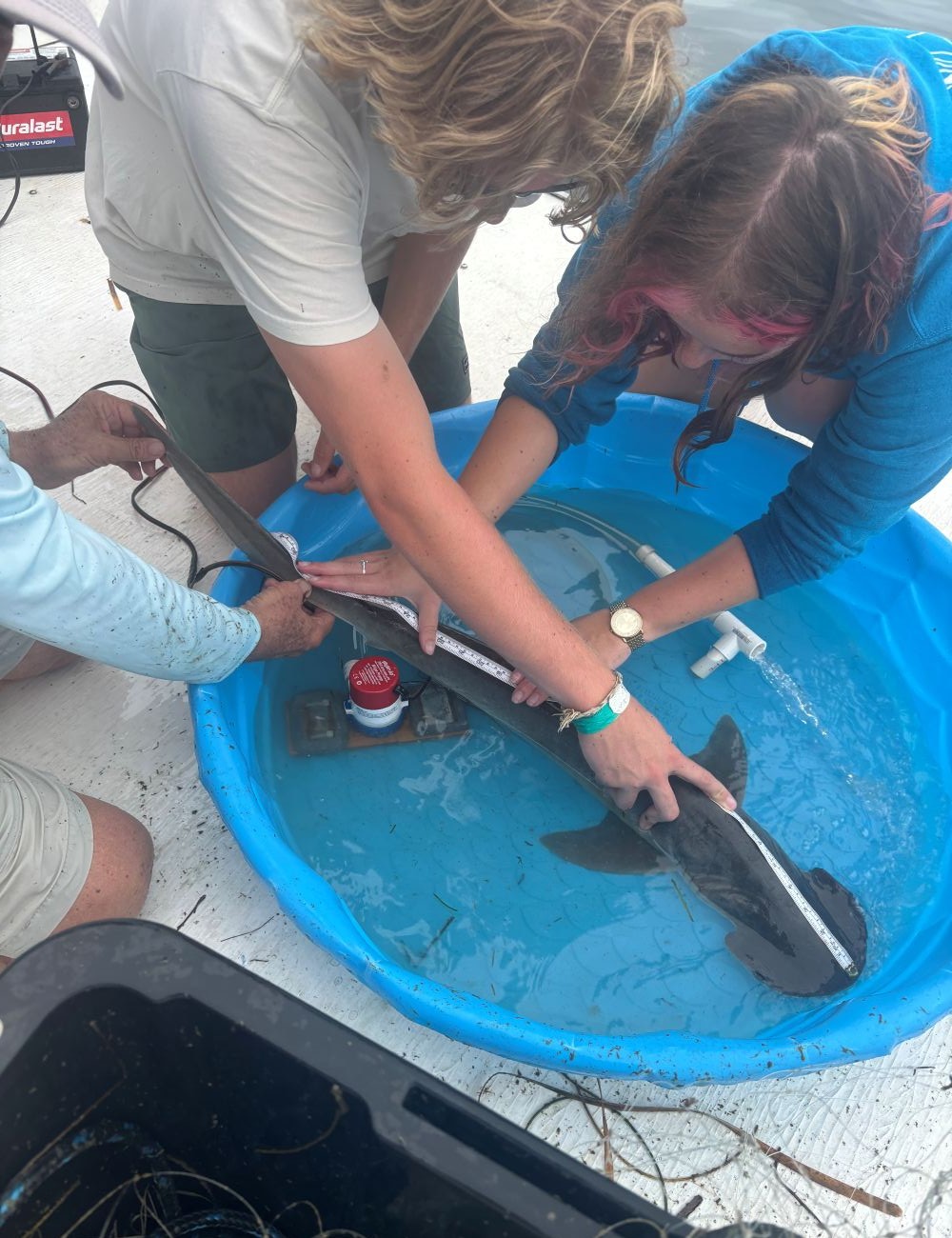
Bonnethead sharks are the smallest species of hammerhead shark and one of the most prevalent shark species found in Tampa Bay.
A total of 1,084.2 square kilometers of Biscayne Bay has been designated as an ISRA.
“That doesn’t exist for Tampa Bay,” Hlavin says.
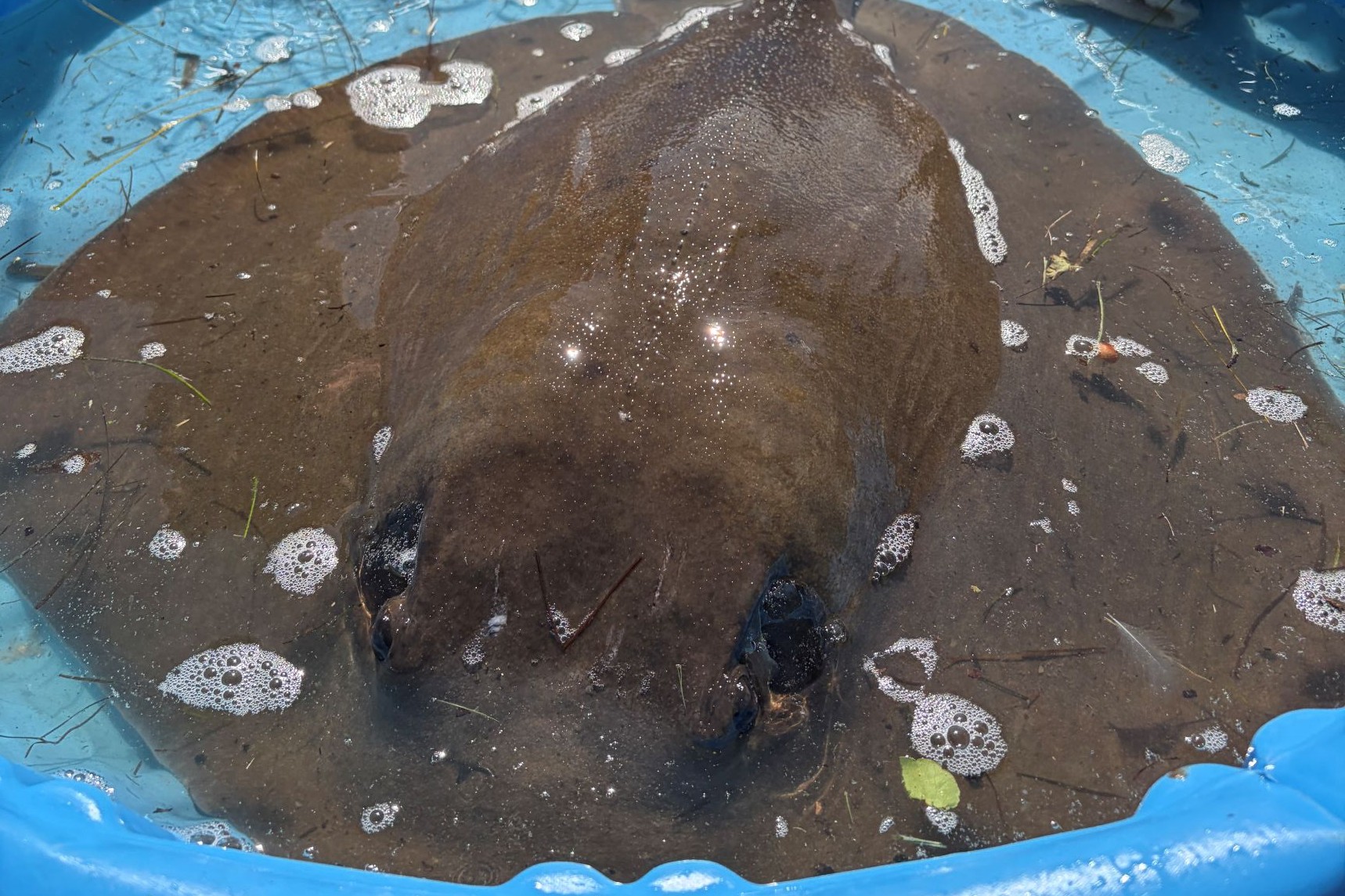
Bluntnose stingrays are commonly found in shallow coastal waters of Tampa Bay.
Over the next decade, Hlavin says there’s work to be done here. There are indicators that Tampa Bay has important and endangered species deserving recognition under the ISRA criteria, he says. Just a few weeks ago, a student caught a juvenile scalloped hammerhead shark, a critically endangered species globally. With Hlavin’s help, they released it.
“That individual is important. Just even that one single data point is a key indicator that we probably have these critically endangered species coming into our areas, just here off campus,” Hlavin says.
These are important data points to document, he adds. Determining how to argue that Tampa Bay is an ISRA definitively is at the top of Hlavin’s to-do list.
And students are a major part of this effort, from Emily studying rays, to others who can support the necessary science, policy or communication. Science communication is a critical part of this effort, Hlavin says, for successfully achieving change.
While many people may think of black rhinos when they hear “endangered,” Hlavin says, you don’t have to travel the world to protect the environment.
“Right in our backyard is where we need to be focusing a lot of our effort,” Hlavin says.