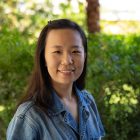
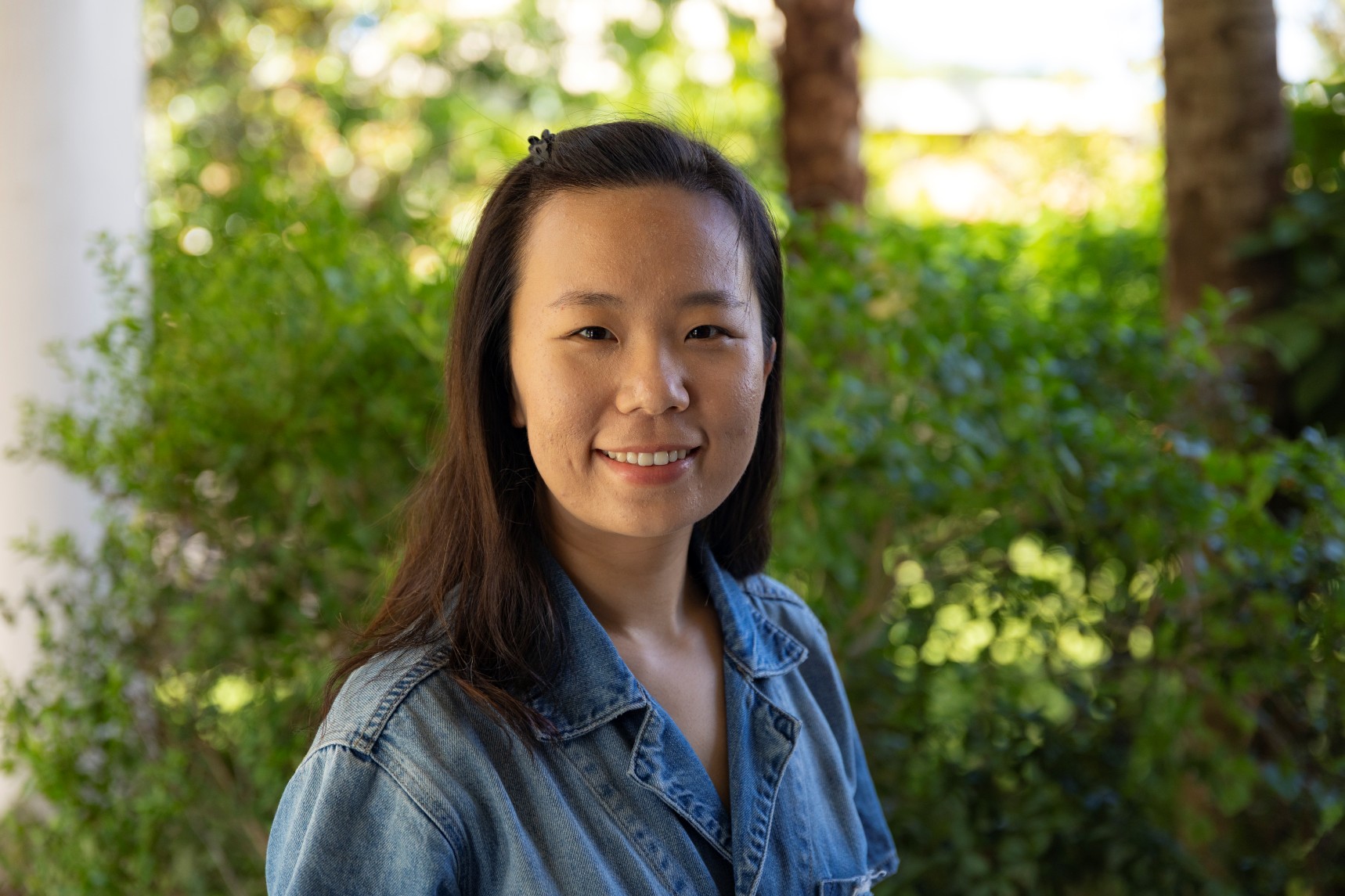
Dr. Vivian Zhang’s research explores this question by examining conversational turn-taking across diverse developmental populations, including multilingual children and neurodivergent groups. Photo by Penh Alicandro ’22
Autonomy to explore her own and students’ interests is what drew Eckerd’s new assistant professor of psychology to this liberal arts college.
Vivian Hanwen Zhang (张瀚文), Ph.D., will begin teaching courses this fall semester, from Introduction to Psychology to Neurodivergence.
“Psychology can be as personal as you want and it can be as distant as you want,” Zhang says, hoping students will connect the topics discussed in class to their personal experiences.
Zhang’s research background is primarily in temporal patterns in naturalistic conversation–or the short pauses between two people when communicating.
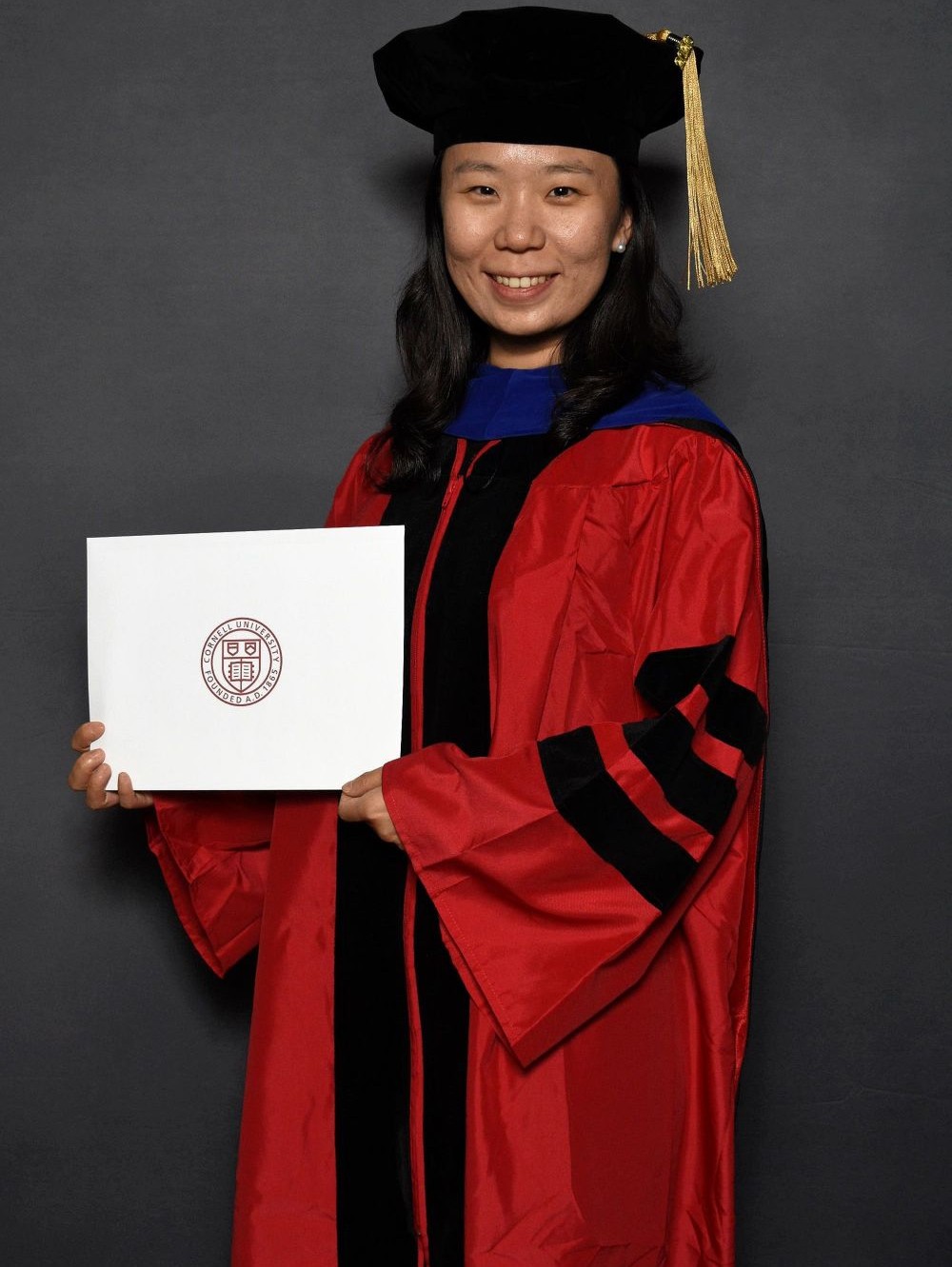
Vivian Zhang earned her doctorate from Cornell University in Ithaca, New York. Photo courtesy of Vivian Zhang.
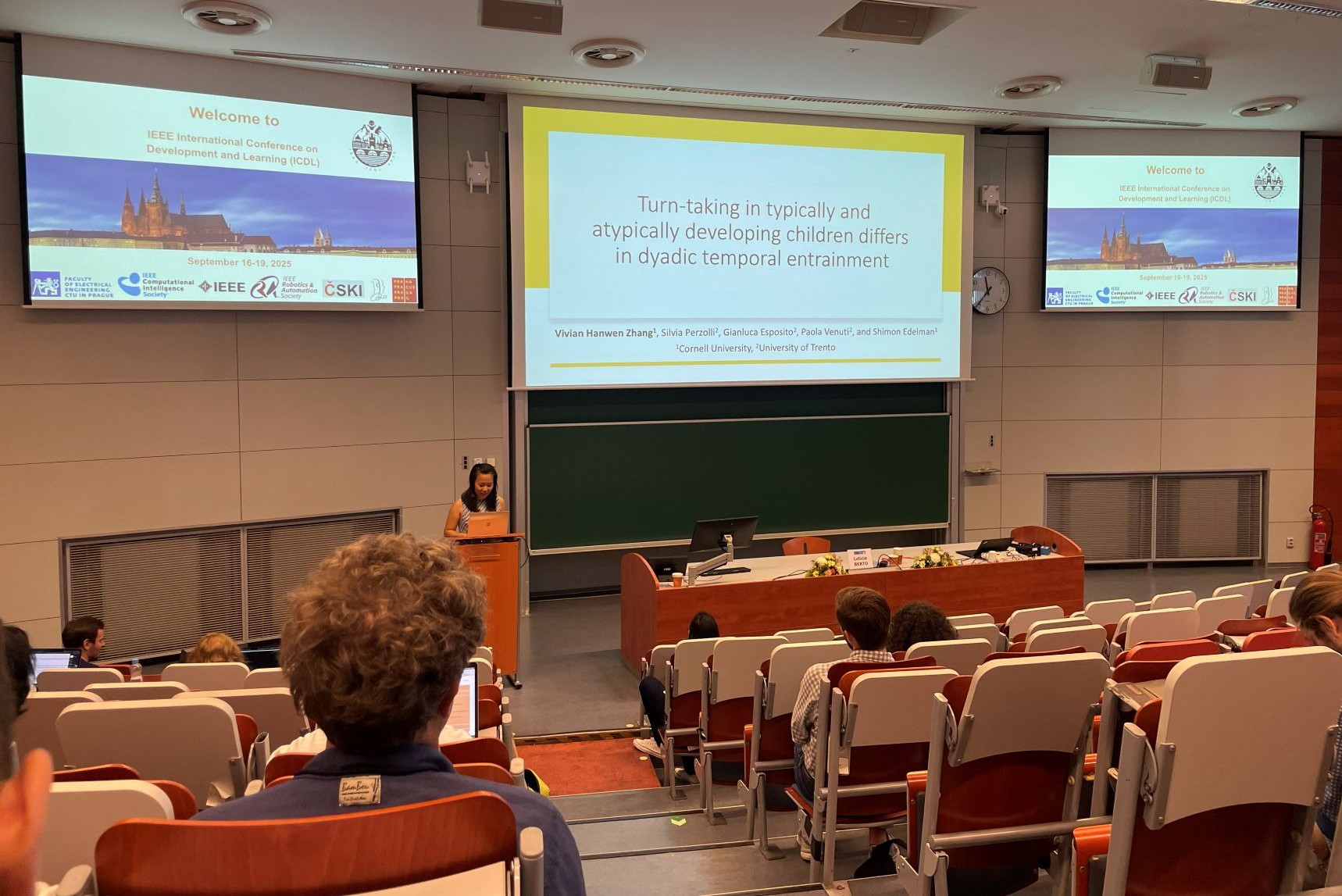
Vivian Zhang presented at the Institute of Electrical and Electronics Engineers International Conference on Development and Learning in September 2025. Photo courtesy of Vivian Zhang.
“The amazing thing about conversational turn taking is that we exchange turns so fast,” Zhang says. Gesturing to the device recording our conversation, Zhang says, “This is exactly how I study!”
Zhang records and annotates conversations across diverse pairings, even with parents and pre-linguistic infants who can only babble. Each shows a pattern of rapid, non-overlapping turns, she says.
Originally from Zhengzhou, China, Zhang has “kind of landed in the four corners of the U.S.” She earned her bachelor’s degree from the University of California San Diego, did a one-year research assistantship at Stanford University, earned her doctorate from Cornell University, and now she’s looking forward to the beaches of Tampa Bay.
The associate dean for professional development at Cornell, Colleen McLinn ’99, Ph.D., first introduced Zhang to Eckerd. McLinn is an Eckerd alum herself.
Zhang wants to incorporate her past research into the classroom too. Humans are highly social and sensitive to small things, like the pauses and timing of conversation, and she wants to incorporate these research findings into the classroom.
As for future work and engaging with research at the undergraduate level, there are two directions she’s aiming for.
Zhang noted potential collaboration with those in Eckerd’s renowned marine science program–ranked first in Florida and fifth in the country for undergraduate marine science, based on data from the Department of Education and prominent ranking sources. Many animal species exhibit turn taking in conversation too. Zhang would like to conduct interdisciplinary comparative research by recording dolphins’ social interactions and analyzing their turn-taking patterns.
Secondly, she’d like to embrace the interdisciplinary nature of the College by teaching how economic structure interacts with psychological processes. Zhang says she is excited to teach at the intersection of general education and psychology.
Though neurodivergence is not Zhang’s primary research background, it’s something she is ready to explore further.
Students in this course will learn about Autism Spectrum Disorder and other diagnoses under the neurodivergent umbrella. Rather than solely focusing on weaknesses, they’ll learn about strengths too. Students will read a “rather controversial journal paper” for the class. Released in June, the paper’s author, Uta Frith, Ph.D., questions whether autism has lost its meaning and suggests that as neurodiversity gains social attention, it functions more as a political and moral identity than a classification.
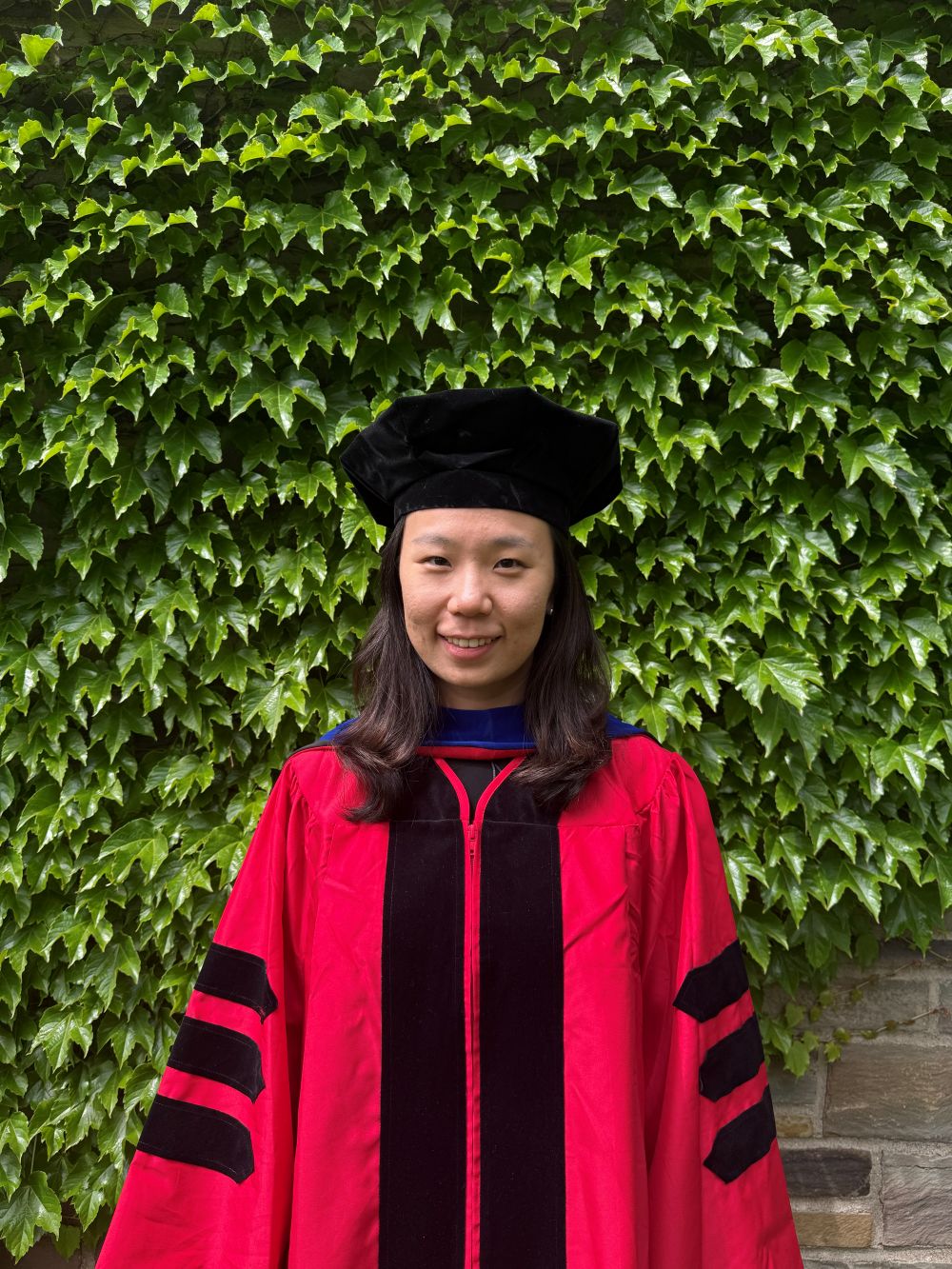
Vivian Zhang on the day of her graduation from Cornell University. Photo courtesy of Vivian Zhang.
“So I’m not only studying it as a psychological topic, but also a societal topic,” Zhang says. She wants to kick off the course with recent research that caused a lot of discussion online, she added.
Outside of work, Zhang enjoys cooking, caring for her monstera plant and watching “Ted Lasso.” For many years, she hiked the mountains of upstate New York. Now, she’s looking forward to snorkeling the waters of St. Pete.
As a kid, Zhang envisioned herself as an interviewer and talk show host, leading one-on-one in-depth conversations. Now, she sees that teaching is parallel to what she pictured, particularly because Eckerd’s student-to-faculty ratio of 11:1 gives students plenty of opportunities to express themselves in class.
When teaching, Zhang says she’s a sort of host: proposing a question and then giving the floor to the students.