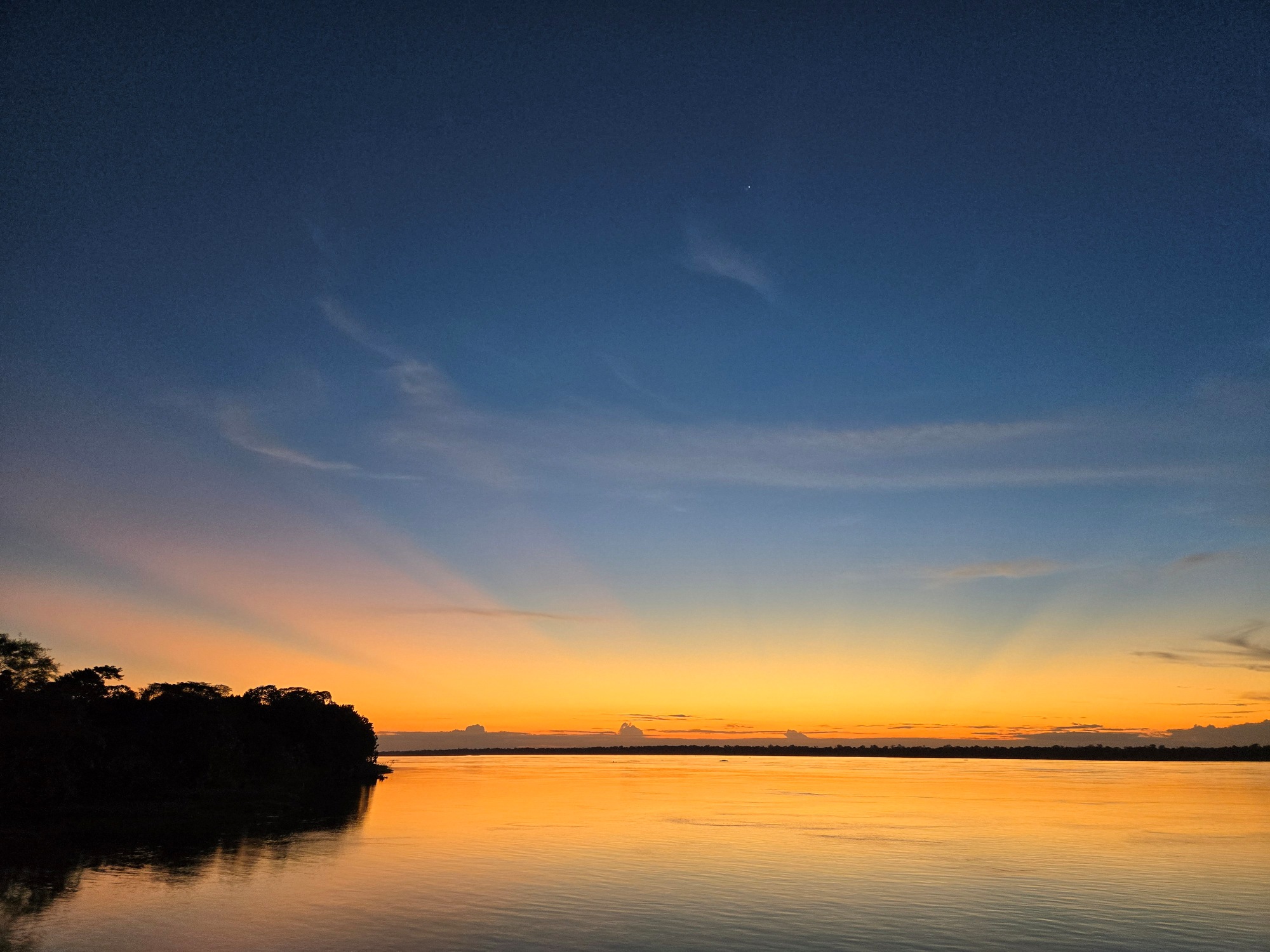
The sun sets in Vale do Javari. Photo by Gabriel de Oliveira.
It was a “master class in collaboration,” says Assistant Professor of Environmental Studies Amanda Hoffman-Hall, Ph.D., who co-authored a recently published research paper with 65 other authors across 57 institutions.
“Spiralling frontier threats in Indigenous Amazonia” brings attention to the critical nature of Indigenous lands for protecting Indigenous peoples, with a focus on the Vale do Javari Indigenous land in the western Brazilian Amazon. These lands are increasingly exposed to socio-environmental challenges, like violence, illegal resource extraction and deforestation, according to the paper. One of the paper’s 66 authors, Beto Marubo, is an Indigenous leader from the Vale do Javari Indigenous land.
“It is a scientific paper, but in many ways, it’s almost a call to action with all of us as signatories,” Hoffman-Hall says.
Though she was researching the Amazon, Hoffman-Hall never had to leave Florida.
She is a remote sensing scientist, who obtains information about objects or areas from a distance, usually from aircraft or satellites. Not only does this technology allow her to study a region without ever stepping foot there, but it makes research more accessible financially and for those who cannot physically conduct on-the-ground research, she says.
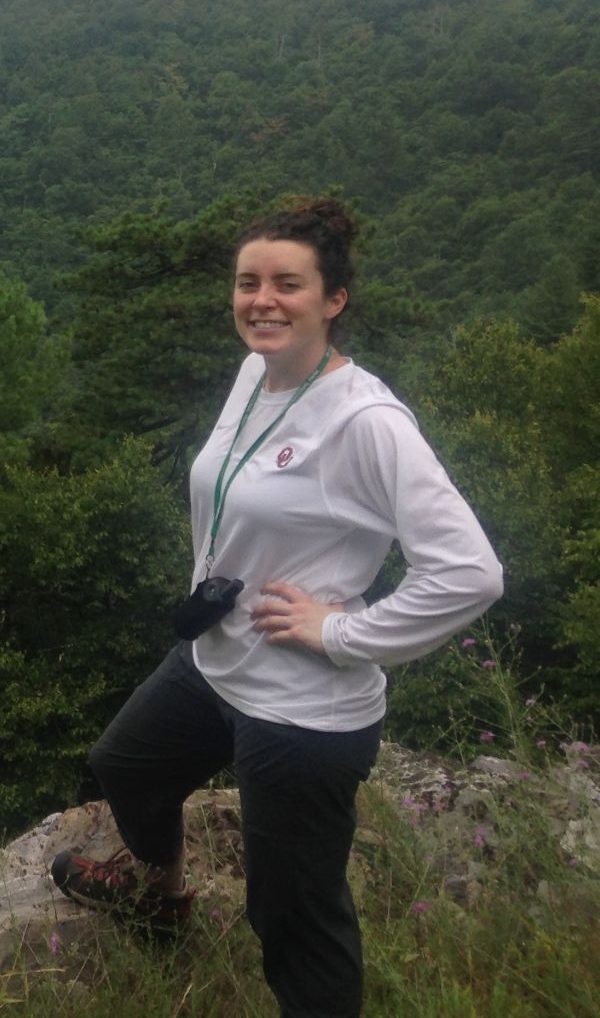
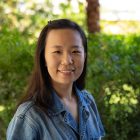
Amanda Hoffman-Hall, Ph.D., doing field work in Virginia. Photo courtesy of Amanda Hoffman-Hall.
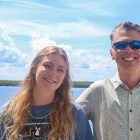
Eckerd College funded Hoffman-Hall’s visit to the Gulf Scholars Program conference at the University of Southern Alabama, where she met Gabriel de Oliveira, the research project leader. They immediately connected because they’re both remote sensing scientists studying forest dynamics with satellite data.
Hoffman-Hall shared the challenges Indigenous lands face. Though protected land, forest degradation, deforestation and illegal activities are accelerating rapidly just beyond its boundaries, she says. To put it in perspective, imagine a U.S. national park right next to an oil field, Hoffman-Hall suggests.
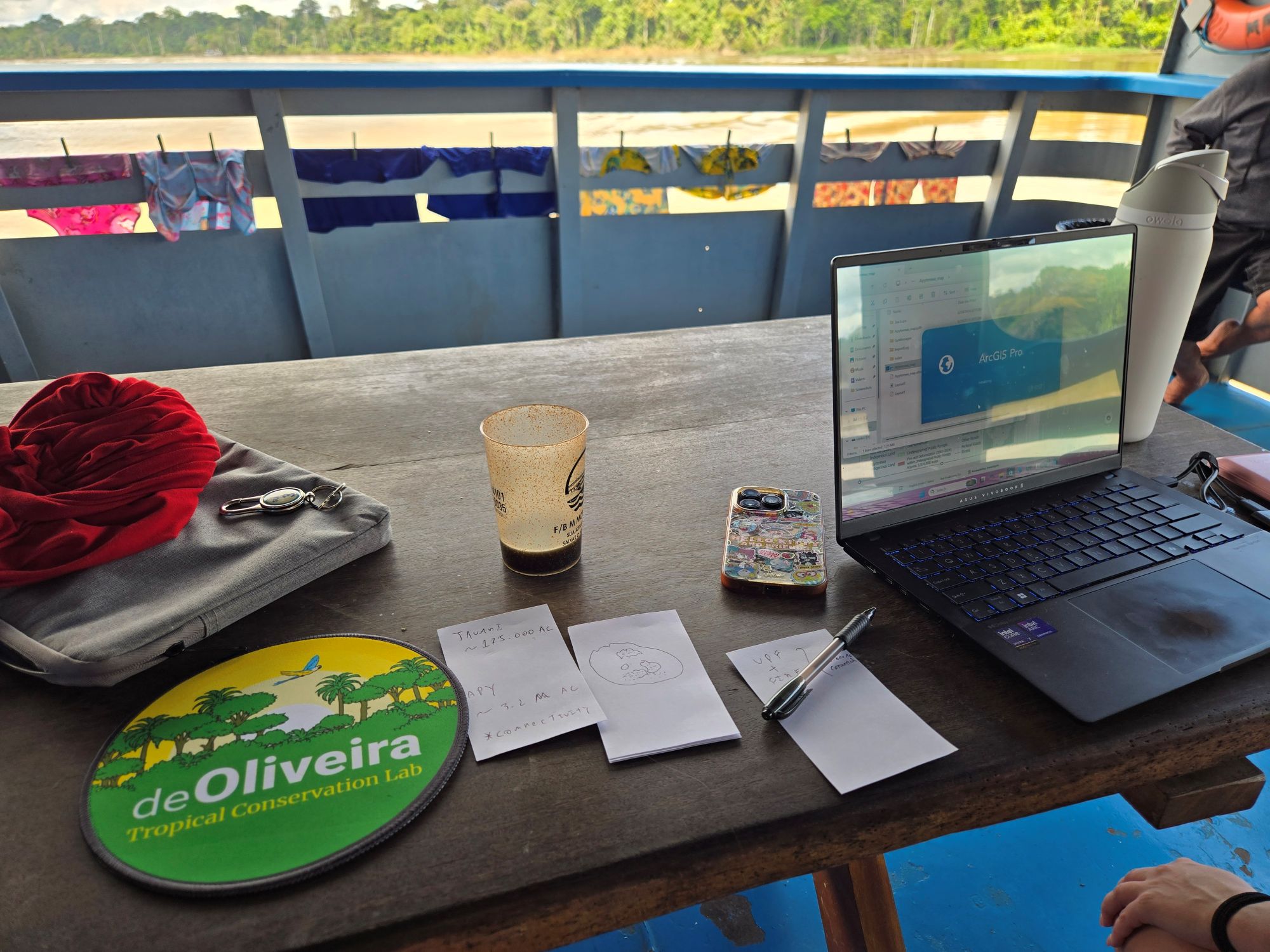
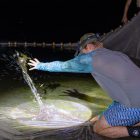
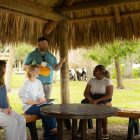
A work station at a recent research visit to Vale do Javari. Photo by Gabriel de Oliveira.
“When you are right up against all of that happening, how protected is your land, really?” she questions.
Hoffman-Hall is generally drawn to research because there are more tools and information at our disposal than ever before. She asks herself how she can use these to make the world a better place.
Protecting land is a key element of her work, but she raises the question of what this actually means. She recognizes that as the world changes, the solutions do too, and there is a need to challenge our assumptions. The natural and human worlds are often seen as separate. Wilderness is viewed as a place devoid of humans, especially in the U.S, she adds.
“A biodiverse community doesn’t necessarily have to be one that humans are completely extracted from,” she says.
For her students in the classroom, or who conduct paid research over the summer, Hoffman-Hall shows them a real pathway of taking their gained skills to positively impact people’s lives. It may not seem obvious in the classroom when a student’s computer crashes, or they don’t know the difference between a pixel and raster, she says, but there is a bigger picture.
One of Hoffman-Hall’s students who graduated in May is writing a paper on satellite-derived wildfire risk. The paper will hopefully help improve future wildfire models, she says, which the student worked on during their time at Eckerd.
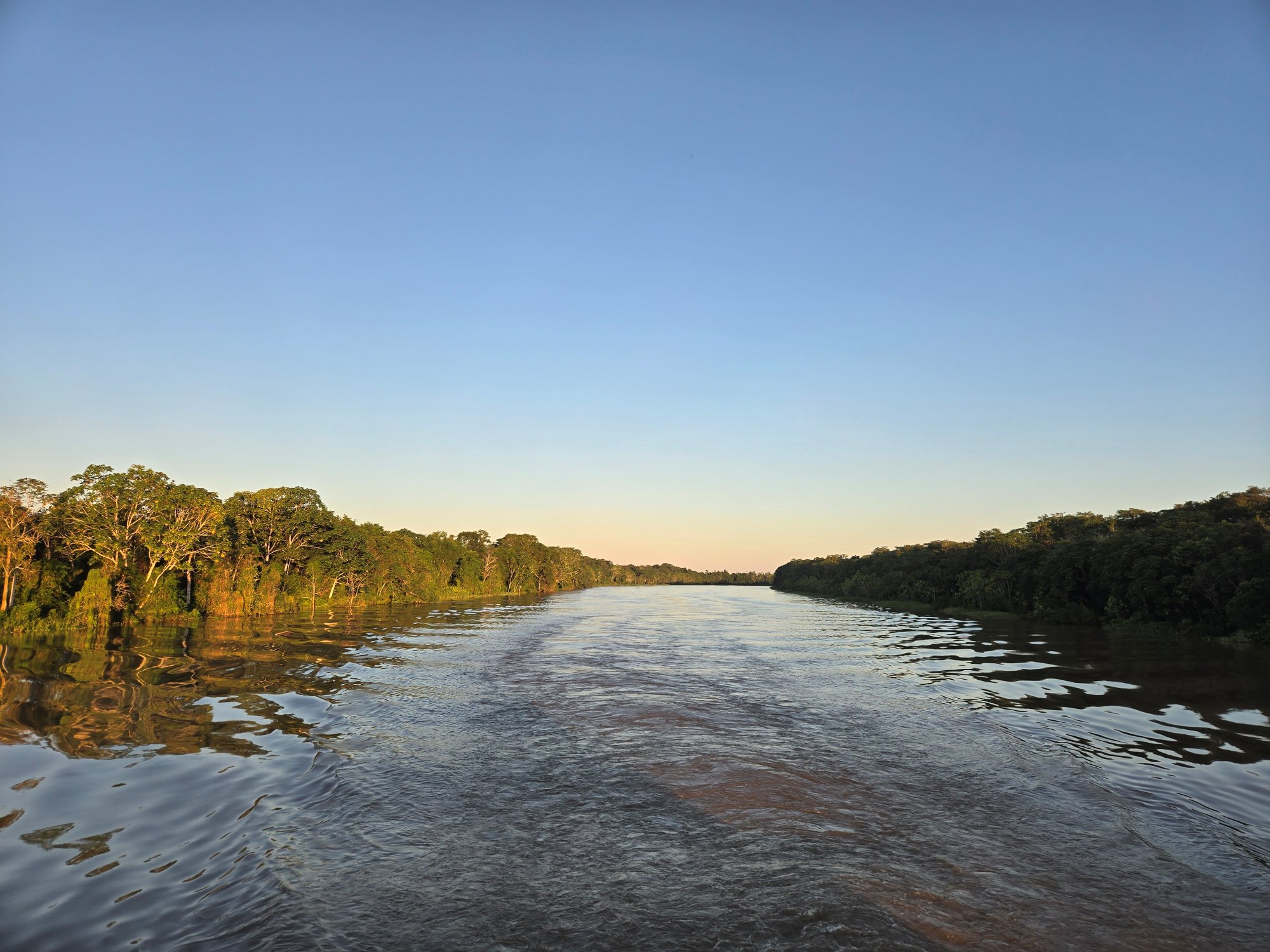
A river running through the Vale do Javari Indigenous land in the western Brazilian Amazon. Photo by Gabriel de Oliveira.
In the classroom, students even created a project close to home: identifying campus parking spots. The Facilities Management office even reached out to ask how many parking spots are on campus.
Hoffman-Hall has long been passionate about geography–which she earned her bachelor’s degree in–because it doesn’t force her to focus on one thing. She’s a “big picture” thinker. She recalls her first geography conference as a student, where one presentation was about a landslide’s impact on a watershed’s sedimentation. At the same conference, another presentation showed the mapping of basketball players’ movement on the court, and another analyzed the use of distance in horror films.
Another reason she admires the seemingly endless roads one can take in geography is that it’s not devoid of humans. Geography, like her co-authored research, accounts for the environment and people. Not one versus the other.
“We are a part of the Earth system,” she says, “Just as much as a blade of grass is a part of the Earth’s system.”