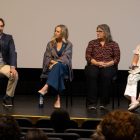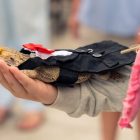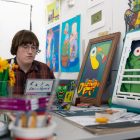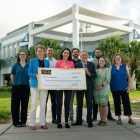

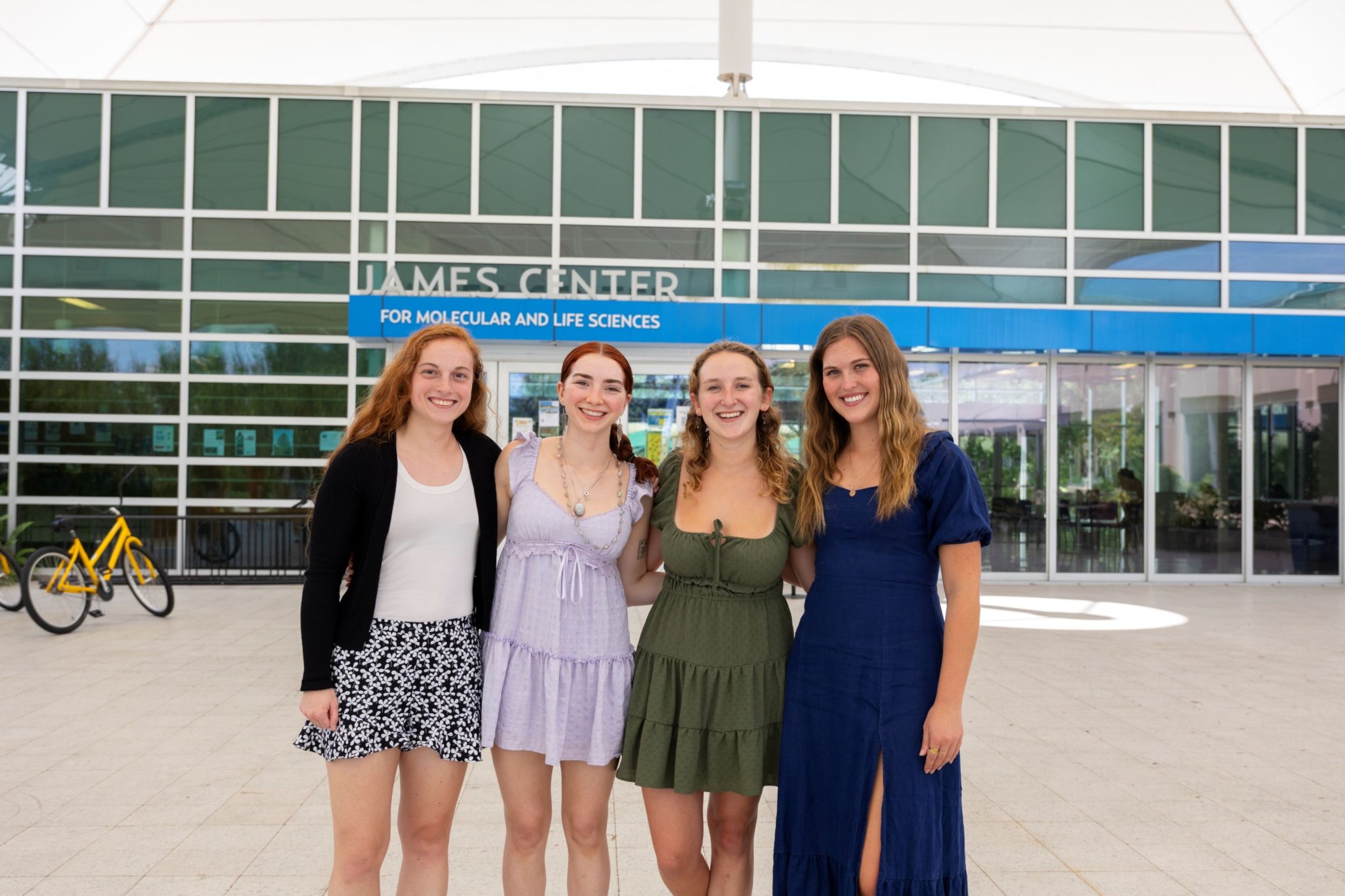
Eckerd College biology students Alyssa Ferrero, Madeline Loiselle, Rebecca Meberg and Claire Walker have all been accepted to veterinary school. Photos by Penh Alicandro ’22.
Claire Walker grew up spending summers on her grandmother’s farm in northern Indiana. It’s where she got comfortable working with her hands and developed a connection to animals—one that eventually led her to pursue a biology major on the pre-veterinary track at Eckerd College.
“I have always wanted to figure out a way to blend my compassion for the natural world and my love of science,” she says. “The most logical route was veterinary care.”
This year, Walker is one of four Eckerd seniors—all biology majors—accepted to veterinary school.
Walker will attend Midwestern University College of Veterinary Medicine, a program known for its hands-on clinical training model. Alyssa Ferrero will attend Ross University School of Veterinary Medicine, an institution located in the Caribbean. Madeline Loiselle will attend Michigan State University College of Veterinary Medicine, one of the nation’s most established veterinary programs. Rebecca Meberg will attend the University of Illinois College of Veterinary Medicine, a top-ranked program known for its breadth of specialties and clinical training.
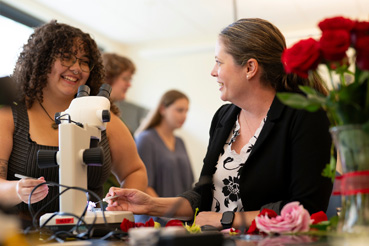
Denise Flaherty, Ph.D., associate professor of biology and Eckerd’s pre-health advisor, describes the veterinary school application process as “extremely exhaustive,” noting that average acceptance rates typically fall between 10% and 15%.
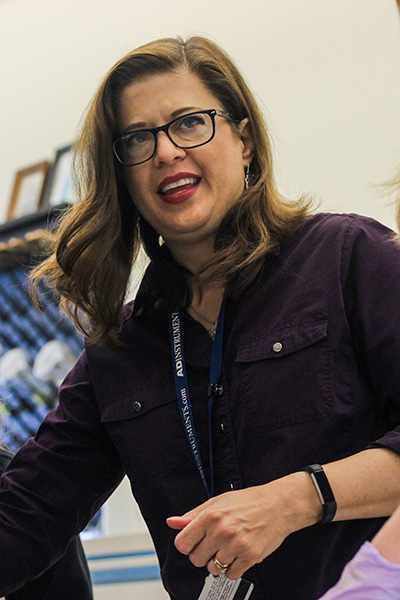
Denise Flaherty, Ph.D., Eckerd’s pre-health advisor, praised the rigor of the College’s pre-vet track.
Standing out in the applicant pool requires both academic rigor and extensive hands-on experience, Flaherty explains. Students must complete demanding science coursework and maintain strong GPAs, while also gaining real-world experience working with animals and veterinarians. Because those expectations are so high, many applicants take a gap year—or several—to build the necessary experience before applying.
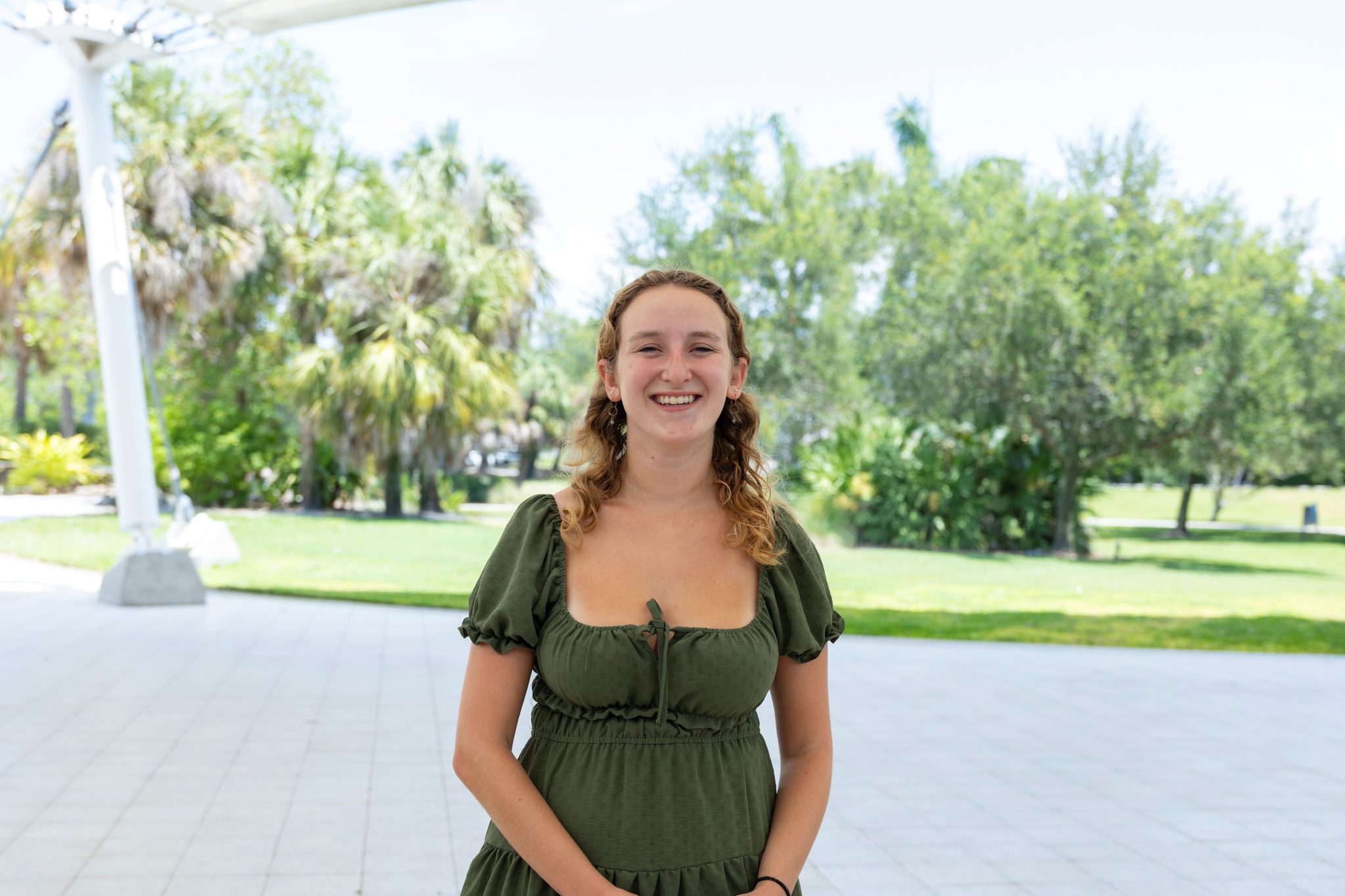
Rebecca Meberg will attend the University of Illinois College of Veterinary Medicine and plans to become a mixed animal veterinarian in a rural community.
“That’s what makes this such a banner year at Eckerd,” Flaherty says. “To have four college seniors apply to vet school and all be accepted is spectacular.”
Flaherty attributes that success in large part to Eckerd’s biology program, which offers a rigorous sequence of animal-focused coursework through the pre-vet track. Classes range from biochemistry, a requirement for every veterinary program in the United States, to specialized offerings in vertebrate anatomy, comparative animal physiology and animal nutrition.
To stand out even more in the applicant pool, some biology majors on the pre-vet track choose to minor in animal studies. This program explores not just how animals function biologically, but how they behave and communicate.
“Courses in animal studies give students a perspective on the behavioral side of animals and animal-human interactions, which adds so much value,” says Flaherty.
But the preparation doesn’t stop in the classroom. Eckerd also provides students with a wide range of hands-on opportunities, including field research, internships and volunteer opportunities with places like the Marine Mammal Pathobiology Lab.
Operated by the Florida Fish and Wildlife Conservation Commission, the Marine Mammal Pathobiology Lab is one of only a handful of state marine mammal field stations. Here, teams respond to sick and injured dolphins and manatees, conduct necropsies and collect data that informs conservation and policy decisions.
For Rebecca Meberg, her year volunteering at the lab became a defining part of her college experience, providing hands-on training in necropsy work and marine mammal rescue. She says the work was also a frequent topic of discussion during her veterinary school interviews because of its specialized nature.
Beyond the lab, Meberg gained experience across a range of veterinary settings, including volunteering in small animal clinics, shadowing an equine veterinarian, and interning at Zoo Tampa’s animal hospital. She presented her research at conferences and symposiums, contributed to an in-progress manuscript and took on leadership roles on campus—experience she credits with helping her build a strong, well-rounded veterinary school application.
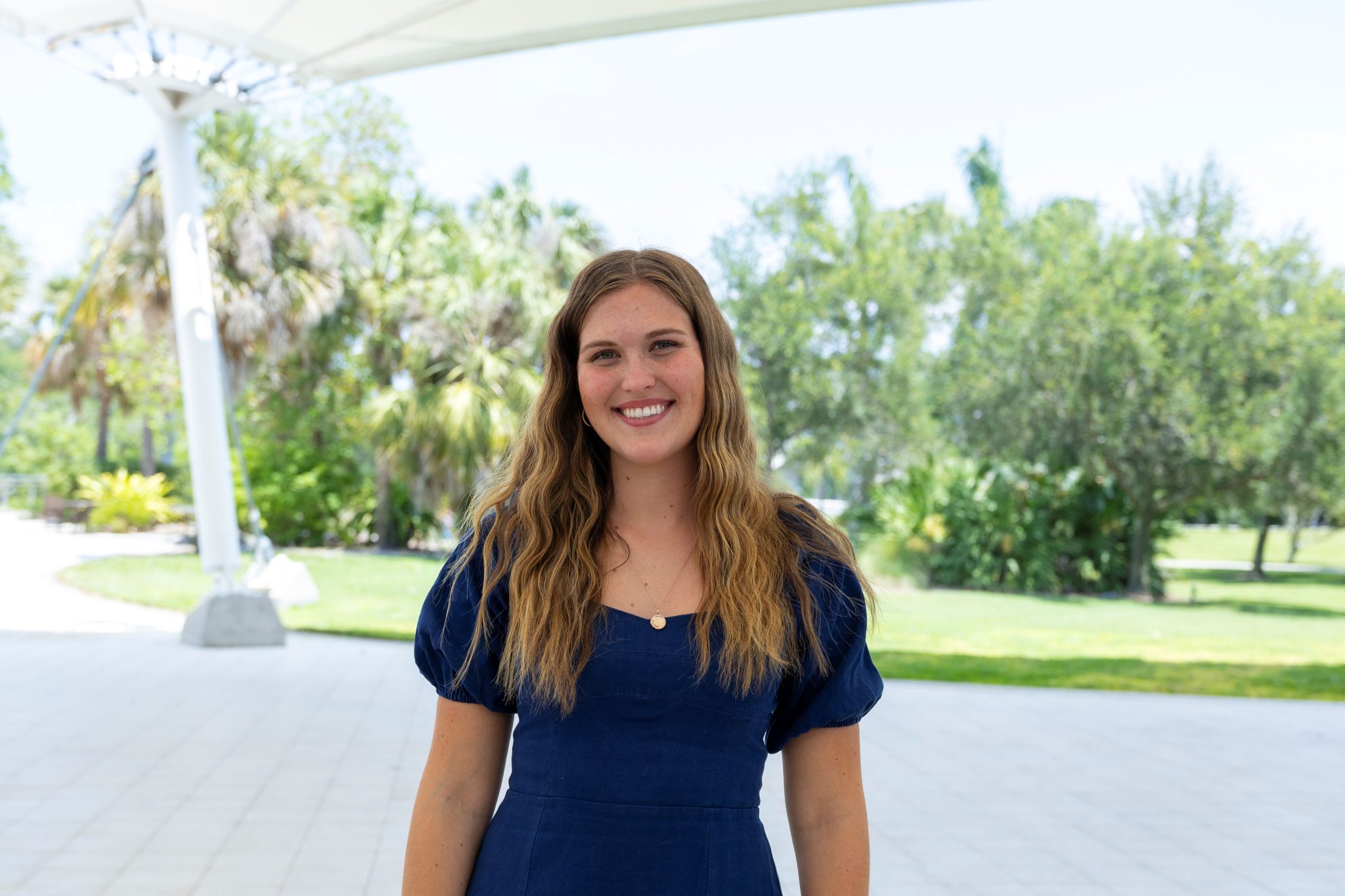
Claire Walker will attend Midwestern University College of Veterinary Medicine and plans to work in farm animal medicine after graduating.
“Eckerd provided a diverse range of opportunities that allowed me to explore my interests, build practical skills, and learn from incredibly supportive mentors who guided me through both the highs and lows of my journey,” she says.
Now, Meberg is focused on where her path leads next. After graduating from the University of Illinois College of Veterinary Medicine, she hopes to pursue a career as a mixed animal veterinarian in a rural community, where access to care can be limited.
“I am particularly passionate about science communication and hope to make veterinary medicine more approachable for clients by clearly explaining the reasoning behind diagnoses, treatments and preventative care,” she says. “Ultimately, I want to improve both animal welfare and client understanding, ensuring that owners feel informed, supported and empowered in their animals’ care.”
Walker is charting her own course as well. She plans to begin in farm animal medicine before eventually transitioning into wildlife conservation and rehabilitation, whether through nonprofit organizations, zoos or aquariums.
“Regardless of where I end up,” she says, “I hope to maintain a work-life balance where I can still travel and think outside, which is exactly what I learned from my time at Eckerd.”