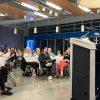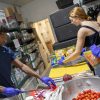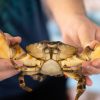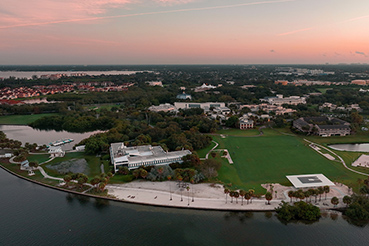
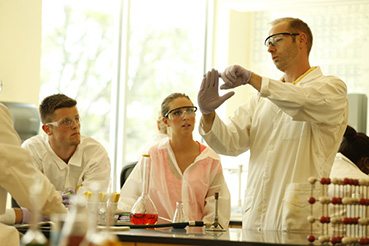
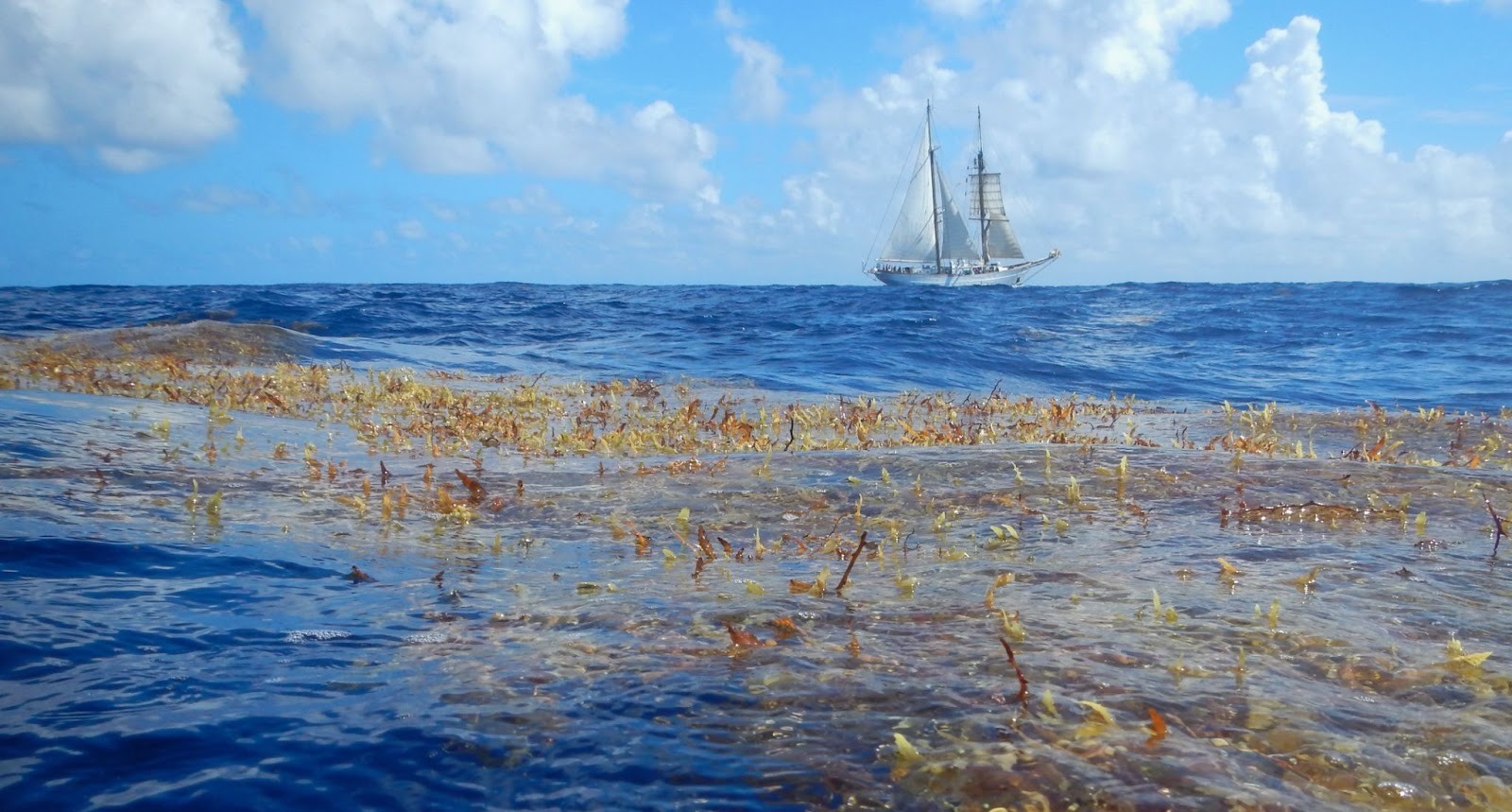
Sea Education Association’s sailing vessels have continuously conducted oceanographic research for decades, including sampling Sargassum with daily net tows. Photos courtesy of Chris Nolan
Since the days of Christopher Columbus, the two-million-square-mile Sargasso Sea in the middle of the Atlantic Ocean has been known for large concentrations of giant floating mats of Sargassum seaweed. “There are mentions of it in his ship’s logs,” says Amy Siuda, Ph.D., professor of marine science at Eckerd College. “But since 2011, Sargassum has been inundating the Caribbean and parts of the Gulf of Mexico, while concentrations in the Sargasso Sea are dropping. That’s a major concern.”
A brown macroalgae, Sargassum is described as the rainforest of the sea, Siuda explains. “It’s an oasis in the middle of the open ocean. Turtles and crabs use Sargassum mats as a place to stay safe, mahi-mahi and tuna feed beneath, and seabirds rest on them. The observed decline might upend and change the ecosystem in the Sargasso Sea. Sargassum inundations are clearly changing the ecosystem in the Caribbean, covering the coral reefs, blocking sunlight and decaying on beaches.”
To understand how and why the shift is taking place, a team of researchers from University of South Florida’s College of Marine Science led by Professor of Oceanography Chuanmin Hu, Ph.D., Jeff Schell, Ph.D., and Deb Goodwin, Ph.D., from Sea Education Association, along with Siuda from Eckerd College (formerly at Sea Education Association), combined satellite imagery with decades of field observations to investigate this complex ocean phenomenon.
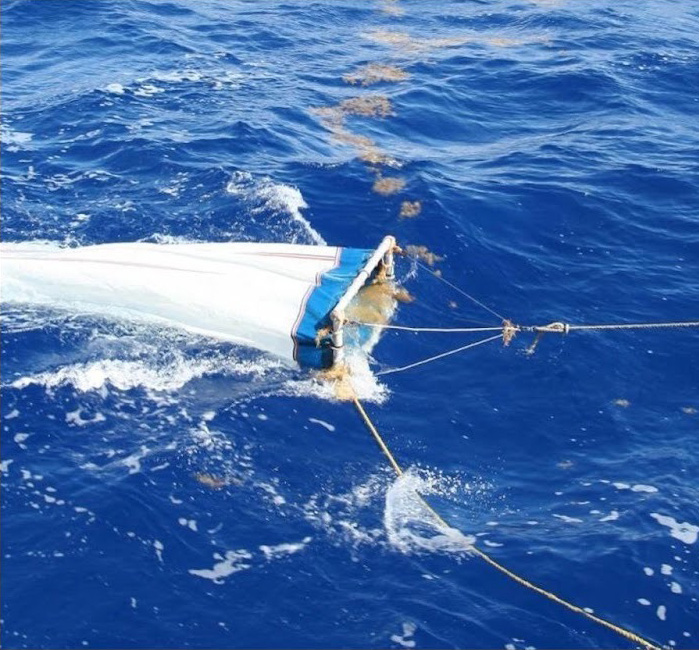
The change in Sargassum location could cause serious problems for the ecosystems.
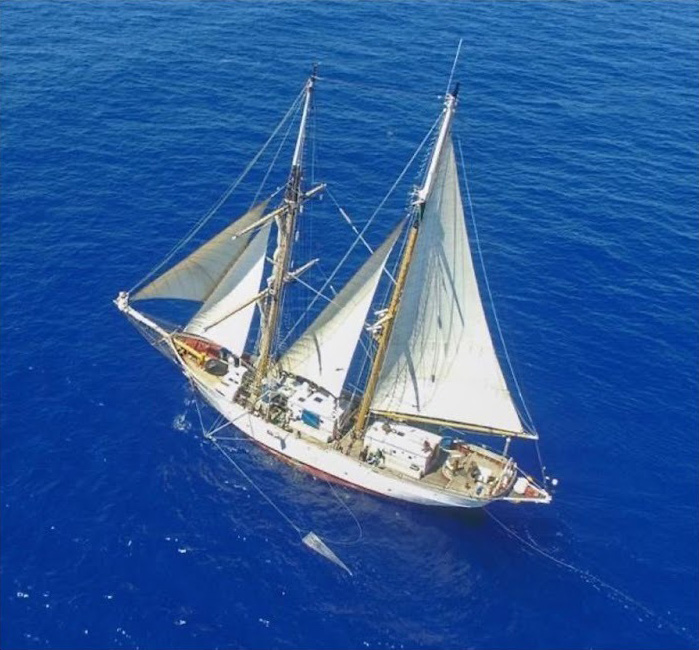
The Sea Education Association has been collaborating with university-based researchers to study the issue.
Their research, titled “Dramatic decline of Sargassum in the north Sargasso Sea since 2015,” was published recently in Nature Geoscience, a monthly peer-reviewed scientific journal that covers all aspects of the earth sciences. The report states that in 2011 “the Sargassum footprint expanded to include the Great Atlantic Sargassum Belt in the tropical Atlantic, but little is known about how Sargassum in the Sargasso Sea changed thereafter. Here we use remote sensing and shipboard data to show that Sargassum biomass in the north Sargasso Sea has decreased markedly over the past 10 years due to changes in ocean temperature regimes, specifically in the Gulf of Mexico.”
Siuda has been observing Sargassum in the Atlantic since 1995. She explains that colleagues at USF named this new abundance in the tropical Atlantic region the Great Atlantic Sargassum Belt (GASB). Occurring since 2011 in satellite data, the GASB appears to initiate each year in the eastern tropical Atlantic, spreading across the Atlantic into the Caribbean and eventually into the Gulf of Mexico.
This new paper uses ocean-basin-scale satellite data to document the Sargassum decline in the Sargasso Sea—its historical location.
Extensive shipboard observations of abundance, collected on annual voyages by Sea Education Association between New England and the Caribbean, corroborated the remote-sensing-derived findings. “However, the more nuanced field records of which Sargassum varieties were present [there are three common ones] and in what proportions really helped the team explain potential mechanisms for the change.”
What triggered the GASB, Siuda says, remains unclear. “There are multiple hypotheses suggesting temperature and nutrients are fueling the growth in the tropical region. There is still so much we don’t know.”