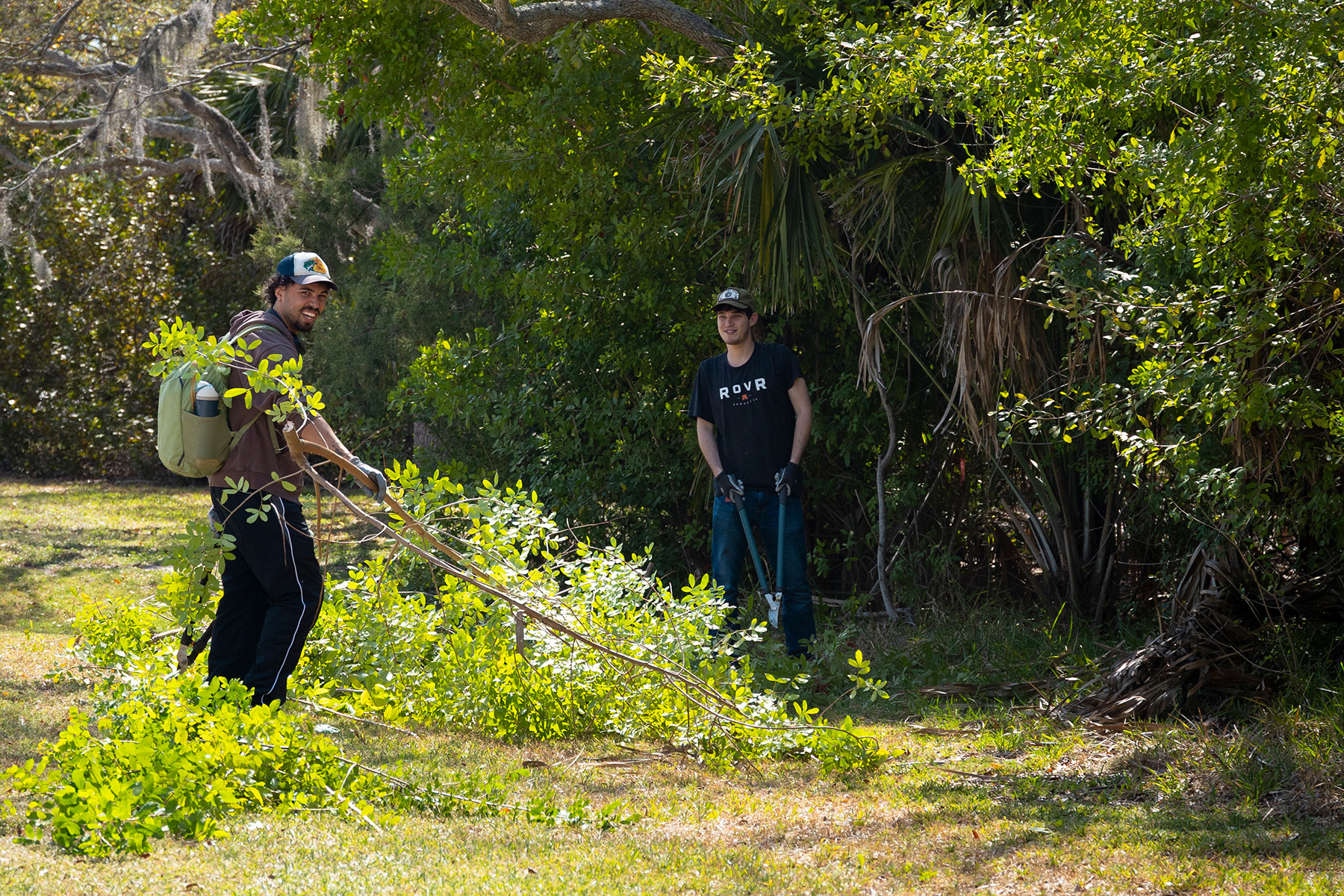
Conservation volunteers gathered at Eckerd College on March 26 to remove invasive Brazilian peppertrees from the College’s campus. Photos by Penh Alicandro ’22
The shovels and pruning shears were waiting, the air was starting to cool, and a record number of people were ready to pick their way through the Eckerd College’s palm hammocks and get to work. A perfect day for hunting Brazilian peppertrees on campus.
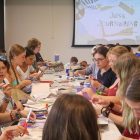
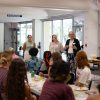
Tyler Cribbs ’16, Ph.D., assistant professor of environmental studies, gave a quick tutorial on what Brazilian peppers look like and why they’re so destructive to the environment. And then more than two dozen Eckerd students and a dozen volunteers from Duke Energy Florida set out on a brilliant late-March afternoon to take part in the College’s annual Brazilian Pepper Pull.
Eckerd College President Jim Annarelli, Ph.D., dressed in jeans and an Eckerd T-shirt, grabbed some shears and joined in.
The Brazilian peppertree is like something out of a 1950s science fiction movie. According to the Florida Department of Agriculture and Consumer Services, the Brazilian peppertree “is estimated to have invaded over 700,000 acres in Florida, including large swaths of Everglades National Park.
“The environmental damage caused by Brazilian pepper is profound. It rapidly colonizes disturbed areas to form dense, single species stands that shade out and eventually exclude native plant species, reducing wildlife diversity. In the same family as poison ivy, Brazilian pepper plants contain chemicals that can cause skin and respiratory irritation in sensitive individuals.”
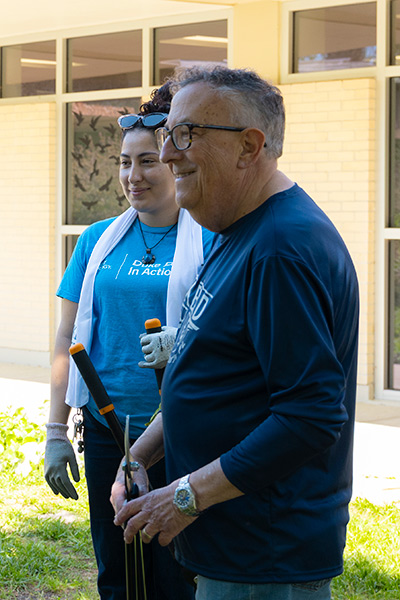
Eckerd College President Jim Annarelli joined the Eckerd College Conservation Corps at the annual Brazilian peppertree pull.
The tree was first introduced to Florida in the 1840s largely because its bright red berries and green foliage were often used as Christmas decorations. But over time, the relationship changed. The Brazilian peppertree, including the seed, is now prohibited from sale, transport, or planting in Florida, according to the FDACS Noxious Weed List. It is also classified as a Category I pest by the Florida Exotic Pest Plant Council.
On the Eckerd College campus, the battle to control the Brazilian peppertree has been waged for several years, highlighted by the annual Brazilian Pepper Pull. Typically, the event has been hosted by the Eckerd College Organization of Students’ Environmental Responsibility Committee once a semester.
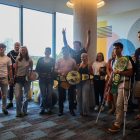
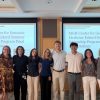
This year, with help from a recent $25,000 grant from the Duke Energy Foundation, Cribbs added his newly formed Eckerd College Conservation Corps, along with members of Delta Sigma Pi, the coed business fraternity at Eckerd. The grant enabled the College to purchase gloves, shovels, shears and a golf cart to haul debris. The grant also helped fund student environmental internships. Duke Energy Florida President Melissa Seixas ’92, an Eckerd alumna and honorary trustee, was instrumental in facilitating the grant.
Carlie Taylor, an outage follow up specialist at Duke Energy Florida, jumped at the chance to join the pulling event.
“Personally, I have a lot of environmental interests. I went to college and had a minor in zoology to go along with my degree in mechanical engineering that I use as an engineer for Duke,” she explained.
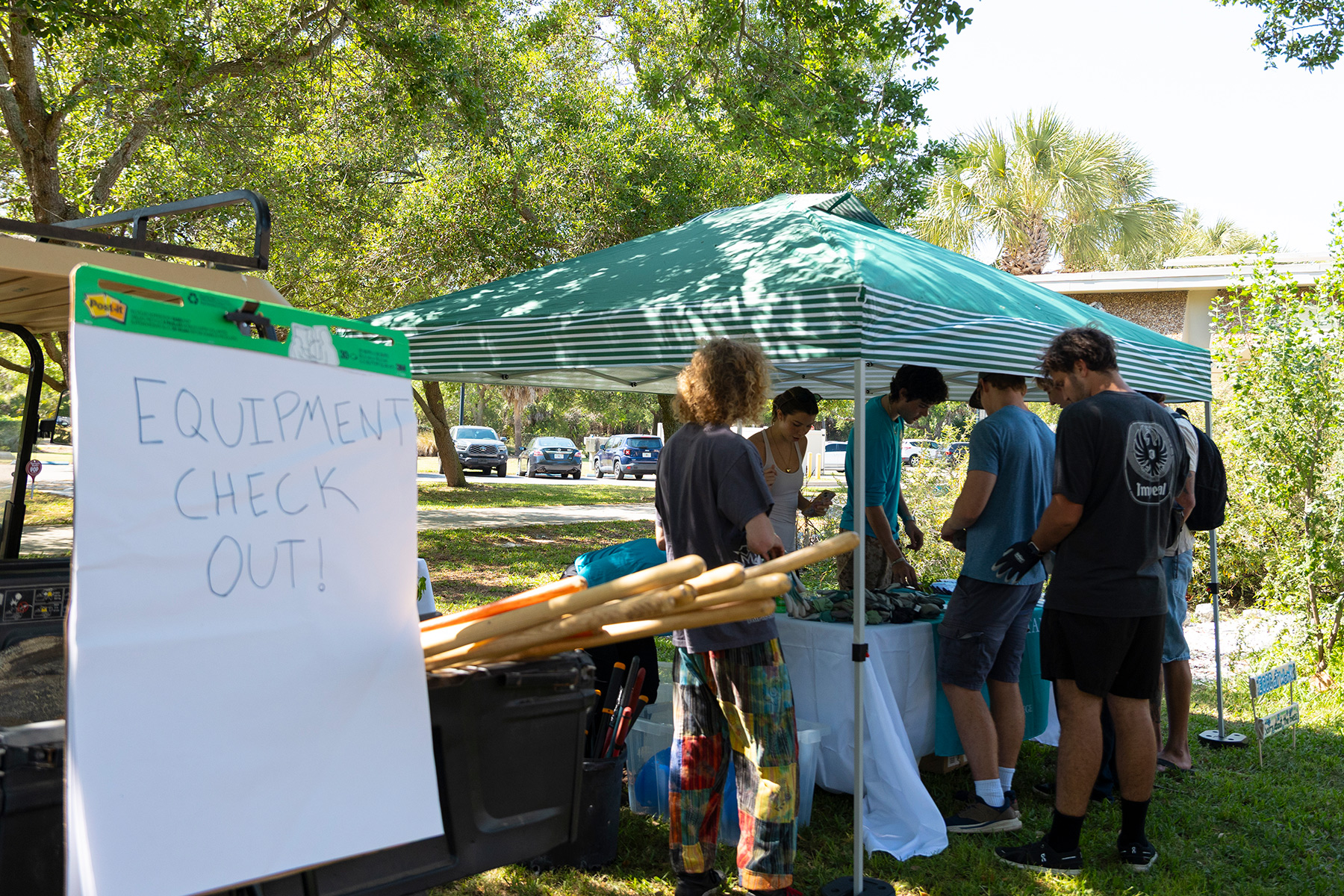
The supplies were funded by ay a $25,000 grant from Duke Energy Florida.
“I really enjoy doing volunteer work—especially outdoors like this. Within the community, Eckerd College is a place where we work regularly. It’s a place we’ve seen during storm responses and regular work. So, it’s really nice to come out and support our local community this year through the environmental clean up.”
Key to the Brazilian Pepper Pull effort, Cribbs says, is learning about and recognizing the Brazilian pepper as an invasive species. “You know how you can be looking for a certain model of car and you don’t see it, and then it seems like you see that model of car everywhere? It’s the same point. It can be hard to see how big a problem that species is, so if you know and can recognize the plant, maybe the next time you see it, you take an extra two seconds to pull it out of the ground.
“Besides talking about invasive species, this lets students be a part of the process and get their hands dirty. And a thank you to Duke Energy. It definitely helps that now we don’t have to borrow everything from the Community Farm. But Duke also brought more than a dozen people. That really shows that they don’t just want to provide financial help. It’s a great show of overall support.”
Grace Albrecht ’25, graduated from Eckerd last December with a degree in environmental studies and minors in animal studies and biology. She now works as a rewilding paraprofessional for the College and helped organize and facilitate the Pepper Pull. “An invasive species like the Brazilian peppertree is terrible for an ecosystem,” she says. “They promote soil erosion, compete with native species and are harmful to wildlife.
“It’s important that we make students, staff and faculty aware of the problem so we can all work together to try to stop the spread of the species.”
Tate Mullineaux, a junior environmental studies major from Fairfield, Connecticut, spent much of Thursday handing out maps and directing people to areas where the peppertrees are located. He works as a native plant apprentice, a job funded through Eckerd’s Office of Sustainability. He typically goes into the palm hammocks and marks the places where the Brazilian peppers were removed to help build a database to monitor if and where the peppers are coming back.
“Tagging the peppers provides a living document that can be passed on and used to keep track over the years,” he says. “We can see where they’re growing and how aggressively they’re coming back.
“This year’s Pepper Pull was amazing,” he adds. “It was definitely the largest turnout we’ve had. The Duke Energy volunteers worked super hard, and I got to talk with Dr. Annarelli. He was very clearly inspired by the work being done.”
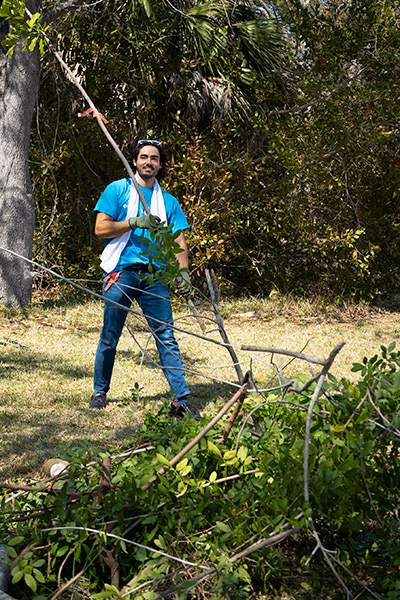
Collected plants were disposed of and the locations were marked and monitored for new growth.
In his spare time, Tate works with the non-profit Stewards of Our Urban Lakes, helping to rid local lakes of invasive plants like water lettuce. “I would love to be able to continue the habitat restoration work I’m doing with nonprofits or environmental consulting,” he says. “The Brazilian peppertree is just a plant to a lot of people and that’s as far as it goes. But plants provide ecosystem service, and some plants degrade those systems.
“I grew up on a family farm and I’ve always cared about nature. And I just feel proud when I walk past an area we’ve helped open up. I’m proud knowing I’m making a difference in a place I care about. It’s rewarding on a soulful level.”
After the day’s work was done and the tools had been put away, President Annarelli reflected on what had been accomplished. “It is absolutely essential to the health of its biotic communities to continue to make progress in the control of invasive plant species on campus. I am so very grateful for the leadership of professor Tyler Cribbs as well as for the excellent work of the Eckerd students and partners from Duke Energy that made this year’s Brazilian Pepper Pull such a great success.”