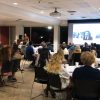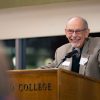
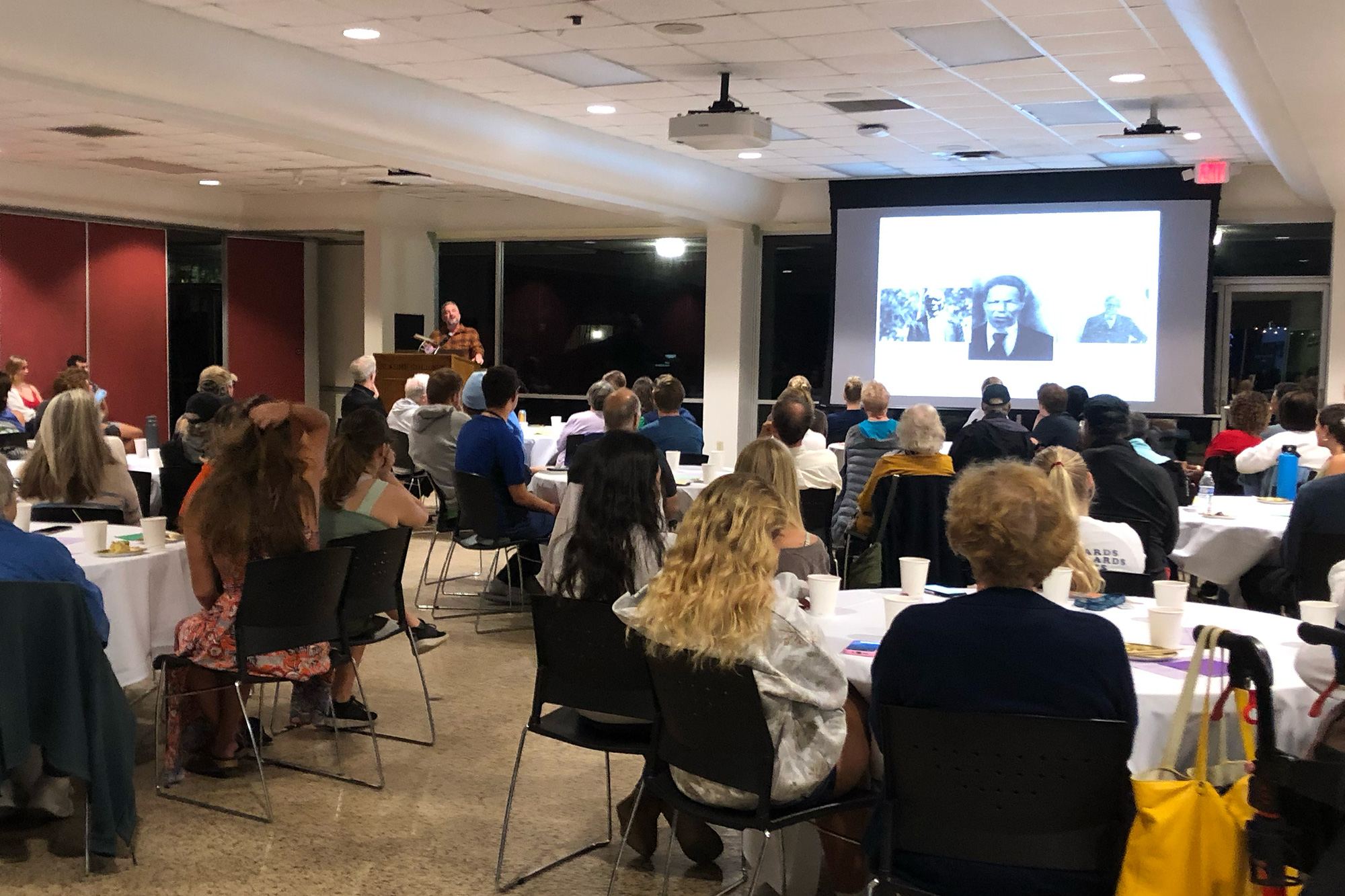
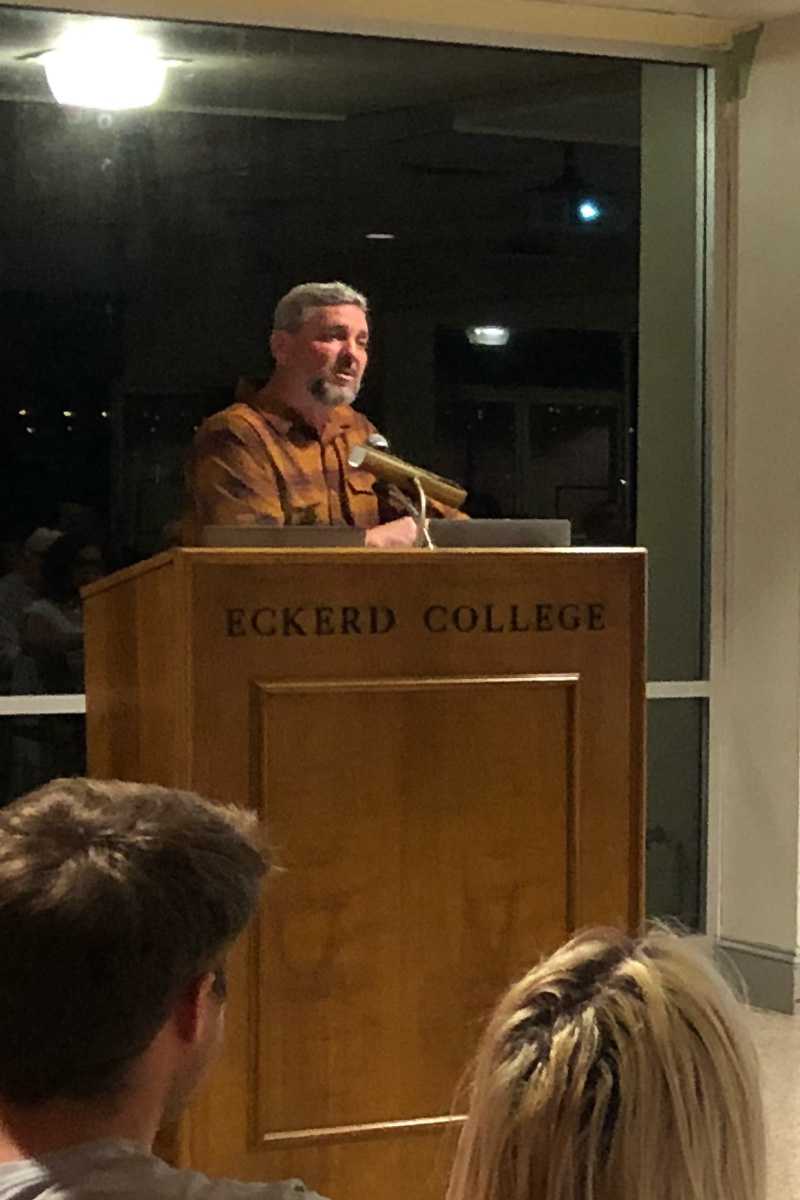
Author Ben Raines explained to an audience of students, faculty, staff and guests the process of locating and exhuming The Clotilda—the last American slave ship on record. Photo courtesy of Amanda Hagood
Over lunch with Eckerd College students, author Ben Raines discussed how he discovered the last known American slave ship and the story behind his book, “The Last Slave Ship: The True Story of How Clotilda Was Found, Her Descendants, and an Extraordinary Reckoning.”
Raines did not set out to find the last known American slave ship. A friend suggested it.
“I said, ‘Is it missing?’” Raines told students during a campus talk on Feb. 17. “He said, ‘Yeah.’ I said, ‘That’s nuts. That’s like looking for pirate treasure.’”
In 2018, Raines located the vessel after years of historical research and fieldwork, solving a mystery that had persisted for more than 160 years. His discovery came before major institutions, including the Smithsonian, had begun their own research.
“I typed Clotilda into Google, read everything I could find, and then ordered all the history books about it,” he said. “I was totally hooked.”
“This is the only intact slave ship ever found in the American slave trade,” Raines said. “For those reasons, it’s an important story.”
Raines’ work was featured heavily in the Netflix documentary, “Descendant.”
The lunchtime talk, sponsored by the Eckerd College Gulf Scholars Program, allowed students to ask questions about the book and the investigative journalism process, as well as his discovery, research, and the history of Africatown—a settlement in Mobile, Alabama.
The Clotilda arrived illegally in Mobile in 1860, more than five decades after Congress outlawed the transatlantic slave trade. Its survivors later founded Africatown, a community built by formerly enslaved Africans determined to preserve their culture.
“They couldn’t get back to Africa,” Raines said. “So they built Africa in America.”
“From their own mouths, we have their life stories,” Raines said. “These are the only records of those kinds of stories in the historic record.”
During lunch, students were able to ask questions about the book and the reporting process used to uncover the Clotilda.
For one student in attendance, the lunch was insightful in shedding light on a chapter of American history she had never encountered. Mia Henrich, a senior environmental studies and literature student from Alpharetta, Georgia, said the lunch broadened her understanding of both history and conservation.
“It was a really interesting experience, and I was glad for the opportunity to learn about a topic I’d never heard about before,” Mia said. “Ben Raines was an excellent and compelling speaker who helped remind me how important history is to conservation.”
What began as an unlikely suggestion became an investigative journalism treasure hunt.
“You never know what’s going to be important,” Raines explained. “I did not think I was going to find a ship.”
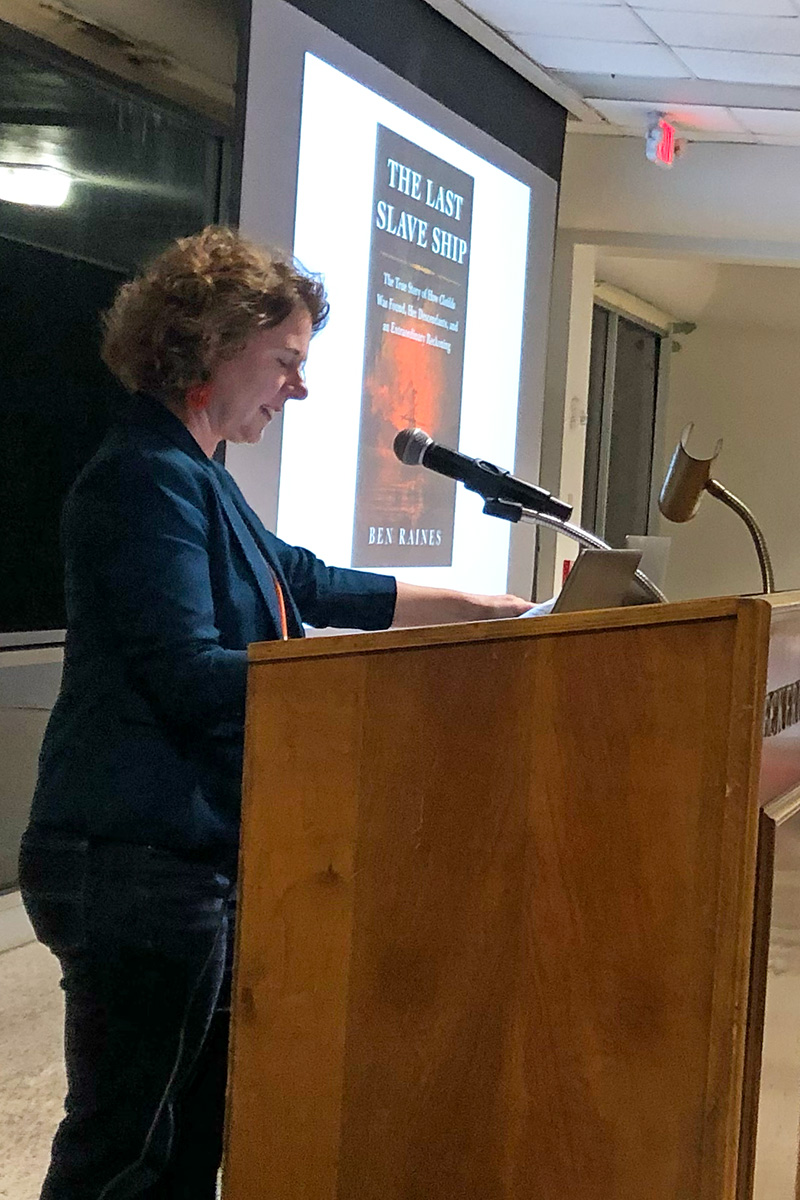
Assistant Professor of Anthropology Anna Guengerich, Ph.D., introduced Raines before the talk.