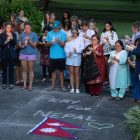

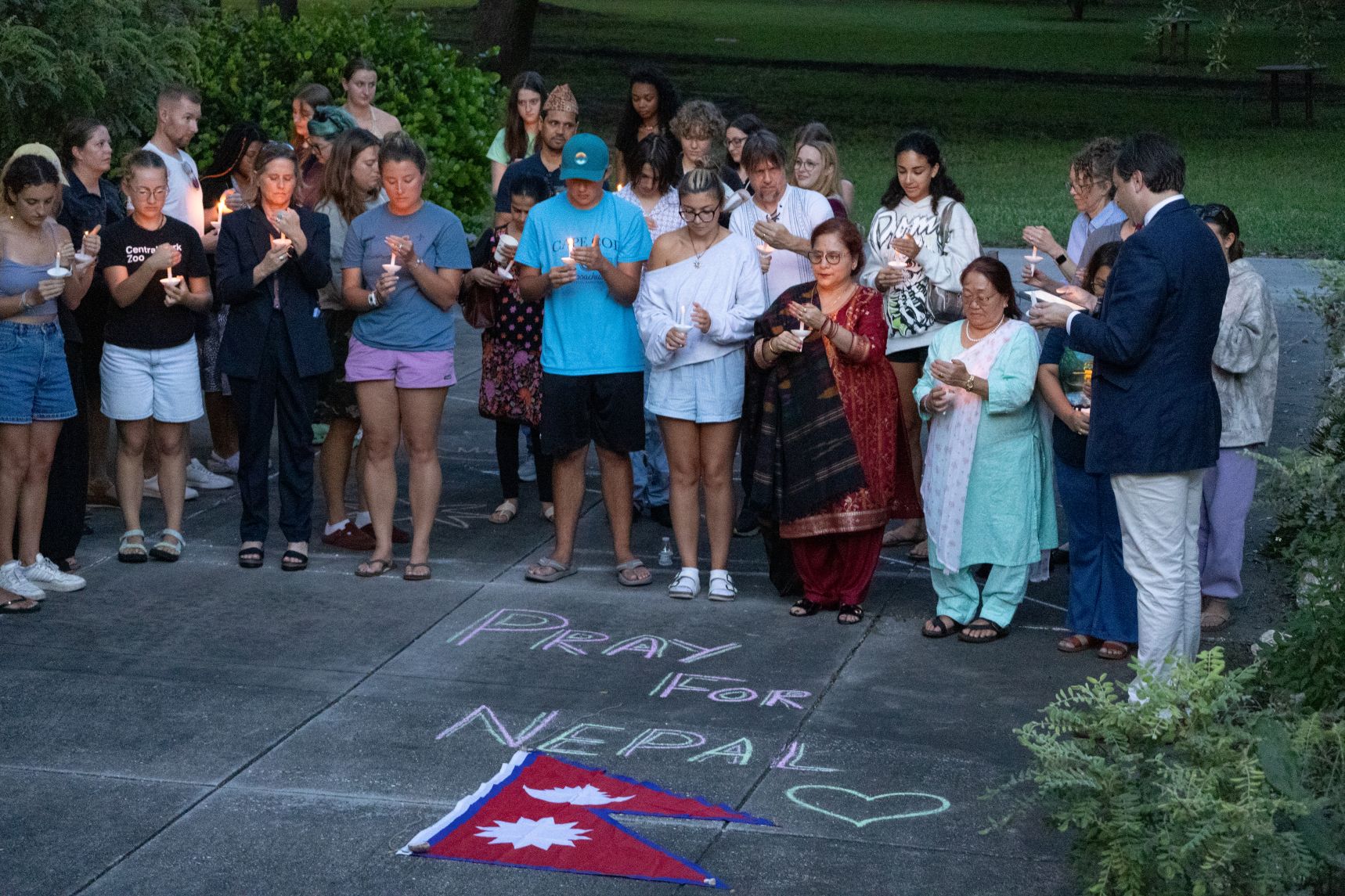
Students, faculty, staff and community members hold a candlelight vigil to pray for flood victims in Nepal, as Director of Spiritual Life and Chaplain Rev. Robert Galloway leads the group in prayer. Photos by Ana Lense
“We can tell those in Nepal, you are not alone,” said Eckerd College Assistant Professor of Physics Basu Lamicchane, Ph.D., to a room full of people wanting to learn more about the Himalayan climate crisis following the devastating flood at the Nepal-Tibet border in August.
“We remember that you have lost; we stand with you as you begin the long process of rebuilding.”
Lacchimine is from Muakut, Nepal—one of the areas severely affected by the floods. While his immediate family and relatives are safe, neighbors, other relatives, friends, and community members were not as fortunate. He shared the impacts at an Oct. 10 public event titled “Climate Justice in the Himalayas: Fundraising, Solidarity and Remembrance” aimed at establishing solidarity and supporting the communities in the process of recovering.
The presentation in Sheen Auditorium included Professor of Religious Studies Amy Langenburg, Ph.D.; Charter President of the Tampa Bay Nepalese Community, Anjana Thapa Paudel; Professor of Environmental Studies, Hilary Flower, Ph.D.; and Lamichhane.
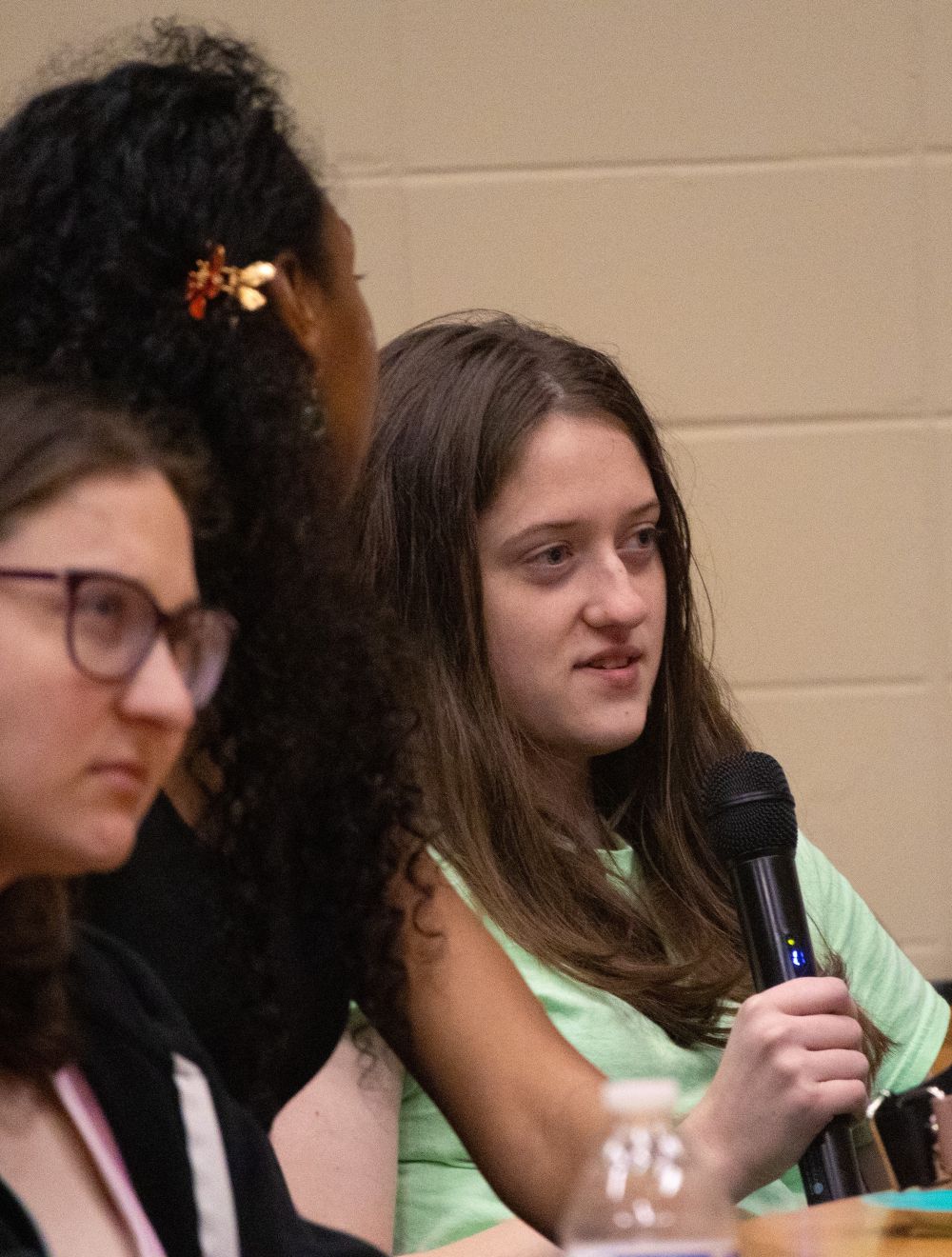
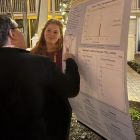
Mary Ellen Young, an Eckerd senior, asks a question regarding the floods in Nepal.
Focusing on the devastating flood on August 26, 2026, along the Trishuli River corridor on the border between Nepal and Tibet. The event allowed more than 50 students and community members to openly discuss, commemorate and offer solutions to climate injustices that countries like Nepal are facing.
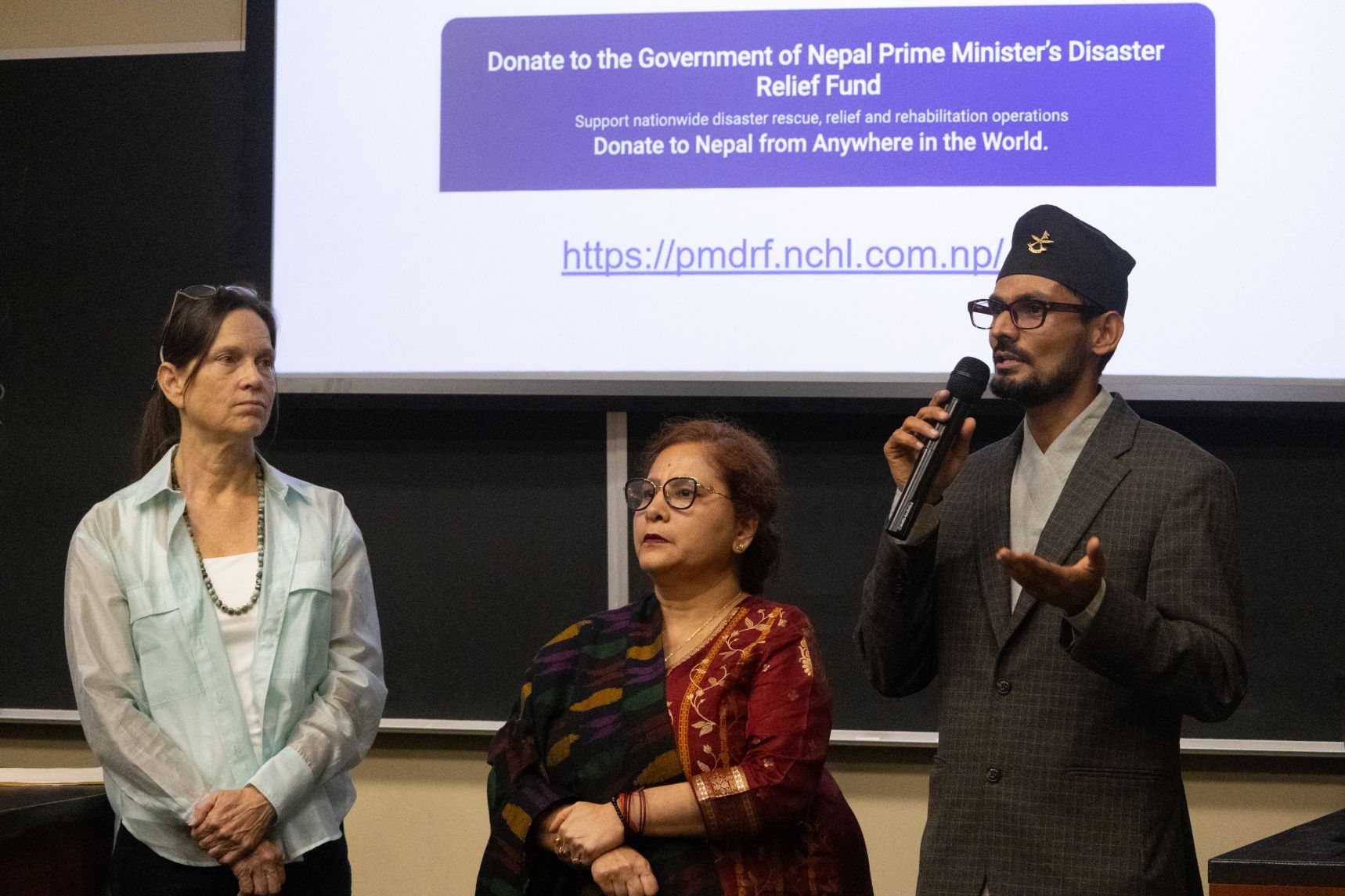
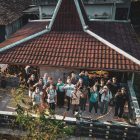
L to R: Hilary Flower, professor of environmental studies); Anjana Thapa Paudel, charter president of Tampa Bay Nepalese Community; and Basu Lamichhane, assistant professor of physics, answer student and community questions after presentating about climate justice in the Himalayas.
“It’s a far away place, and maybe seems like it doesn’t have much to do with you, but it does,” says Langenberg, the crowd consisting of community members like Tampa Bay Nepalese restaurant owners, Nepalese families, representatives from the Tampa Bay Nepalese Community, and even members of nearby living retirement communities.
Langenberg opened the event with a brief overview and set the tone by discussing the disaster that occurred less than two months ago. Langenberg segued to Paudel, who recounted that despite the distance between the Himalayas and Tampa Bay, the damage was still personal.
Paudel added, “It is about our families, our friends, our villages, and for some, about people whose voice we will never hear again.” She emphasized how homes, roads, infrastructure and hydropower facilities were wiped out—but most painfully, human lives were decimated. Reports include more than 1,400 deaths, thousands missing, and 13,000 people rescued in an ongoing operation from the initial event two months ago. Paudel reflected that the “damage is estimated at $1.8 billion, with reconstruction needs of about $4.78 billion.”
Flower shared her research about the events that led to this devastation.
The peaks of the Himalayas are not as sturdy as one may think. In fact, they are shattered bedrock “glued together by ice-filled joints intermixed with permafrost,” Flower explained. As a result of the increased temperatures caused by greenhouse gases, the ice-filled joints thinned, which weakened and increased the gaps of the shattered bedrock, causing the collapse of melting ice, rock, and other debris—plummeting 6,000 feet down. The belief is that this landslide then created a dam, allowing water to build and eventually burst and flood the river.
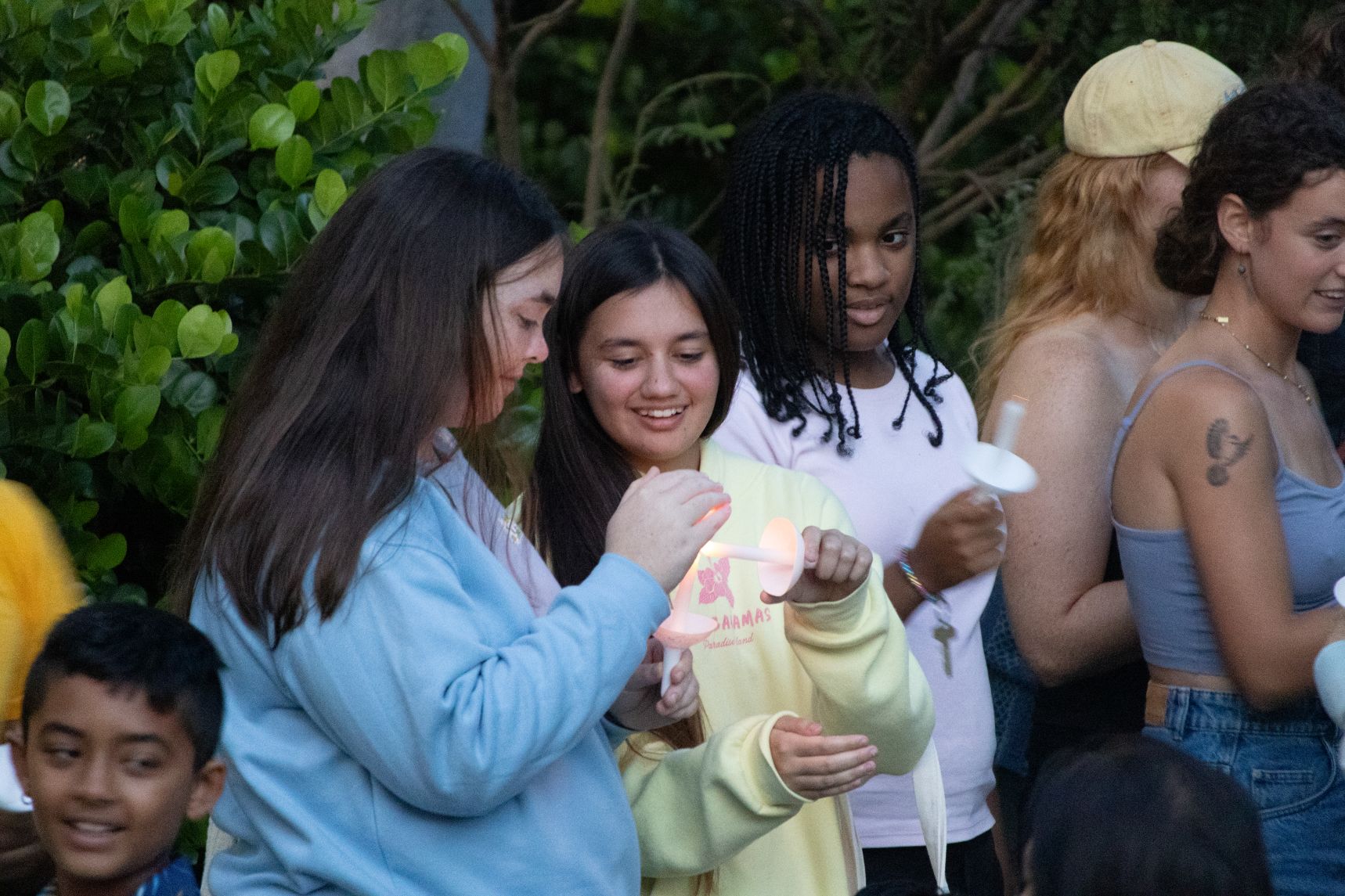
Eckerd students participated in an candlelight vigil to show solidarity with those suffering from the devastation in Nepal.
Flower noted two items: the first is Nepal is a small country of mult-dimensional factors. Meaning, Nepal has a very low contribution to greenhouse gasses, a very low GDP, but is highly vulnerable to the effects of climate change, and possesses a low readiness to respond to the impacts of climate change. Second, for countries like Nepal, the term climate justice is emphasized. Like the other panelists, Flower explained, “Climate justice asks who caused it, who suffers, who pays, and who decides.”
What would climate justice look like applied to countries like Nepal, who suffer from the effects of other countries ‘ contributions to greenhouse gases?
Flower proposed climate reparations to shift the dominant paradigm of reliance on charities or donations. She argued that wealthy countries must take responsibility for their contributions to these environmental impacts. She elaborated that reparations from historical global emitters (like the United States) would enable vulnerable countries like Nepal to have the funds to recover and establish preventive systems for climate readiness.
“With each increment of warming, there’s much more risk of these catastrophic events,” Flower concludes.
“But amid this tragedy,” Lacchimine reminds, “we have also witnessed remarkable moments of hope.” He refers to the rescues of workers trapped inside hydroelectric tunnels, and continuous ongoing rescue efforts in the aftermath of the flood.
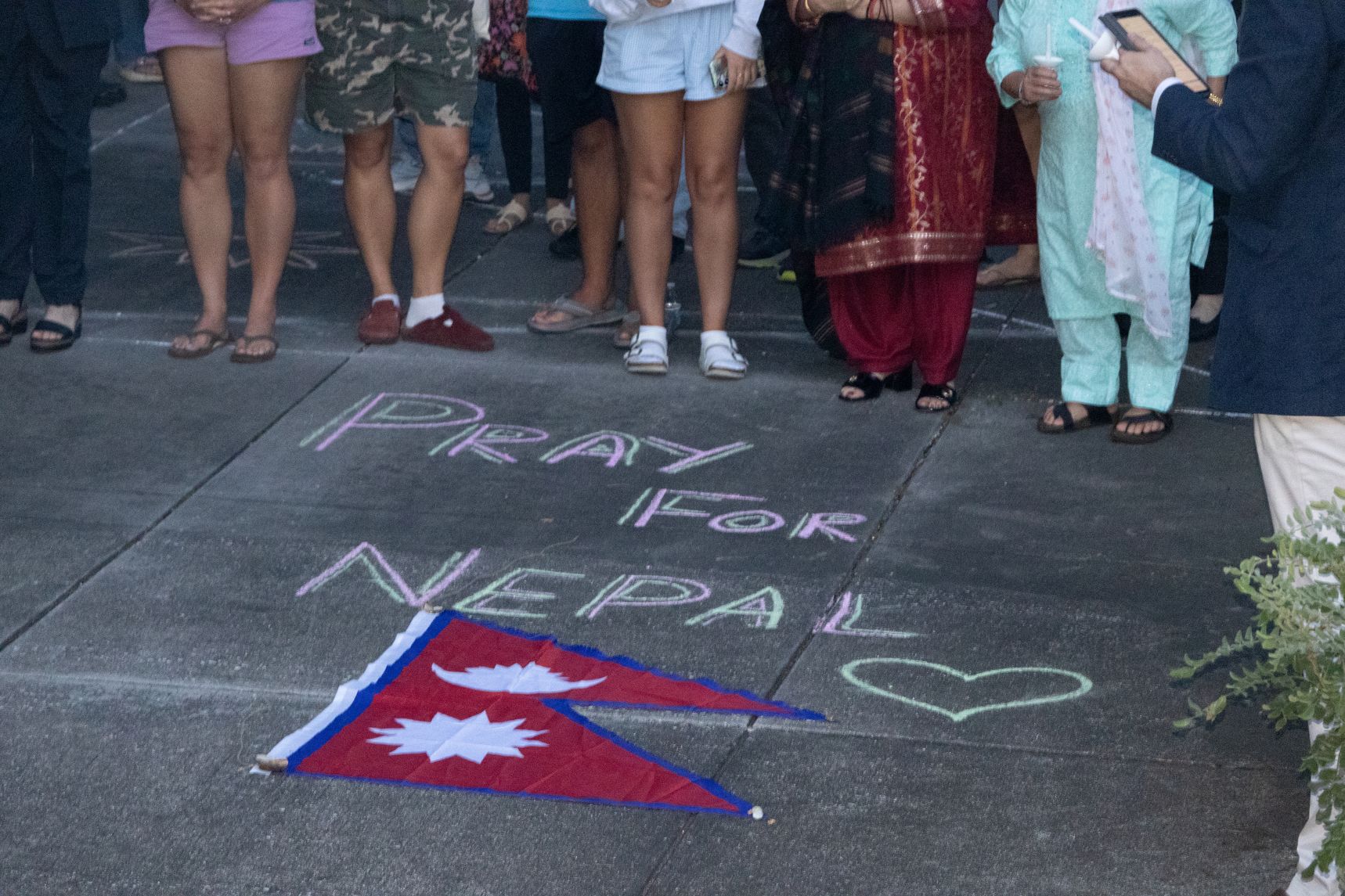
More than 1,400 have died as a result of the flooding emergency.
When the panelists had finished, the floor opened for attendees to collaborate and ask questions.
Among the many questions, a senior physics student from Apex, North Carolina, Mary Ellen Young had asked:“You [Flower] had said that they think this was caused by the dam building up water, and it could have happened sort of like days in advance … Is there a way to like relieve some of the water pressure slowly so that it could have caused less property damage as well?”
Flower answered, “I think that would be something to do research on. But the first priority would simply be knowing that it’s happening and getting people out of harm’s way.”
After the last of the questions had been answered, the attendees were invited to the commemorative candle lighting ceremony with the Director of the Center for Spiritual Life and Chaplain Rev. Robert L. Galloway to conclude the event in prayer. The prayer’s theme was shared hopes and wishes for all those affected by the floods, and for Nepal to recover.
As said by Lacchimine, “We are connected by our shared humanity, and when life is uncertain, that connection may be one of the most important things we have.”