
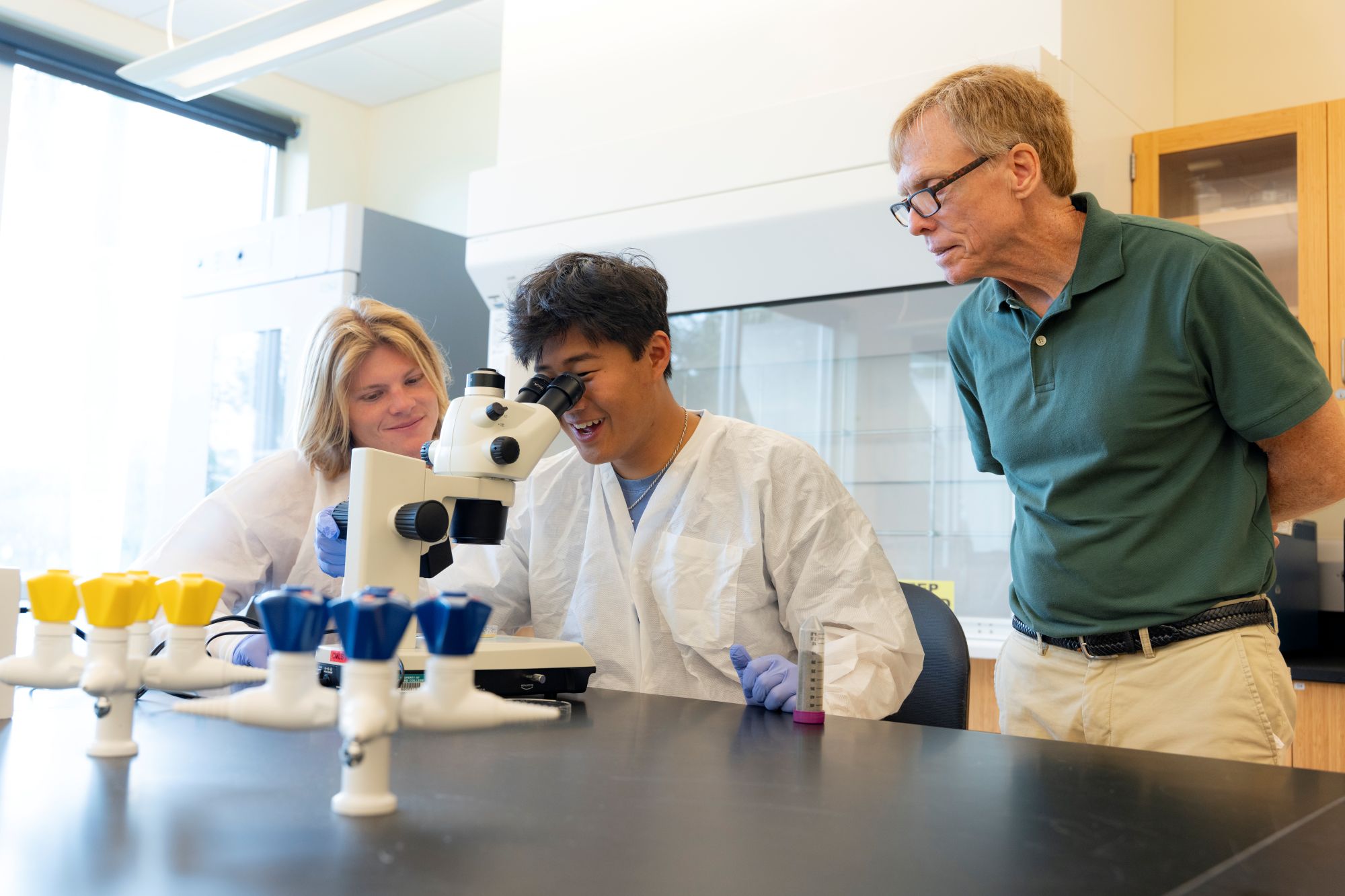
Allen Chen examines bacteria under a microscope as Colbin Campbell (left) and Steven Denison, Ph.D observe. Photos by Penh Alicandro ’22.
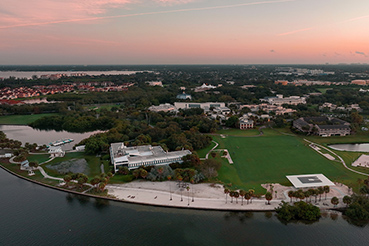
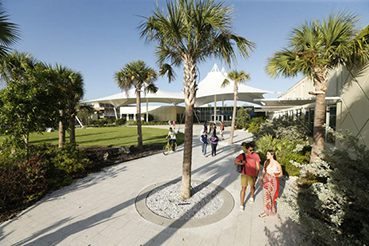
Eckerd College’s campus is a bayside paradise on Florida’s west coast. Mars is a giant ball of red dust millions of miles away. Yet these two contrasting locales may have something in common. Soil samples from the Palm Hammock at Eckerd contain Bacillus safensis. There is reason to believe the surface of Mars may also be harboring this resilient microbe.
The spacefaring bacteria were discovered over the course of four weeks in Professor of Biology Steve Denison, Ph.D’s microbiology lab. The class contributes findings to Tiny Earth®, a Wisconsin-based research project with affiliates on campuses across the nation that crowdsources the search for new antibiotics.
Bacillus safensis gained notoriety over two decades ago after being found on spacecraft surfaces and in assembly cleanrooms at Kennedy Space Center in Florida and the Jet Propulsion Laboratory in California. The bacteria showed an ability to survive in an environment almost completely bereft of airborne particles. It also demonstrated resistance to UV radiation and salt. This means there is a significant chance it survived on the Mars rovers Opportunity and Spirit during their journey to the fourth planet from the sun.
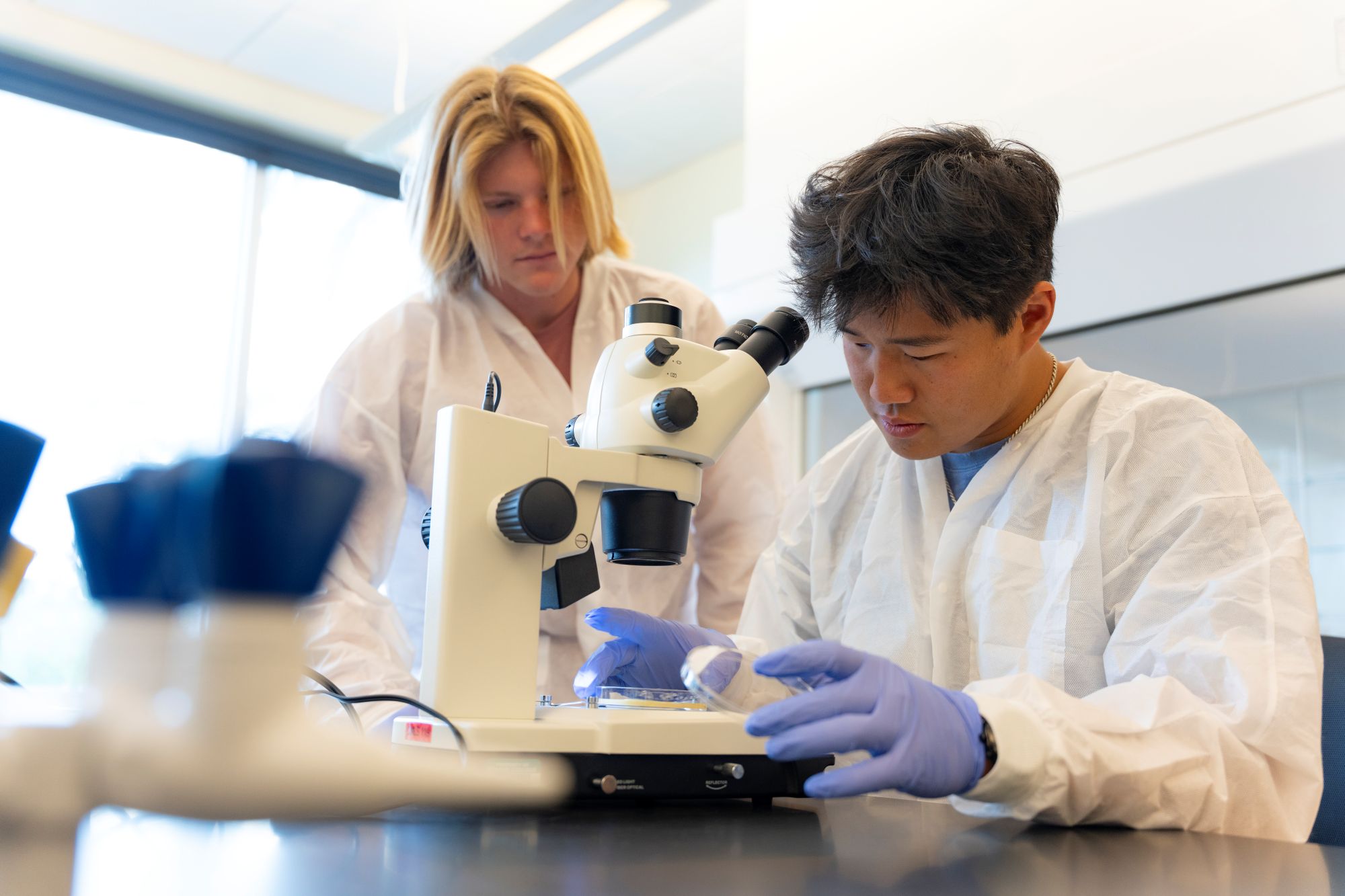
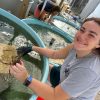
Colbin Campbell and Allen Chen prepare diluted soil sample for examination under a microscope.
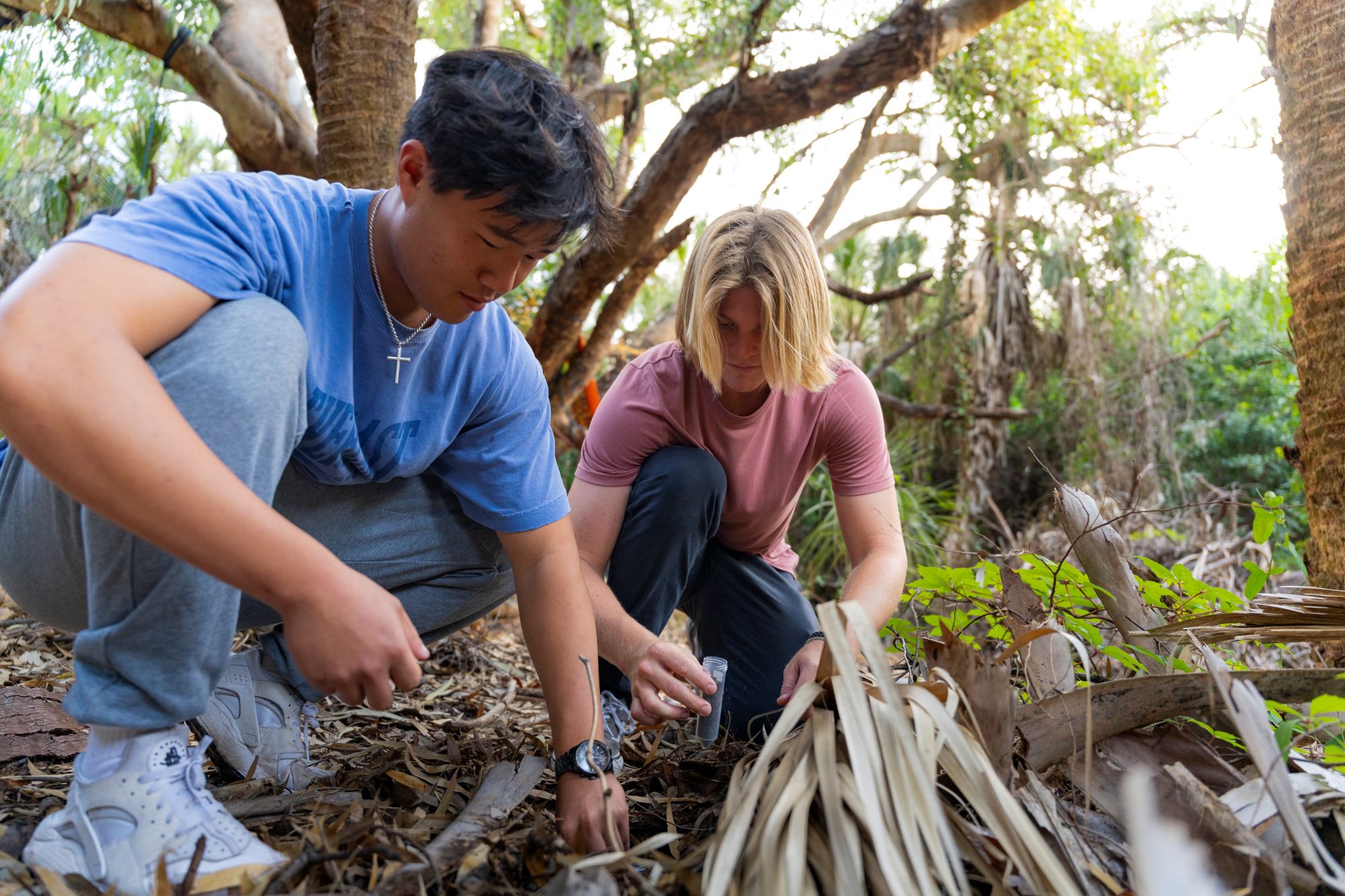
Allen Chen and Colbin Campbell acquiring a soil sample from the Palm Hammock on the Eckerd College campus.
“It was a bit of a surprise and just kind of fascinating to find a bacteria so well known and that’s kind of a media star because it went to Mars,” said Denison. “It wasn’t a novel finding. Bacillus safensis is known to produce several antimicrobial compounds. But the good thing about a finding like this for the lab, is that it shows that the lab is working and we’re able to find things that actually inhibit the growth of other bacteria.”
Denison initiated Eckerd’s Tiny Earth affiliation in 2023, traveling to Wisconsin to be trained in Tiny Earth’s process and protocols. The training certifies Denison as a Tiny Earth Partner Instructor. Each spring, two dozen students, known as Tiny Earthlings, in his microbiology lab collect soil samples, which are then diluted to allow bacterial growth and harvesting.
Bacterial samples are introduced to a safe relative of a pathogen to observe if any produce antibiotics. Any that do are processed for identification. The goal is to identify new antibiotic-producing materials to combat harmful bacteria that are increasingly resistant to traditional antibiotics such as penicillin.
Rising senior Allen Chen, the microbiology student who first spotted Bacillus safensis in the lab assay, is a marine science major from Millersville, Maryland, pursuing a pre-health track. He became interested in finding new solutions to ESKAPE pathogens. ESKAPE is an acronym for six antibiotic-resistant pathogens that are highly virulent: Enterococcus faecium, Staphylococcus aureus, Klebsiella pneumoniae, Acinetobacter baumannii, Pseudomonas aeruginosa and Enterobacter spp.
“These ESKAPE diseases, people are constantly needing new ways to manage them, and this could lead to new ways to do that,” said Chen.
This was the first year samples from Palm Hammock were examined for bacteria. In previous years, the class examined nutrient-rich soil from the Eckerd College Community Farm. Denison noted differences in soil content between the two locations.
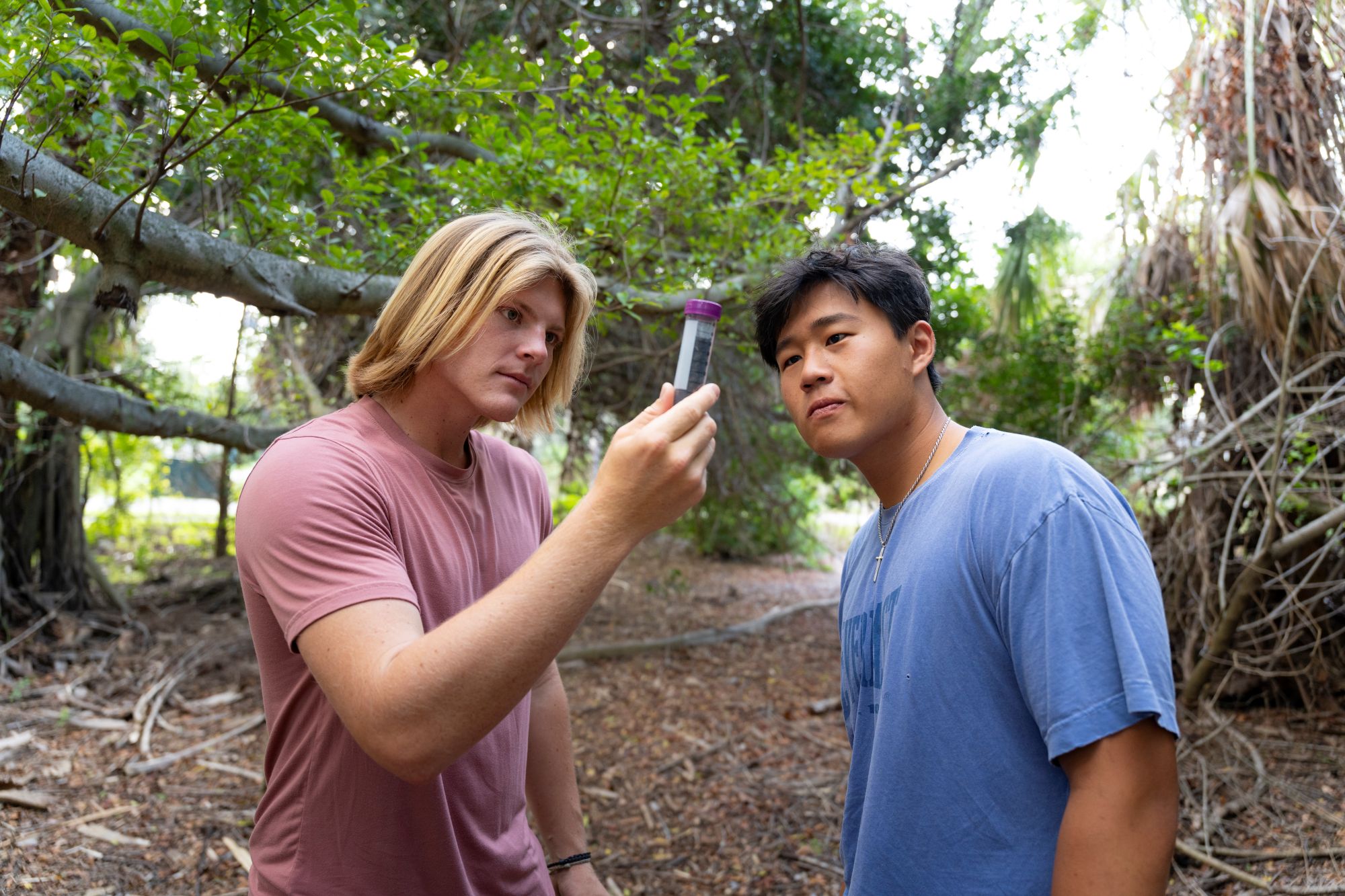
Colbin Campbell and Allen Chen secure their soil sample before bringing it back to the microbiology laboratory for testing.
“At the farm, they are making their own compost, so it’s very nutrient-rich soil. This year, we tried the Palm Hammock, and that area had probably flooded. We did see that there was lower diversity in the Palm Hammock than at the farm. Salt water flooding in the Palm Hammock may be why there was a little less diversity, and may be the reason that one [Bacillus Safensis] was found, as it’s more resistant to some of those environmental conditions,” said Denison.
While the class’s discovery didn’t prove to be novel, Chen was still excited to have found an antibiotic-producing agent, especially one that may have successfully escaped Earth’s atmosphere. He is spending the summer taking on a completely different health care topic: interning at Massachusetts General Hospital and researching Friedreich’s Ataxia repeat expansion disorders, a rare genetic condition.
Denison and a new group of students will take on another round of Tiny Earth exploration in search of their first novel antibiotic discovery.