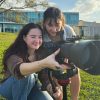

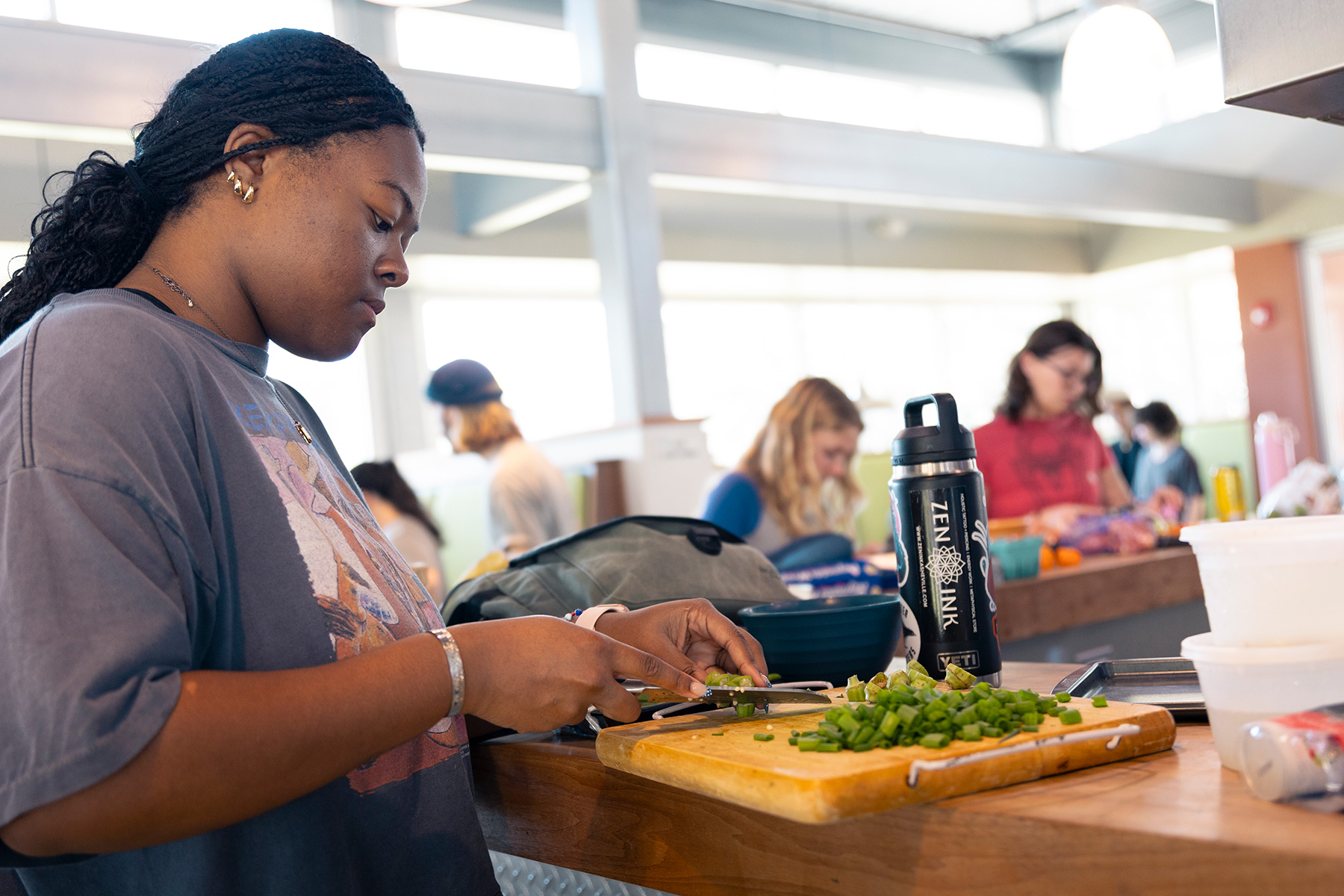
Senior Jemma Nelson chops vegetables in her Archaeology of Food Winter Term course. Photos courtesy of Penh Alicandro ’22
The kitchen can also be a classroom.
For the third year, Assistant Professor of Anthropology Anna Guengerich, Ph.D., took her Winter Term students on a tour of cultural cuisines from tamales to jollof rice in her course, Archaeology of Food.
“This class explores what we can learn about human societies through the foodways of the past,” Guengerich says. “The course is built around four meals that we cook and eat together, representing cultural contexts such as Indigenous Mexico, ancient Rome, Native American foraging and the African Diaspora.”
Jemma Nelson, a senior environmental studies student from Roswell, Georgia, says, “The class has helped me visualize the similarities in all of our lives and how food is a way of bringing communities together to create traditions and special memories. Being able to expand my knowledge of food has also made me more open to trying new cuisines.”
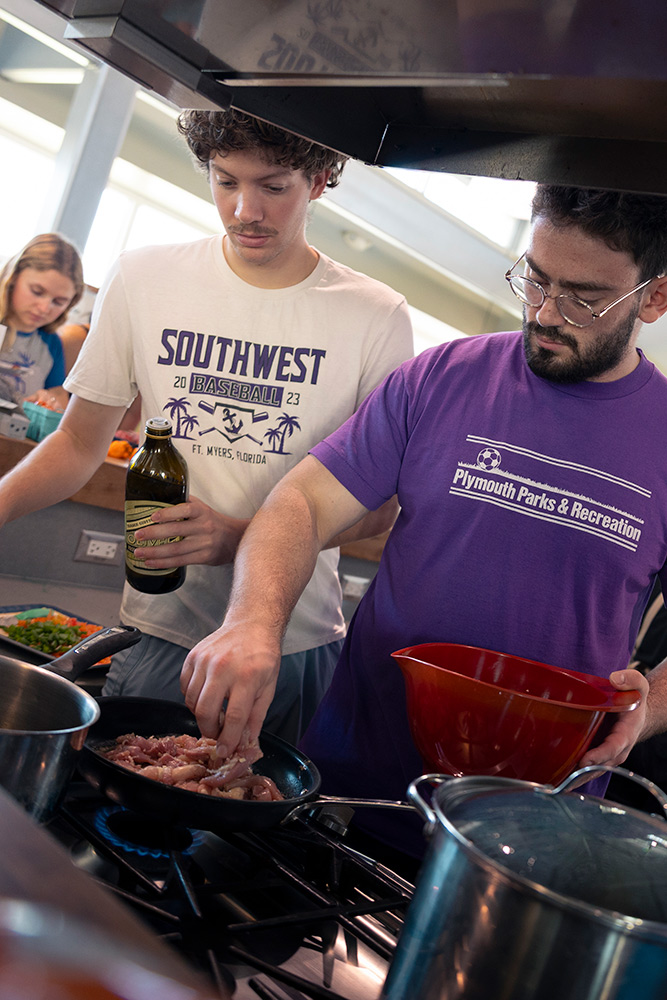
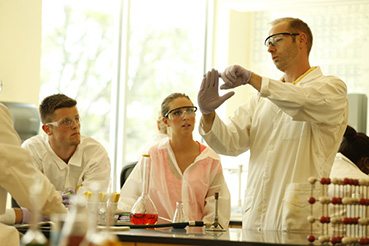
Students prepared Mesoamerican and West African dishes with the help of an instructor.
Specifically, the course is taking an in-depth look at corn relating to agro-biodiversity, how food is used to shape status and identity, as well as Mexican culture and cuisine. Students will explore anthropological questions such as health, sustainability, biodiversity, inequality and imperialism.
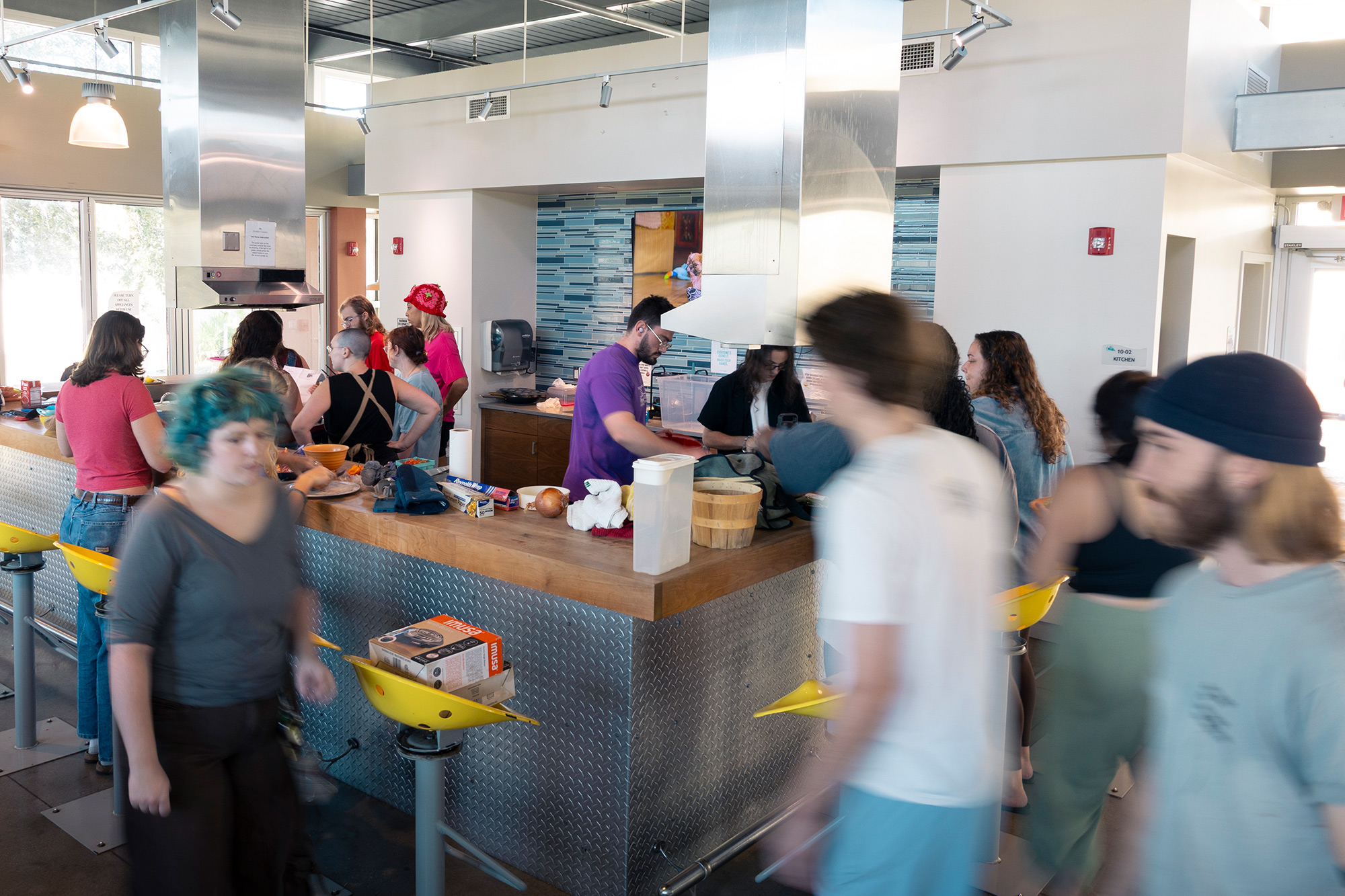
Assistant Professor of Anthropology Anna Guengerich, Ph.D., says the course connects with students because of the relationships most cultures have with food.
“Everyone has a personal relationship with food. It’s a general interest for students,” Guengerich says.
Since 2011, Guengerich has co-directed an archaeological research project in the mountains of eastern Peru granted by the National Science Foundation examining the environmental impacts of the Inca conquest on Indigenous societies prior to Spanish colonization. The project involves working with rural community partners to conserve native plant species and traditional knowledge of plant use.
The course offered two cooking modules throughout the short-term, including a Mexican cooking lab, which taught students different ways to prepare corn such as making tamales and tortillas with cactus petals from the Eckerd College Community Farm, and a drink from corn meal called “champurrado.”
The second cooking lab was focused on African cuisine and the West African diaspora. They cooked dishes such as black-eyed pea salad, banana fritters, peanut brittle, chicken and greens stew, and jollof rice.
“The Archaeology of Food was a fascinating course for me because it revealed the deep connection between people and food throughout history,” says Max Garr, a junior human development and psychology student from Minneapolis, Minnesota. “I especially enjoyed learning how food is a fundamental part of human life and how practices like feasting were used as expressions of power. The class showed how major food related-decisions have shaped human societies and continue to influence us today. The cooking labs made these lessons come alive and were a highlight of the course.”