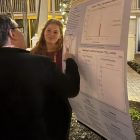

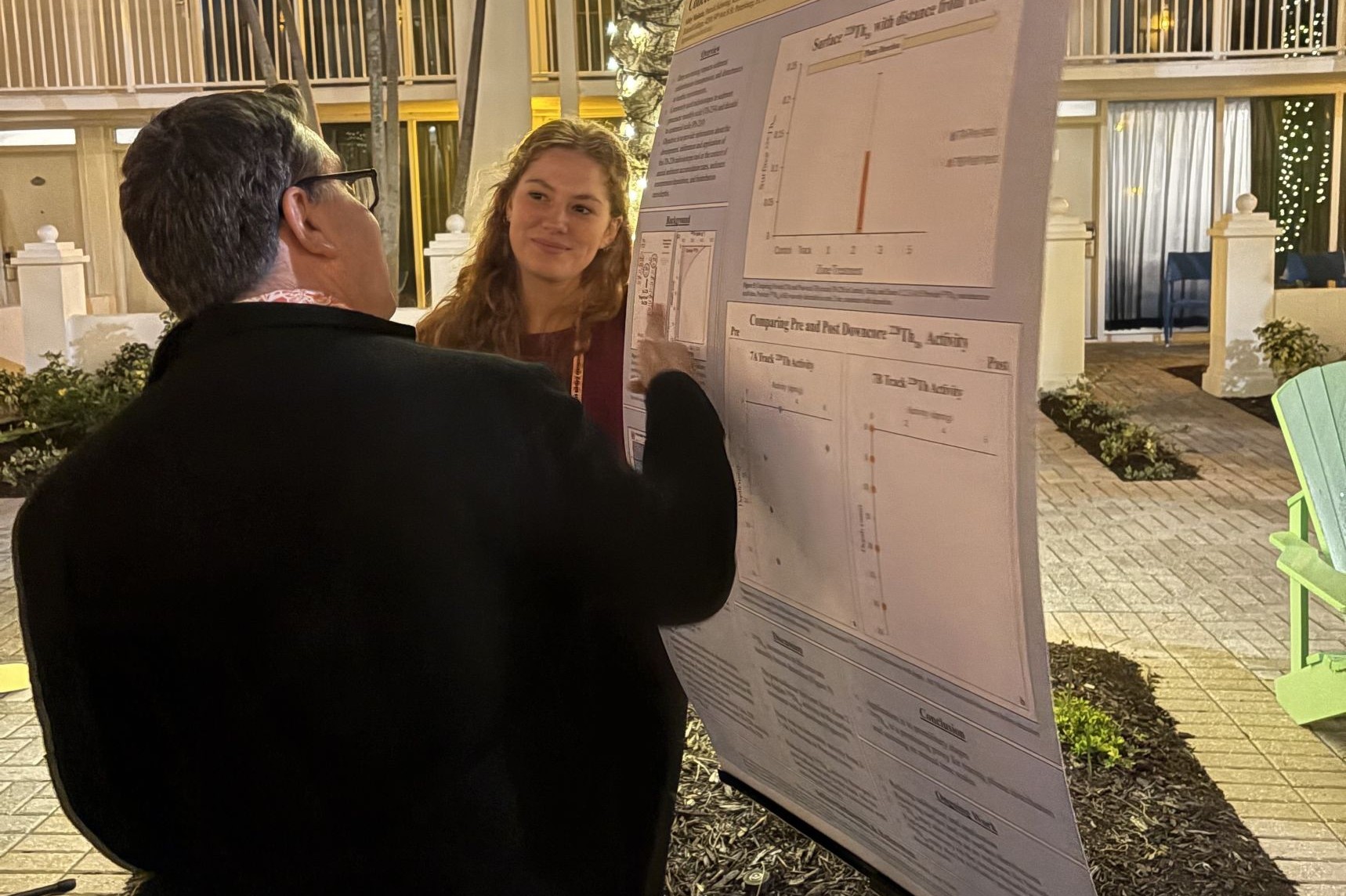
Abby Malatia presents her poster to an observer at UMC 2025 in St. Pete Beach. Photo provided by Abby Malatia.
Eckerd College students will be jetting off to Toyama, Japan this November for the Underwater Minerals Conference, the world’s largest gathering of ocean mineral stakeholders.
The UMC is an annual conference with representatives from over 25 countries. Since 1970, it has brought together a community of academic, government and commercial sector professionals. Two Eckerd students are joining Associate Professor of Marine Science Patrick Schwing ’06, Ph.D., at the conference this fall.
“These are all the opportunities, if you were at an R1 institution, all of the grad students would be doing,” says Schwing.
Over the past five to ten years, demand for lithium-ion and other battery components has risen. Nodules, a type of mineral that takes millions of years to grow on the seafloor, absorb basic metals needed to make batteries, Schwing says. Nodules are one of the mineral types being targeted for ocean mining.
The impacts of deep-sea mining remain unknown, from climate to regulatory risks. Schwing and his student researchers are working to establish baselines.
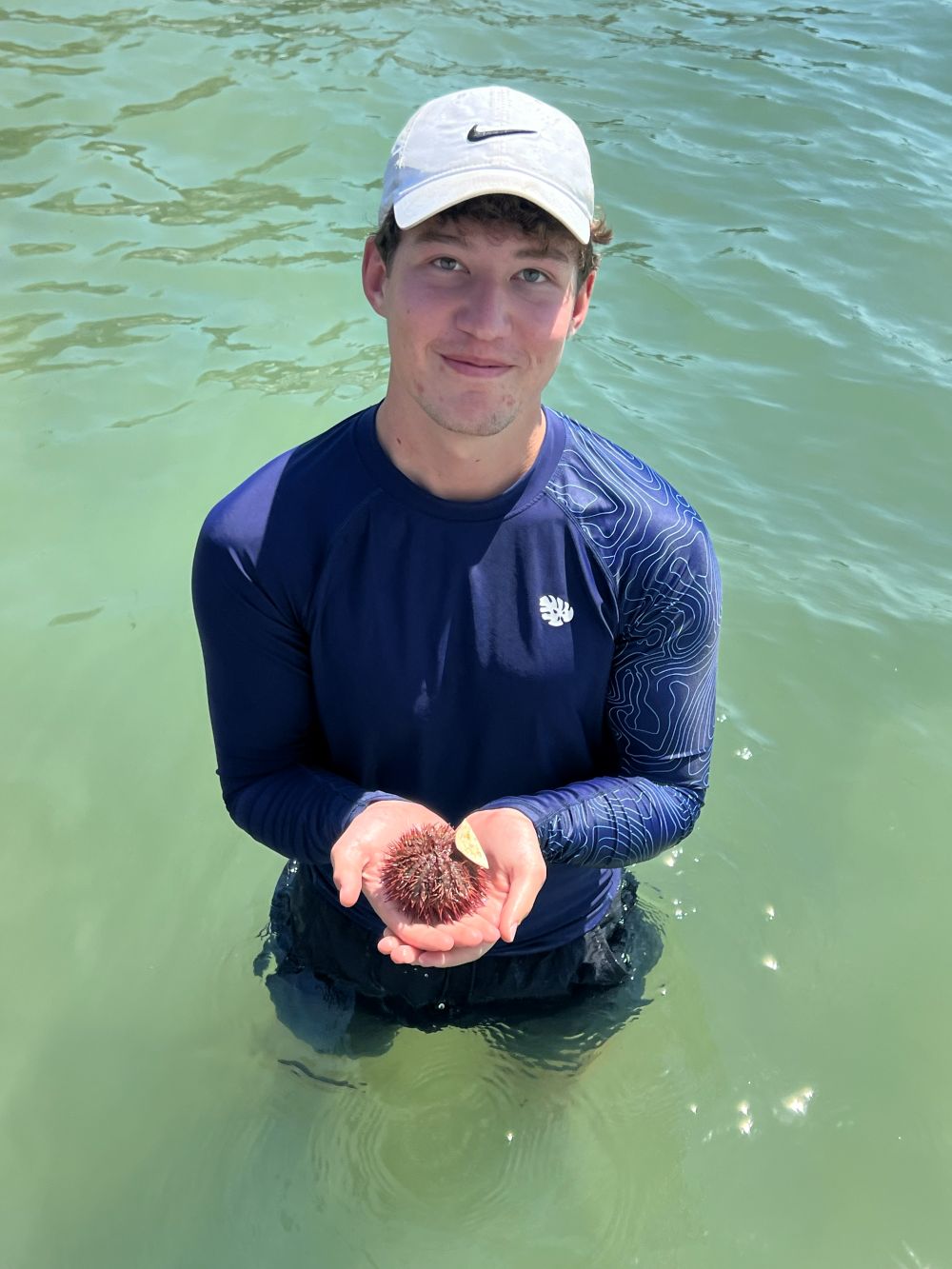
Josef Flieg collects underwater samples. Photo provided by Josef Flieg
“It’s still controversial, because we don’t know exactly the environment of deep-sea mining. However, we’re kind of figuring that out in our lab,” says Josef Flieg, a senior marine science and French major from Sainte Genevieve, Missouri.
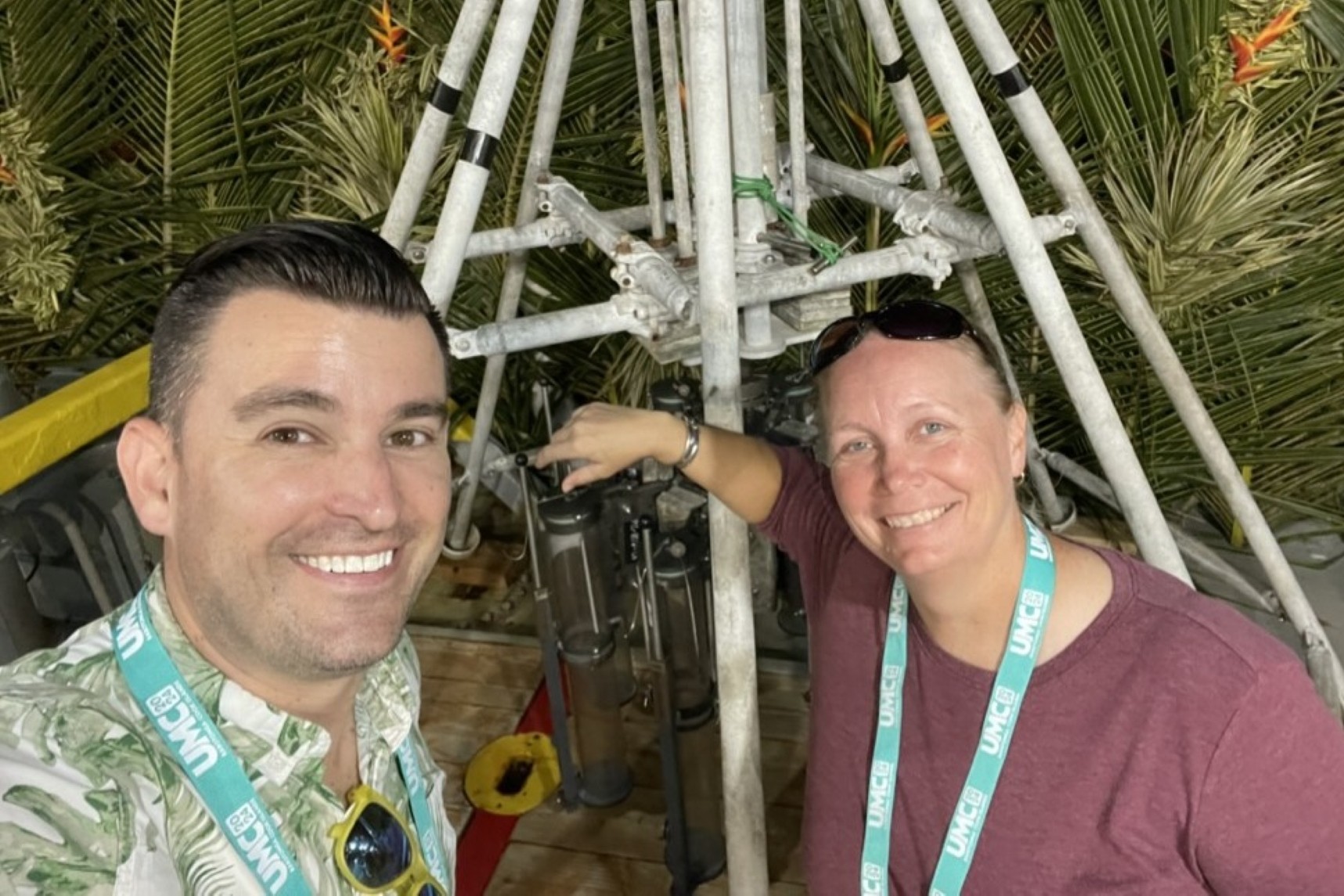
Patrick Schwing ’06 and Rebekka Larson ’01 both attended UMC in the Cook Islands in 2024. Photo provided by Patrick Schwing
Josef will be presenting his research on biogenic silica at the conference. He’s using biogenic silica as a tracer for seafloor plume in the Cook Islands Exclusive Economic Zone. Abby Malatia, a senior marine science major from Plainfield, Illinois, will showcase her work on radiochemical indicators as tracers for seafloor deposition in the Clarion-Clipperton Zone.
“Our labs are paid, which isn’t exactly common for undergrads,” Josef says.
The price tag of traveling to Japan was alleviated by Eckerd support. The pair of students received $5,000 in combined financial support from the ECOS Independent and Collaborative Ventures Fund, in addition to several smaller grant-funded resources. Associate Dean of Faculty for Student Success Kat Robinson, Ph.D., connected Josef and Abby to multiple sources of funding for academic and professional development.
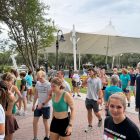
Last year, the UMC was held in St. Pete Beach. Both Josef and Abby attended; Abby recalls the diversity of professional backgrounds present.
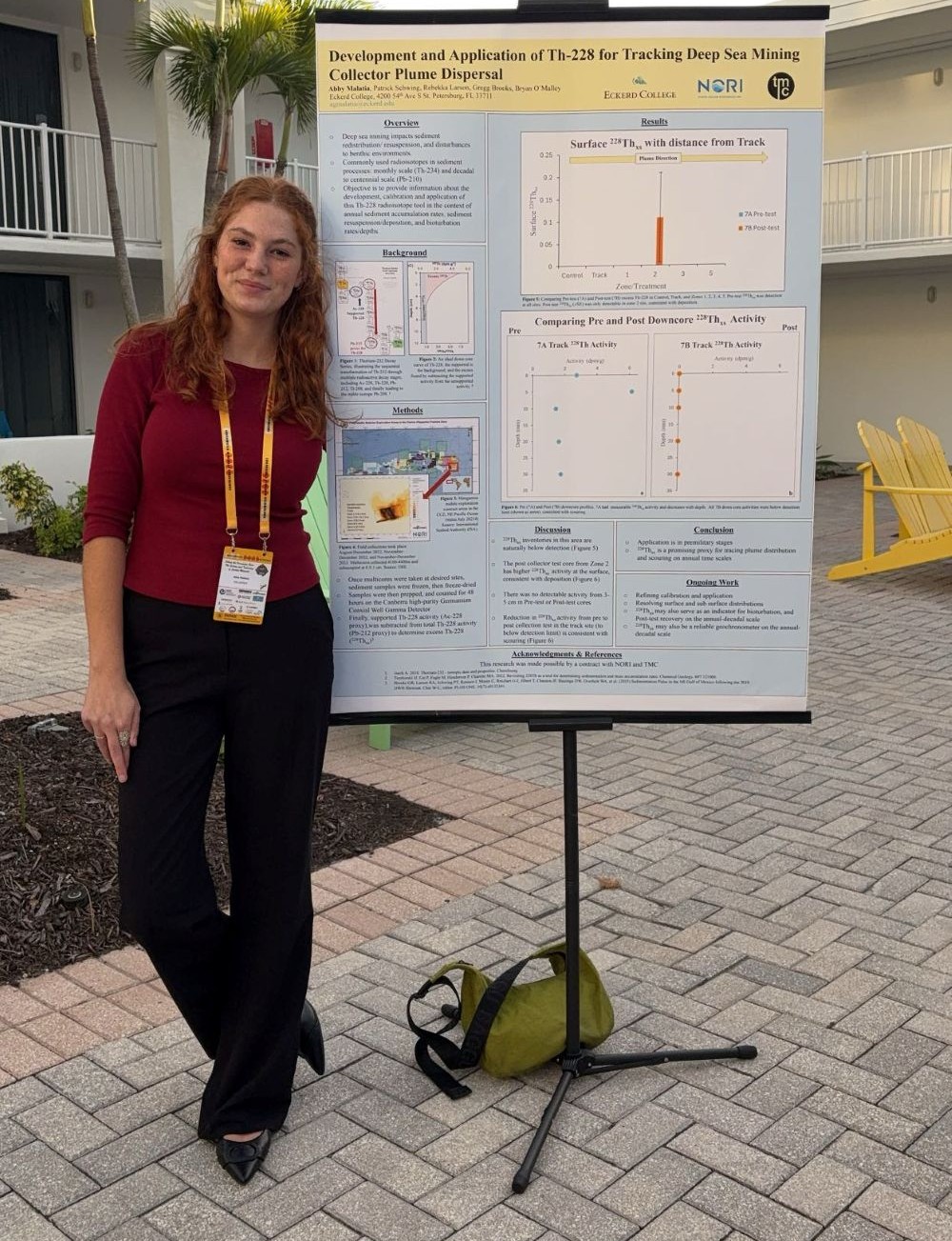
Abby Malatia stands with her poster at last year’s UMC. Photo provided by Abby Malatia
“There was a lot of marketing, managing, low-key CEOs there,” Abby says with a laugh. “It wasn’t just all science.”
Communicating with non-scientists helped Abby learn how to convey the importance of her research in tailored ways. Abby’s research will double as her senior thesis.
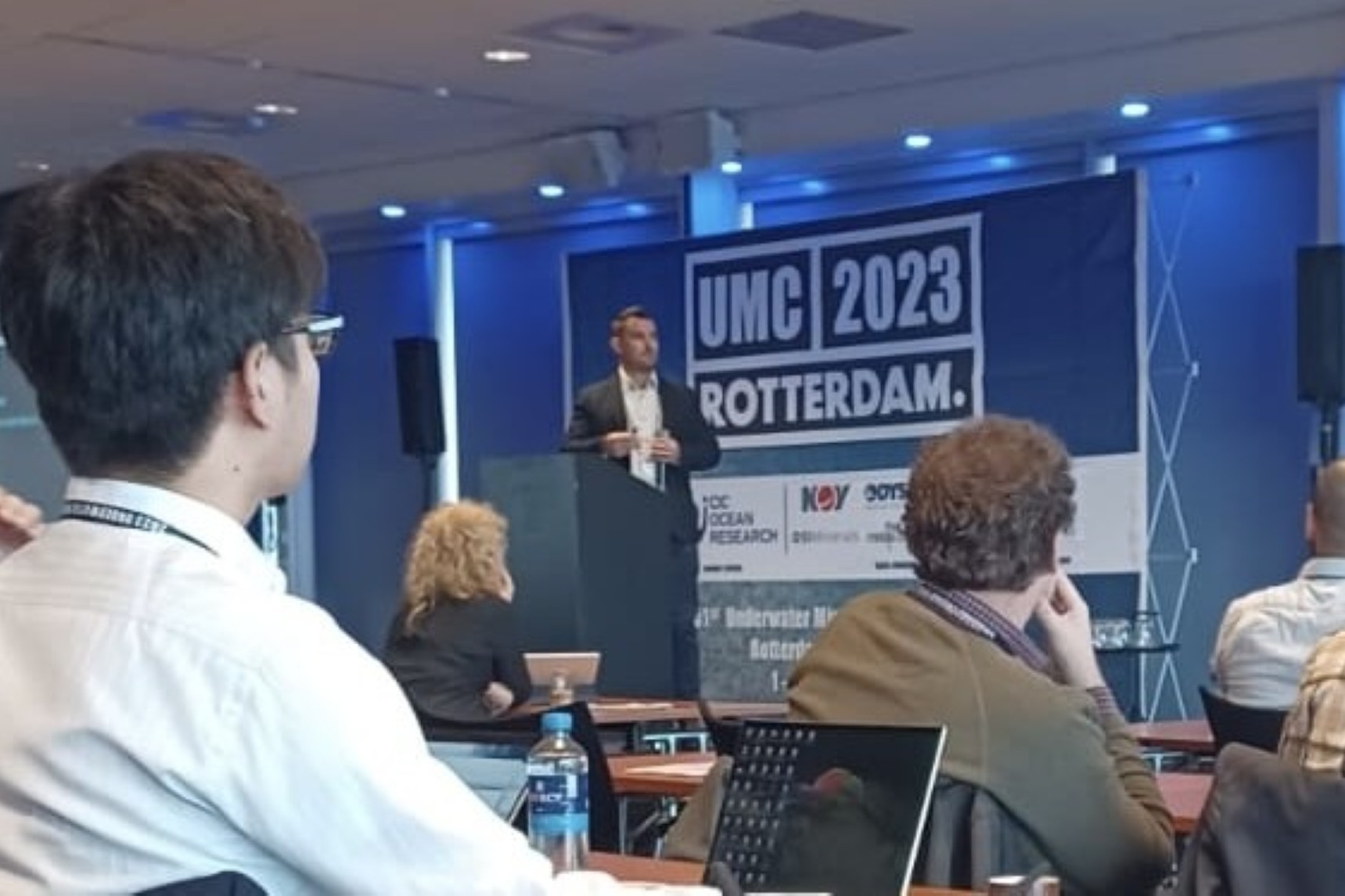
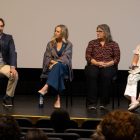
Patrick Schwing ’06 speaks at the 2023 UMC in Rotterdam. Photo provided by Patrick Schwing
“I feel like the more I became involved, the more I was like wait: I actually really like this,” Abby says. “So I am gonna turn it into my senior thesis and then I’m also going to go to grad school for it.”
She’s interested in pursuing further education at the University of Washington. Abby is drawn to marine geology and chemistry, more so than marine biology, she says. Growing up, Abby loved the Disney movie “Atlantis: The Lost Empire.” She treasures the possibility of discovering something new.
For the upcoming conference in Japan, Abby is most looking forward to hearing other people’s ideas and getting better at presenting her own research. Josef, noting this is his final year of college, is thinking about the job market. He’s looking forward to connecting with professionals across fields and seeing what he’s interested in, in terms of deep-sea opportunities.
“You can do things, get experience for it, get paid, and put yourself above the rest, just by the factor of being an Eckerd student,” Josef says.