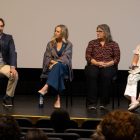

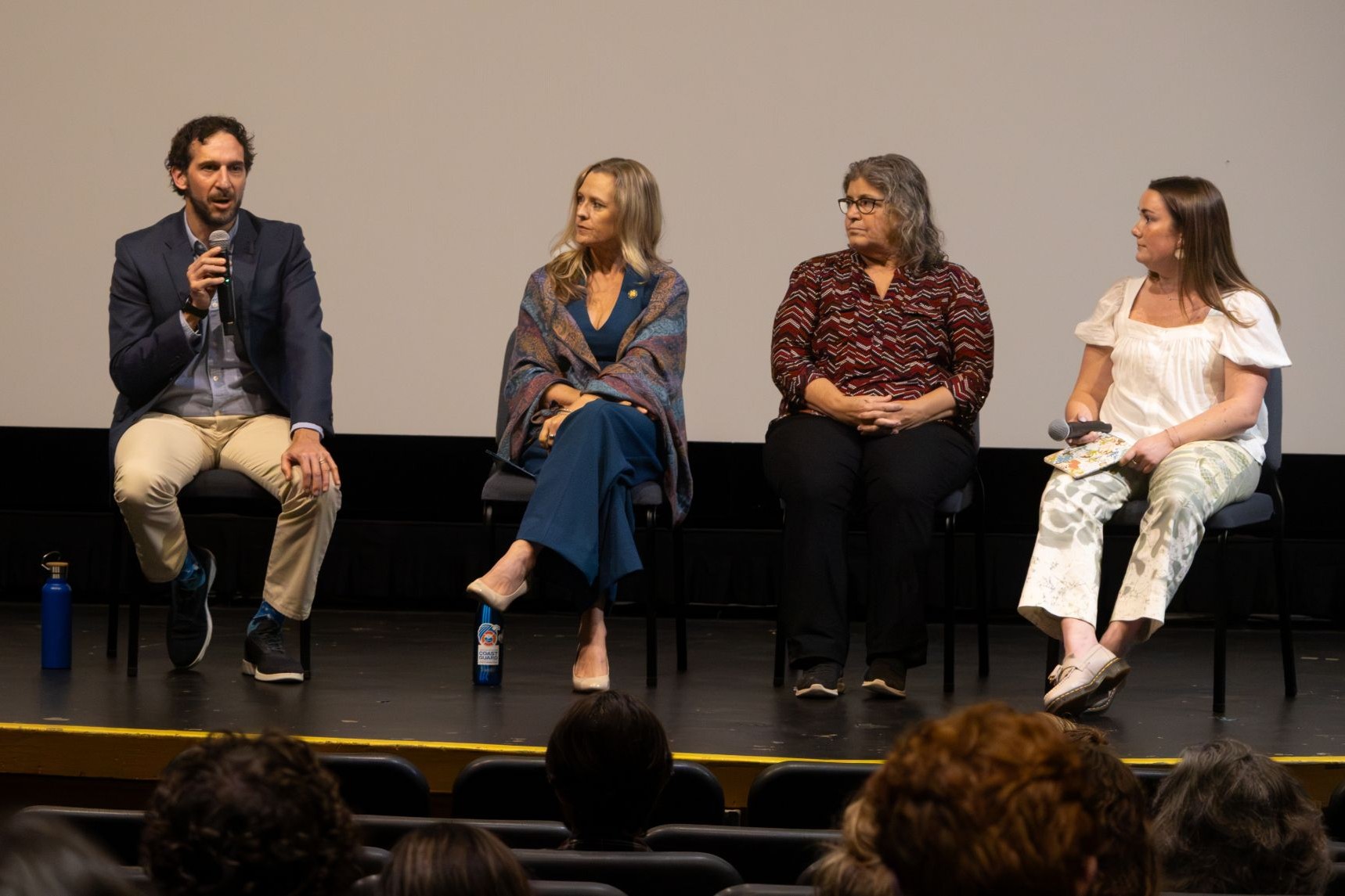
Mauricio Arias, Ph.D., speaks as part of a panel discussion following a screening of “The Story of Plastic” at Eckerd College on Oct. 6. Photos by Madison DeVore ’25
Florida State Representative Lindsay Cross (District 60) joined a panel of scientists, professors and advocates at Eckerd College to discuss the plastics crisis during Florida Climate Week.
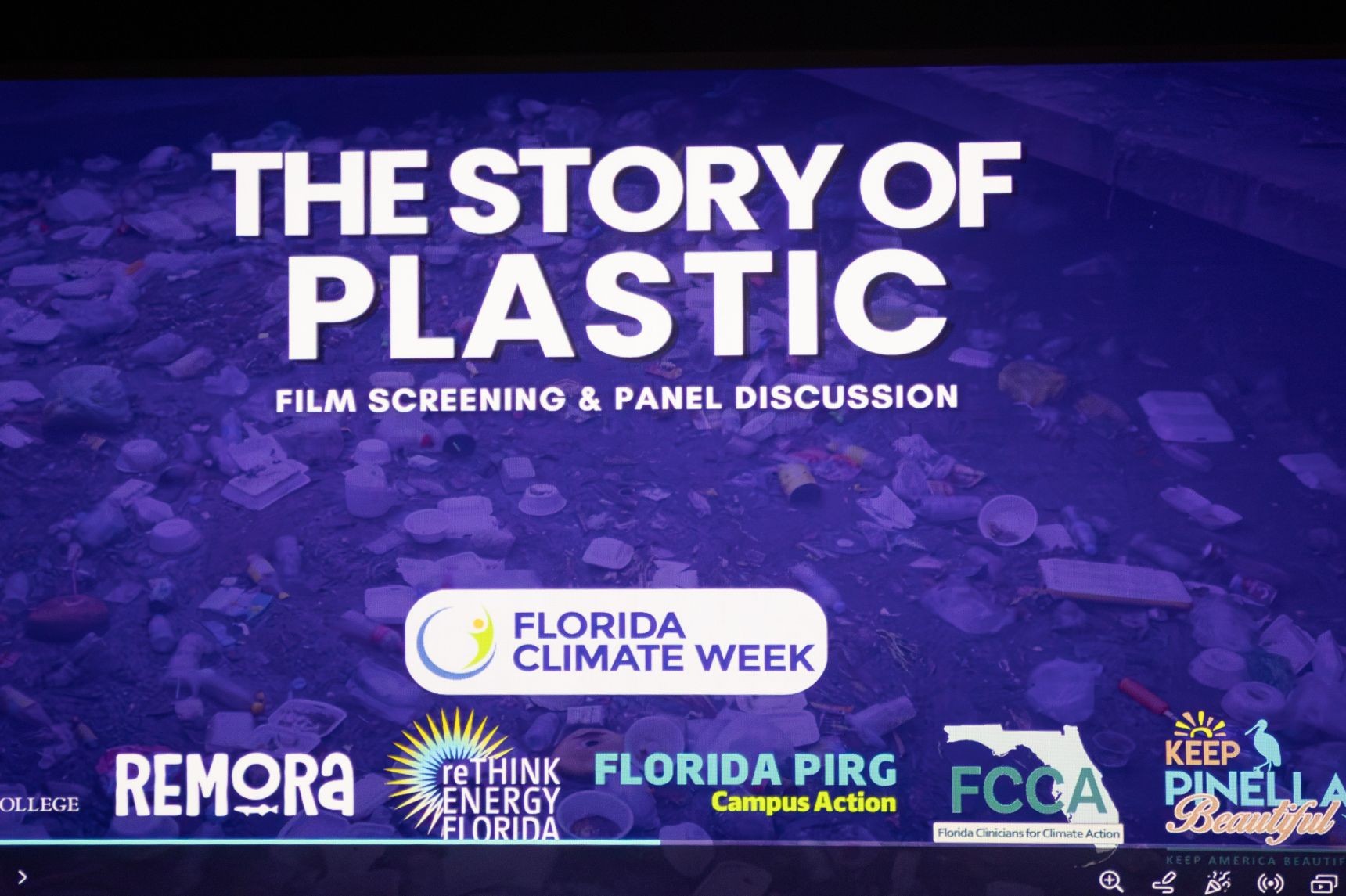
On Oct. 6 in the Dan and Mary Miller Auditorium, the Eckerd community and general public were invited to watch “The Story of Plastic,” a 2020 documentary about the life cycle and consequences of plastic. Following the screening, the panel answered questions from Professor of Marine Science Amy Suida Ph.D., and the audience.
“Plastic pollution is an interdisciplinary problem, from environmental impacts and potential food impacts, to public health,” says Suida.
The panel consisted of professionals who bring different perspectives to the same issue. Suida and Cross were joined by University of South Florida Associate Professor Mauricio Arias, Ph.D.; Florida Clinicians for Climate Action’s Maria Sgambati, Ph.D.; and Chloe McKenna ’23 from ReThink Energy Florida and Plastic-Free Pinellas Coalition. The event was hosted by Reduce Single-Use, Keep Pinellas Beautiful and ReThink Energy Florida.
“The Story of Plastic” covers the entire lifespan of plastic, from production through outcomes ranging from recycling to incineration.
The film shows the entire lifespan of plastic, from production to management of used plastics, including recycling and incineration. The City of St. Petersburg has a goal to be a zero-waste city by 2050 and Eckerd committed to the Break Free From Plastic pledge in 2019.
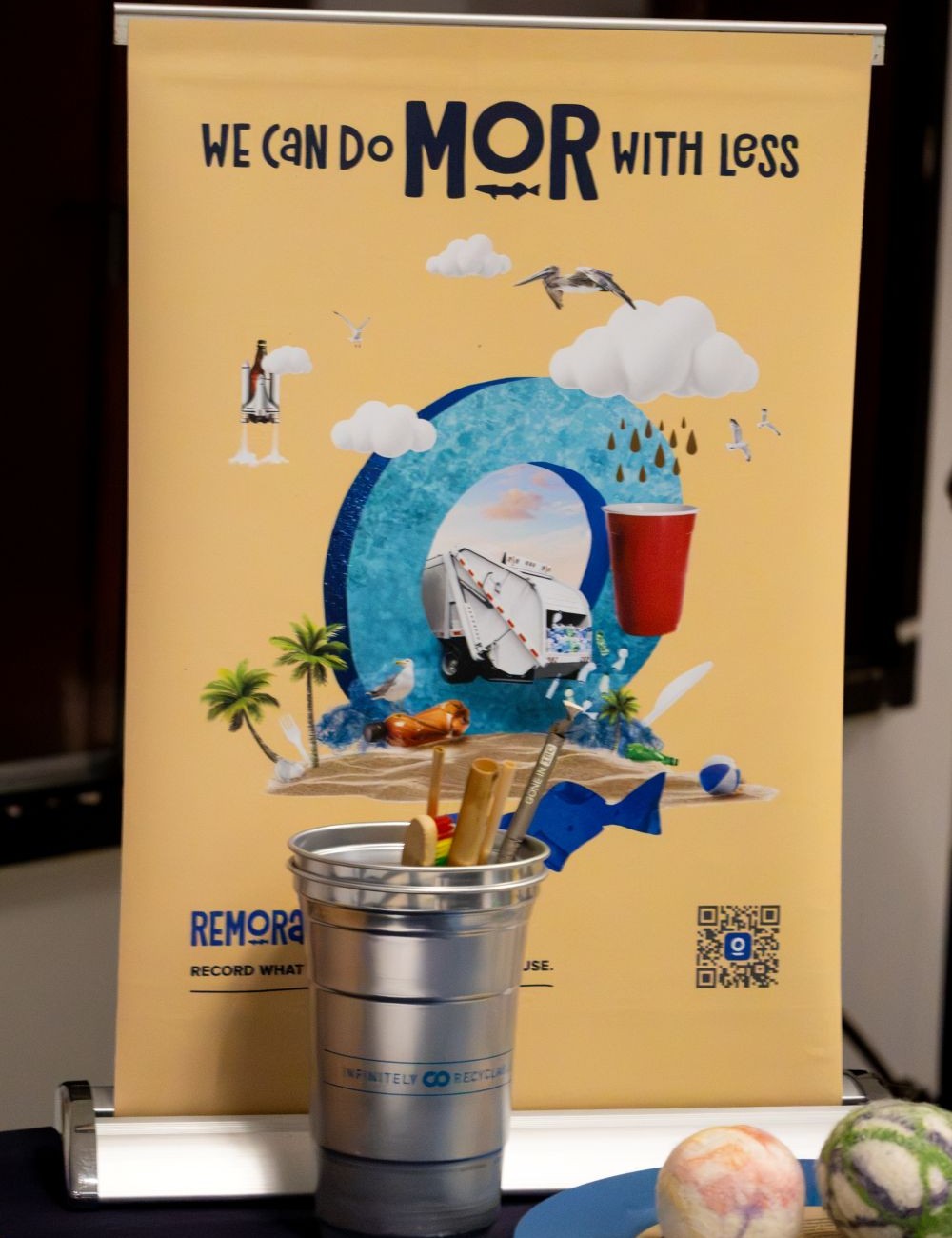
One of the steps Eckerd has taken to reduce the use of single-use plastics is launching Remora, an app designed to help individuals track their use and refusal of single-use plastics.
“All action around plastic pollution and other things that you care about has to start at a local level,” Cross says.
Cross suggests supporting local businesses that align with your values—and refusing to spend your money at businesses that don’t. For example, if a coffee shop won’t fill your reusable cup, you can stop going there, she says. On the other hand, you can spend your money at stores that make an effort to use reusable products.
“Your dollars are a way to influence policy,” Cross says.
McKenna, who majored in environmental studies and animal studies and minored in political science at Eckerd, has been in the environmental space for a decade. She grew up in Southern California and was long passionate about the ocean and whales. However, she attended an arts high school and dance was her focus. After breaking her foot twice in one year, she looked to other things she was passionate about that she could do for the rest of her life.
At Eckerd, McKenna helped launch Remora, an app designed to help you track your use and refusal of single-use plastics. This helps individuals reimagine their relationship with plastic use, as well as contribute to data that helps us understand which plastics are most easily refused, McKenna says.
Immediately after the event, Eden Smith, a senior anthropology major from Northfield, Vermont downloaded the Remora app.
“I’m just trying to take advantage of the opportunities here at Eckerd, to see and hear from politicians and actors in the community and just see what we can do,” Eden says.
Prior to watching the film, Eden didn’t know that plastics came from fossil fuels. The documentary and discussion created that connection and showed her where individual and systemic changes can be made.
McKenna is now the Development and Communications Director for ReThink Energy Florida and Project Coordinator for Remora. She educates local businesses about plastic-free alternatives, such as metal straws. Mckenna helped provide free metal straws for local coffee shops, like Pistil House.
“Using a reusable and a metal straw may seem small,” McKenna says, “but it is a small form of resistance and choosing not to be a part of that system.”
Cross added that advocacy is another important aspect of combating climate change. She advised communicating with elected officials, putting pressure on politicians and corporations and using social media to advocate.
“It takes time, but you keep doing it. You make it uncomfortable for the people who are doing the wrong things and you uplift and thank the people who are doing the right things,” Cross says.