
A recent study abroad trip to Indonesia blended political science and marine science. Photos by Addy Bunie
A recent Eckerd College study abroad trip hinged on two professors’ very distinct backgrounds: policy and marine science.
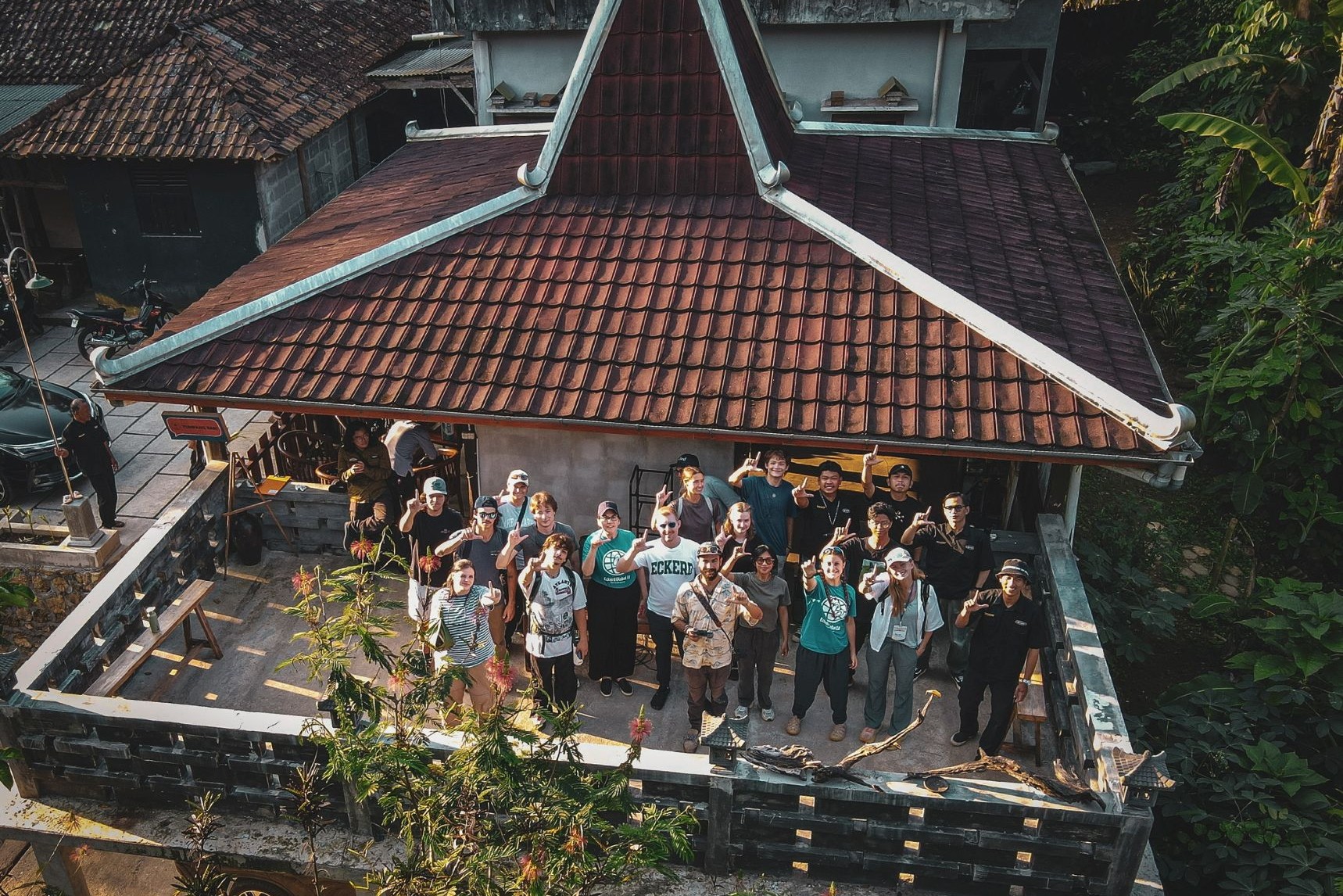
Associate Professor of Political Science Allison Quatrini, Ph.D., and Professor of Marine Science and Biology Cory Krediet, Ph.D., led a group of students to Indonesia in June for the course “Asian Environmental Issues: Indonesia.” The course addressed the intersection of culture, politics and environmental protection in Indonesia.
“You can’t have just the sciences or just the policy,” says Addy Bunie, a sophomore environmental studies and biology major from Amherst, New Hampshire, who went on the trip.
Policy is needed to make a difference, while scientific evidence is needed to back up your reasoning, she says. Political science was a gap in Addy’s knowledge that this trip filled in.
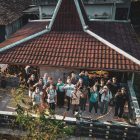
Students examined the differences in how non-governmental organizations and the government approach coral restoration. Students participated in lectures at Atma Jaya Catholic University of Indonesia and environmental excursions in Yogyakarta.
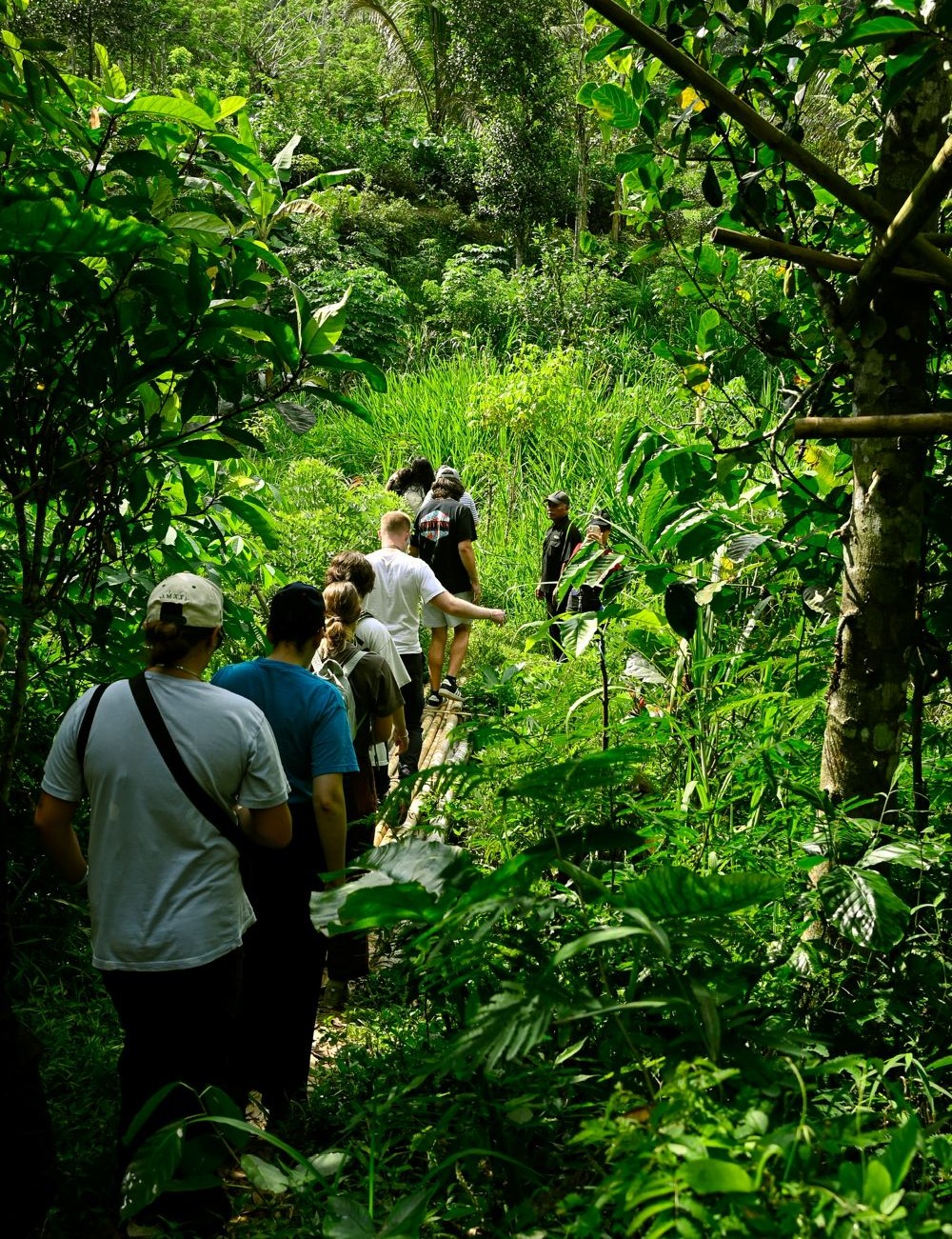
Indonesia has the third-largest expanse of tropical rainforests in the world.
Students scuba dived and performed coral restoration with the Biorock team in Pemuteran on the island of Bali. To connect the hands-on science with the community, students interviewed local government officials and community members regarding protection of the ocean and marine life.
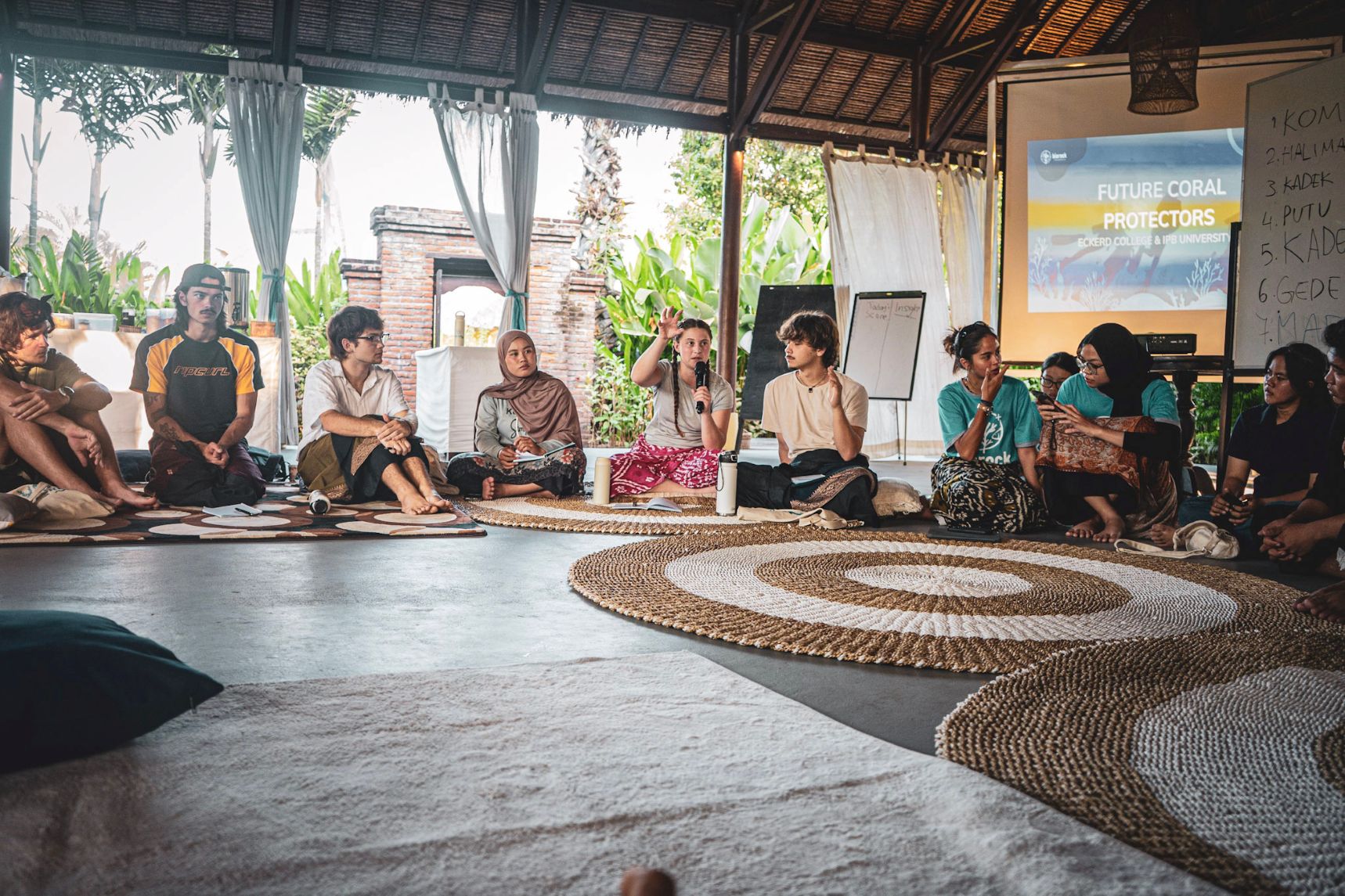
Students had the opportunity to speak with government officials and community members about the ocean and local marine life, and what policies exist to protect them.
“Students at the end of the program walked away with a greater appreciation of the complexity of what all goes into work like this,” says Krediet.
They were exposed to a different country, government, and system overall—and how each of these interacts with science. While Krediet’s and Quatrini’s specializations are disparate on paper, they work hand in hand. To achieve their intended restoration goal, collaborations like these are necessary, Krediet says.
“It definitely opened my eyes to more types of people and ways of living and attitudes toward conservation,” says Addy.
Addy spoke with people across religious backgrounds, from Hindu or Christian to Muslim. She learned how their religious practices were integrated into their everyday lives and sometimes connected with their conservation opinions.
Students visited a family-run coffee plantation, where the agriculture became physically tangible. Addy describes it as a sensory experience, where she smelled coffee plants, got a few bug bites, and stepped through a natural forest. The class tried out the filtering and drying process with coffee. They tasted the local snake fruit.
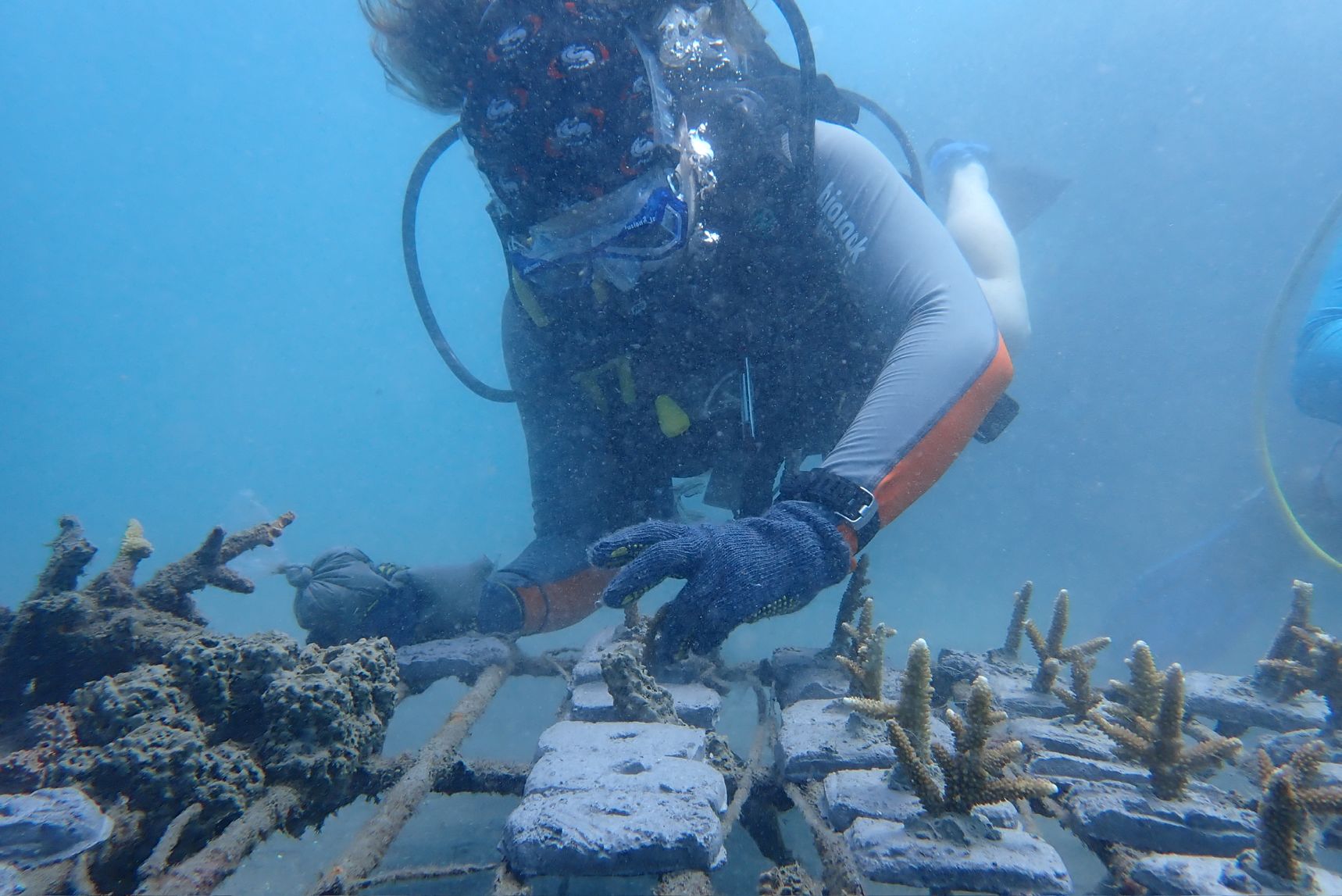
One of the immersive activities on the three-week trip was performing coral restoration in Permuteran on the island of Bali.
While this trip took place for three weeks in the summer, Krediet and Quatrini are considering making it a Spring-into-Summer course. This would entail a spring semester class on campus, followed by the immersive travel after the semester ends.
One of Quatrini’s favorite aspects of the trip was seeing who the students are outside of the classroom. She saw their skills in art and photography. Two students volunteered to do a social media takeover for the Office of Global Education, and Quatrini was impressed with the results.
“It was nice to really see them as whole people,” she says.
Over the three weeks, Krediet saw a transformation in the students. The power of travel—experiencing and embracing a different culture—is profound, he says.
“When you come out on the other side of that, you can really appreciate the value of what we do and how lucky we are that we are at a college like Eckerd, that allows students and faculty to do these types of courses,” Krediet says.