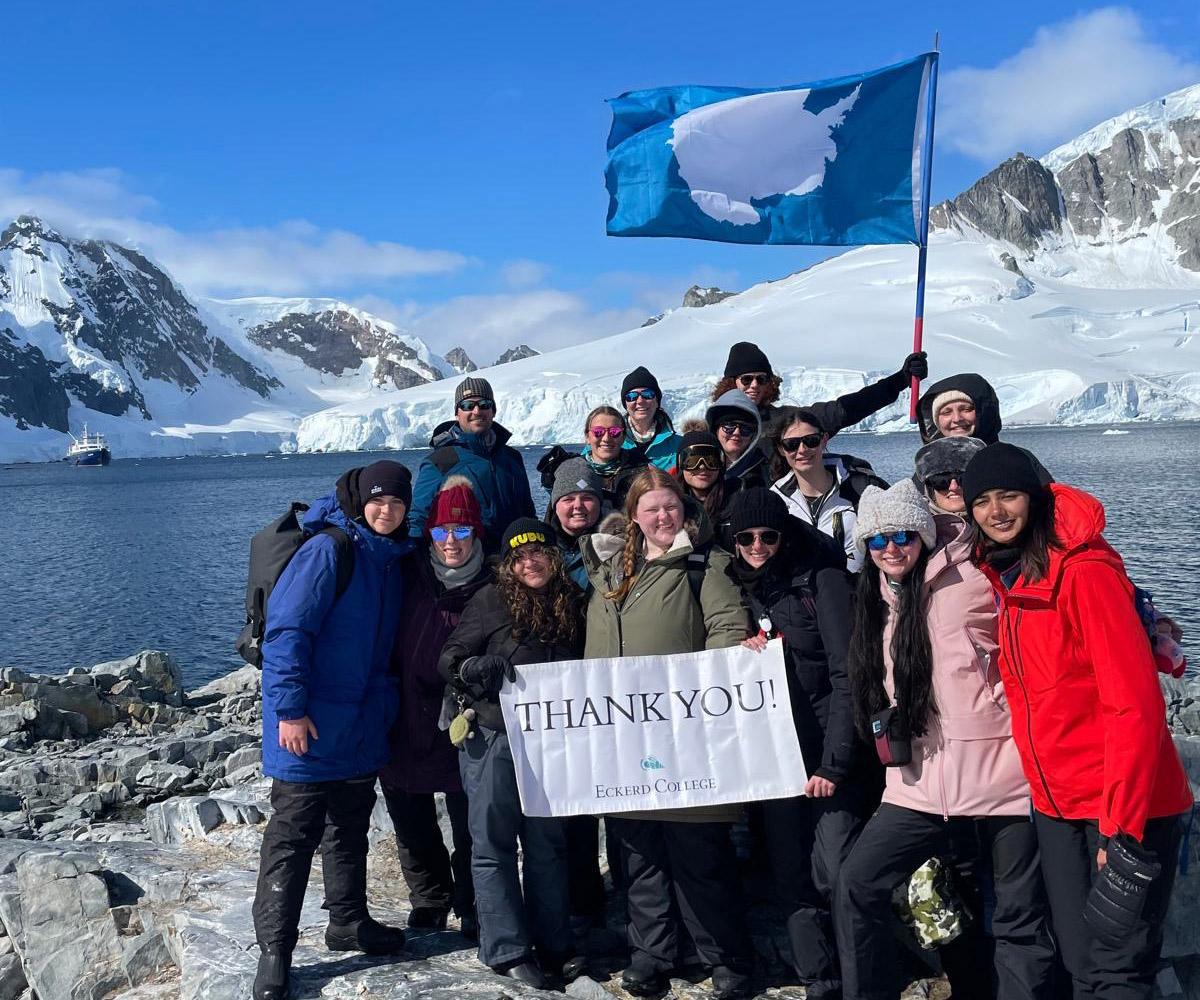
Twenty student traveled to Antarctica with Assistant Professor of Marine Science Patrick Schwing ’06, Ph.D., for a Winter Term course focused on the continent. Photo courtesy of Patrick Schwing ’06
For the first time in over two decades, 20 Eckerd College students and two chaperones journeyed over 6,000 miles south to explore the Antarctic Peninsula. Led by Assistant Professor of Marine Science Patrick Schwing, Ph.D. ’06, the trip focused on the history, oceanography, marine life and culture of the southern continent.
A similar trip was last run in 2005 by Peter Hammerschmidt, Ph.D., now a professor emeritus of economics at Eckerd College. Schwing, an Eckerd student at the time, went with Hammerschmidt and 11 Eckerd students to Antarctica then. Since joining Eckerd’s faculty, Schwing has been working on developing a new course so his students could experience the magic and wonder of Antarctica as he did 21 years ago.
For 10 days, Eckerd students sailed aboard the m/v Plancius, a converted Dutch Royal Navy vessel, with around 80 other passengers and 14 guides through the upper Antarctic peninsula. Between landings at penguin colonies, historic bases, and whale-watching cruises, they attended lectures by experts in marine science, Antarctic history and current Antarctic politics. During their time on and off the boat students witnessed seals sleeping on icebergs, orca whales playing with a humpback, massive glacier calvings, and many baby penguins.
Alana Buffardi, a junior marine science and animal studies student from Merrimac, Wisconsin, said the trip changed her perspective on Antarctica. She had watched documentaries about the continent which portrayed glacial calving—when chunks of ice break off at the end of a glacier—as a sign that “the Earth is melting, but it is actually perfectly normal.”
Traveling to Antarctica allowed her to witness these calvings firsthand and learn from the guides about the structure and movements of glaciers that cause them to calve.
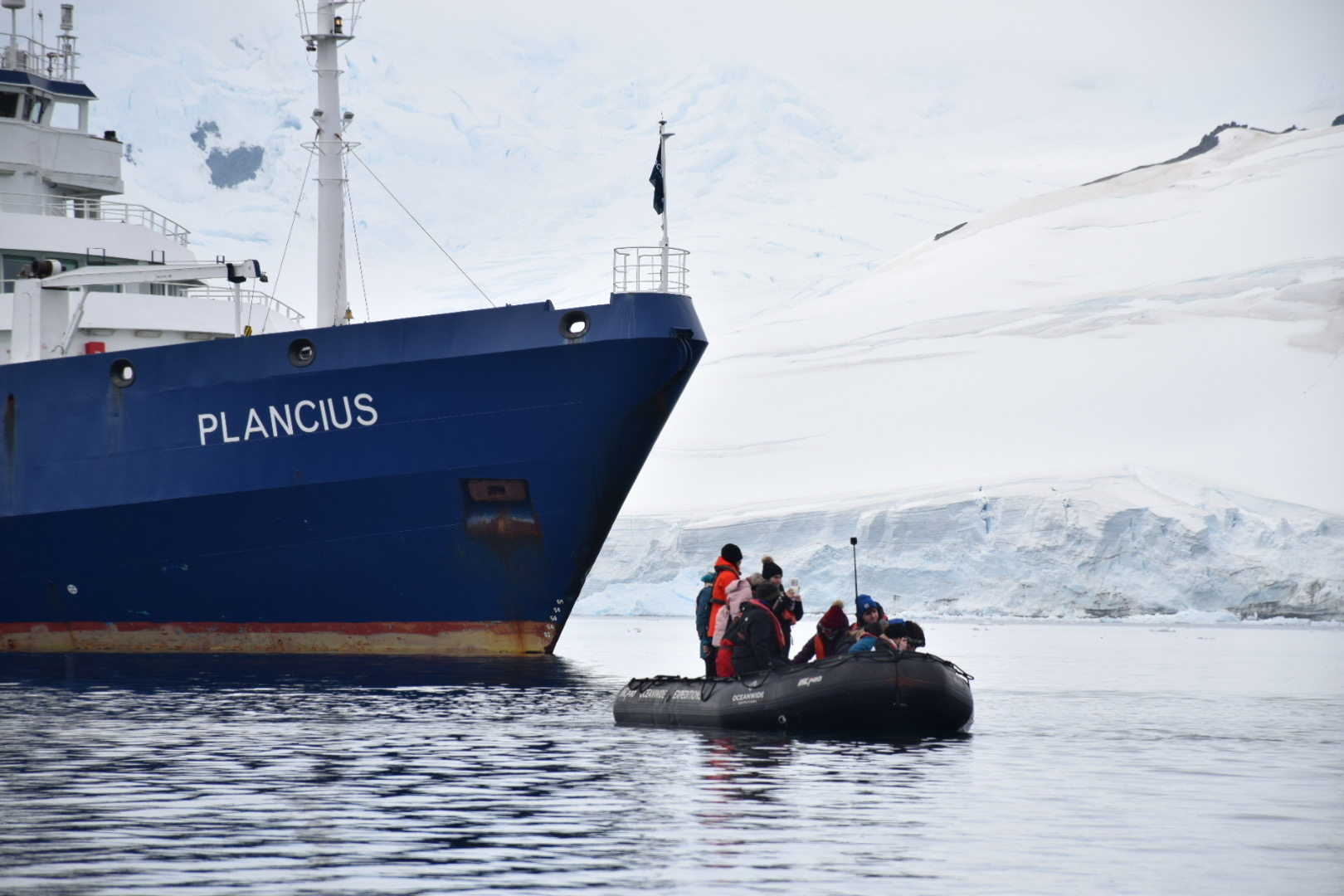
Eckerd students board a Zodiac in front of the m/v Plancius in Andvord Bay on their way to look for humpback whales, icebergs and leopard seals. Photos courtesy of Ariana Cory ’26
Through the guidance and instruction from Schwing, students explored many perspectives on Antarctica, discussing at length the impacts of human activity in such a remote place.
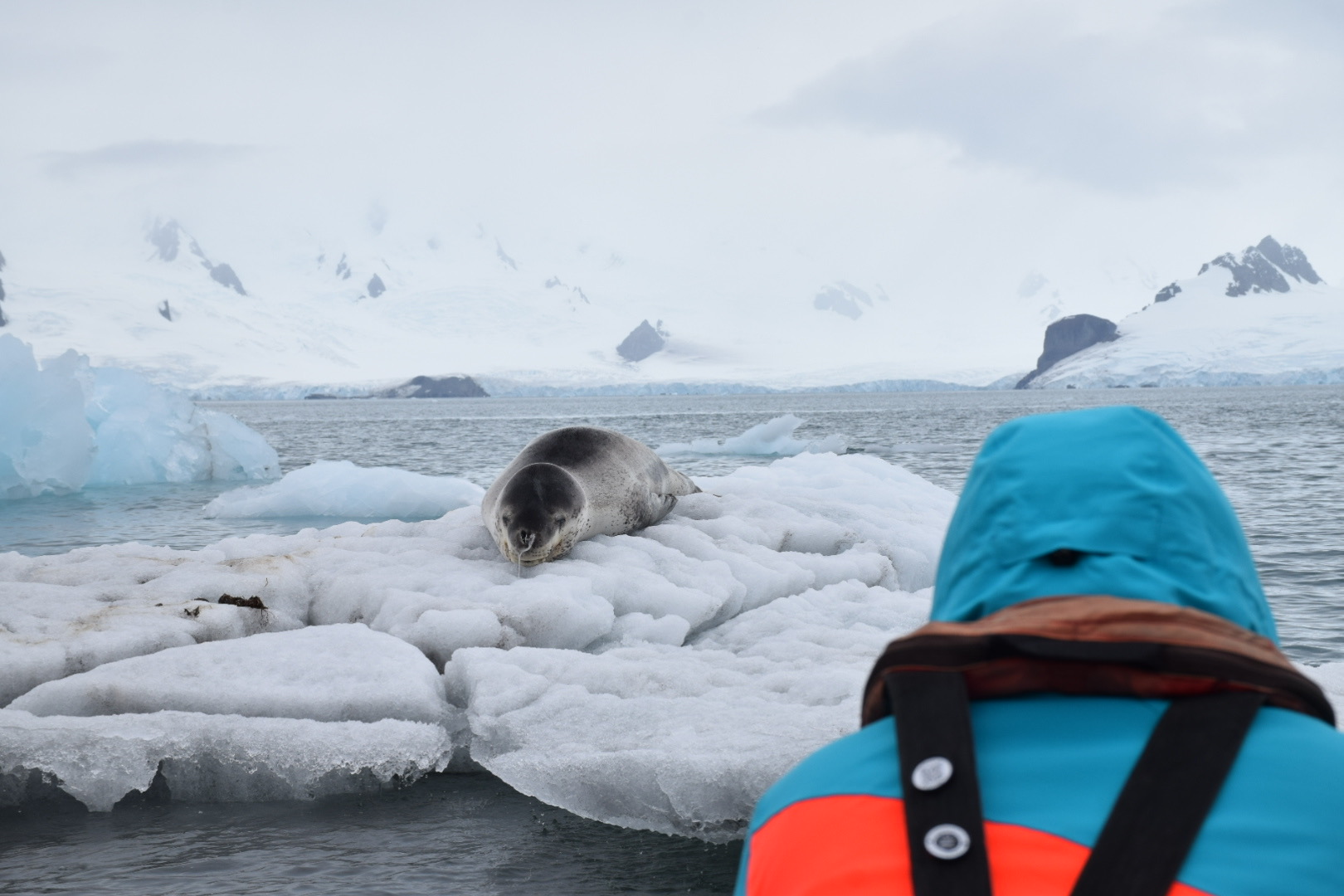
Danielle LaCasse ’06, an alumni chaperone for the trip, observes a leopard seal floating on an iceberg near Edinburgh Hill.
They learned about heroic tales of explorers, military operations, scientific research and the increase in tourism in recent decades.
Some students also had the opportunity to share things they had learned at Eckerd with other passengers and guides on the boat. After the last stop in the trip, at Edinburgh Hill, Cole Dusing, a marine science senior from La Cañada Flintridge, California, gave a lecture to the ship about columnar basalts, a unique geology feature of Edinburgh Hill. The lecture combined geological processes he had learned about at Eckerd College and research into the geologic history of Edinburgh Hill. The trip inspired several students, including Cole and Alana, to consider careers in guiding in the Antarctic. Alana said her favorite part of the trip was “talking with the guides, they were all so enthusiastic.”
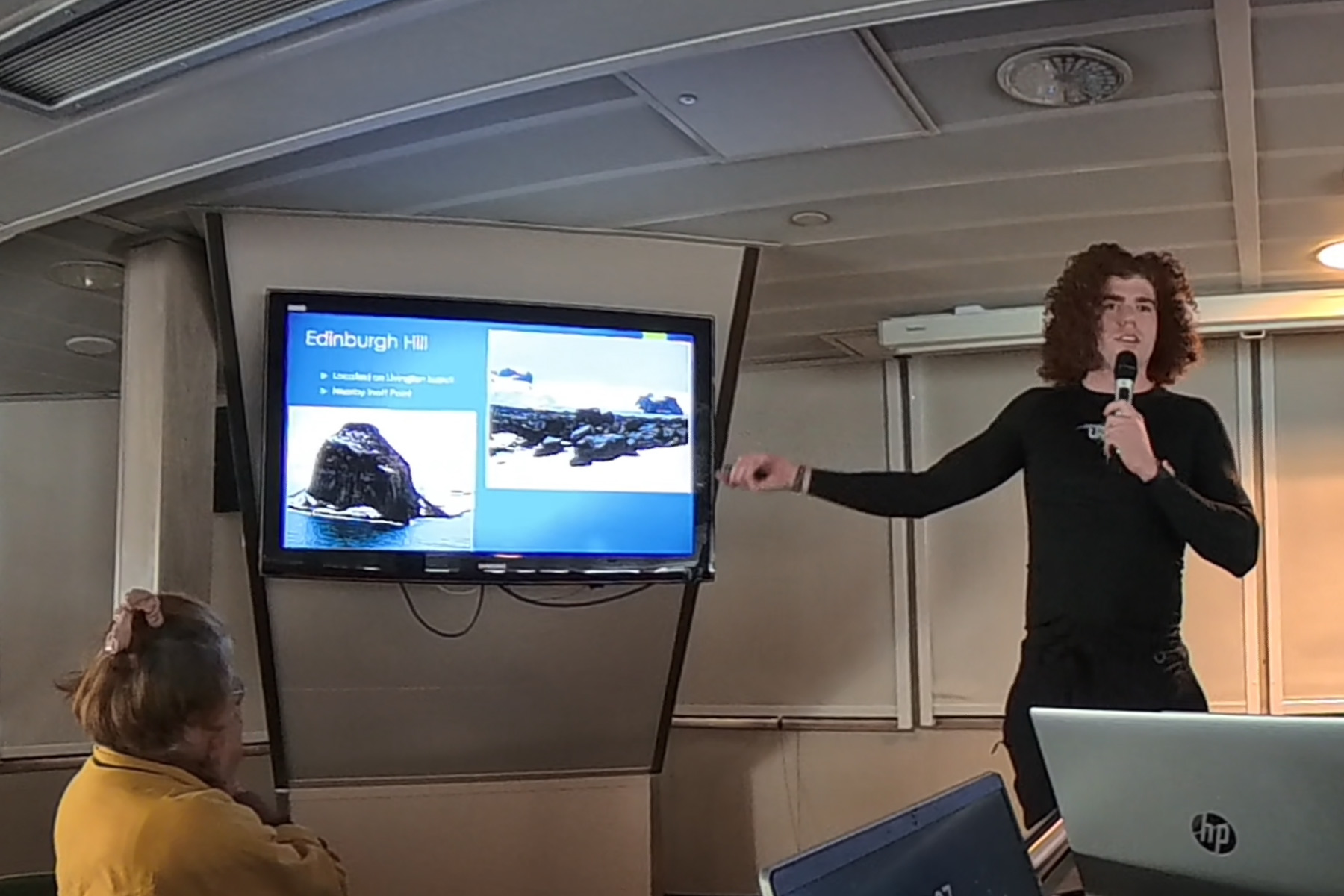
Senior Cole Dusing presents to the passengers and staff of the Plancius about the geology of Edinburgh Hill.
Their experience inspired in the students a need for conservation, sustainable tourism, and regulation of the last, vast wilderness that they will carry back to Eckerd and throughout their future careers.