
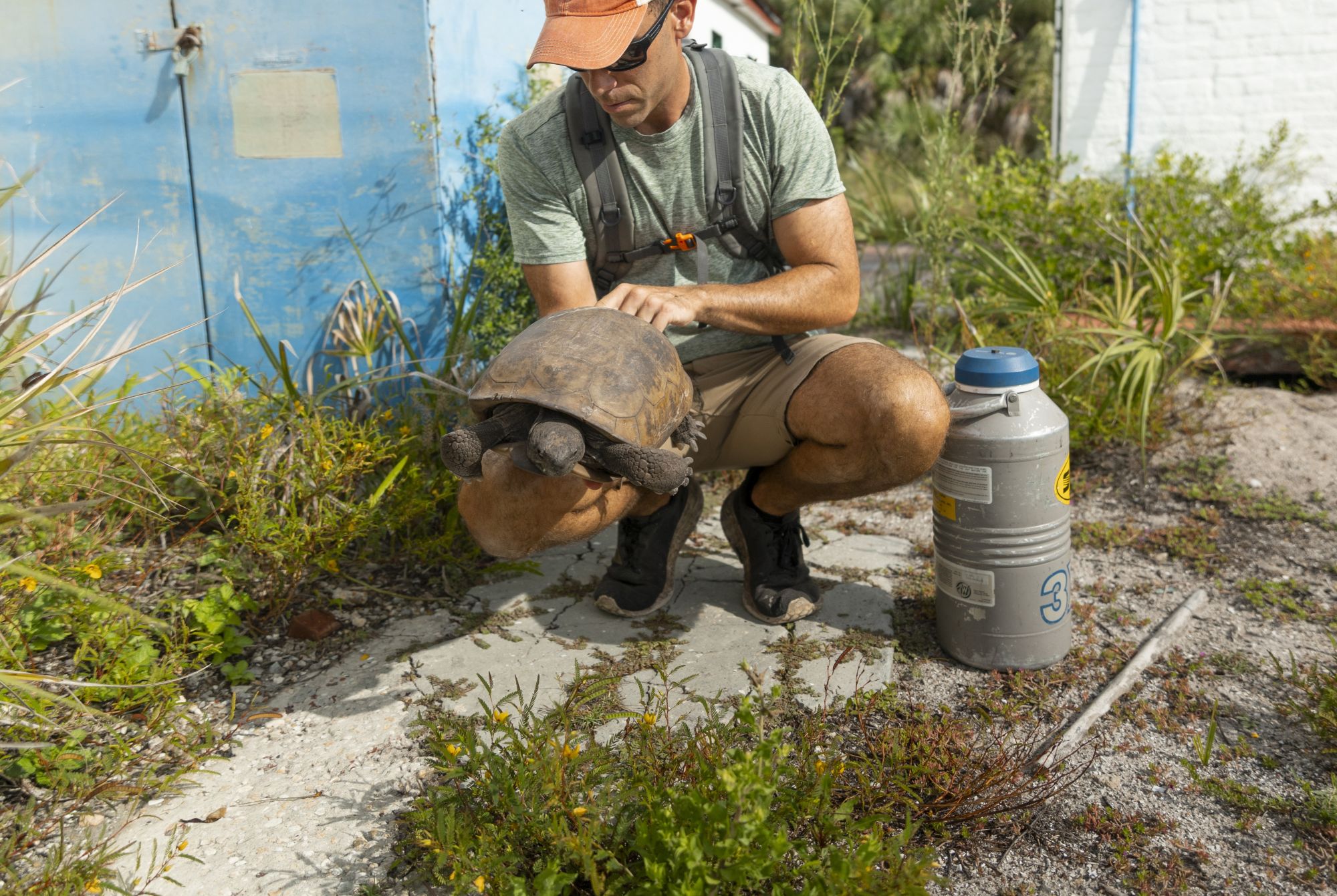
Jeffrey Goessling, Ph.D. examines a tortoise on Egmont Key. Photo by Penh Alicandro ’22
New technology is allowing the Eckerd community to tackle old questions.
Associate Professor of Biology Jeffrey Goessling, Ph.D., operates a herpetology lab where students across disciplines collaborate to study gopher tortoises. Since last summer alone, Goessling has co-authored seven research papers—with students often being a co-author. The published works have appeared in significant scientific journals like Ecology and Evolution and the Journal of Thermal Biology.
Goessling teamed up with Michael Hilton, Ph.D., associate professor of computer science, to develop time-saving technology.
“The technology really lets us get at these old questions and old assumptions that have been supported through old methods,” says Goessling.
He originally got involved in gopher tortoise research because the species was a candidate for protection under the Endangered Species Act, creating a push for answers to population questions. The tortoises themselves, he describes as cool, charismatic and having quirky aspects to their biology and behavior. Not to mention, they’re much easier to find than other species–making it more likely to have a large sample size for students to interact with.
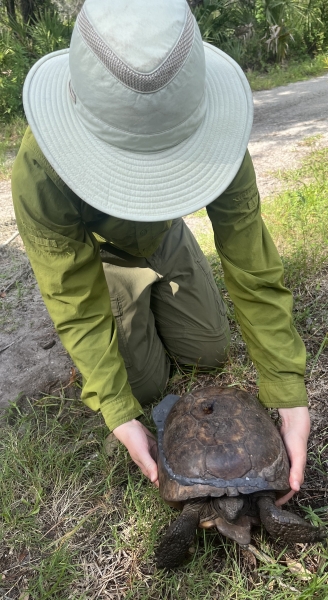
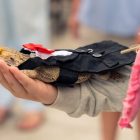
Karin Ebey, ’25 cradles a gopher tortoise during a research trip. Photo courtesy of Jeffrey Goessling
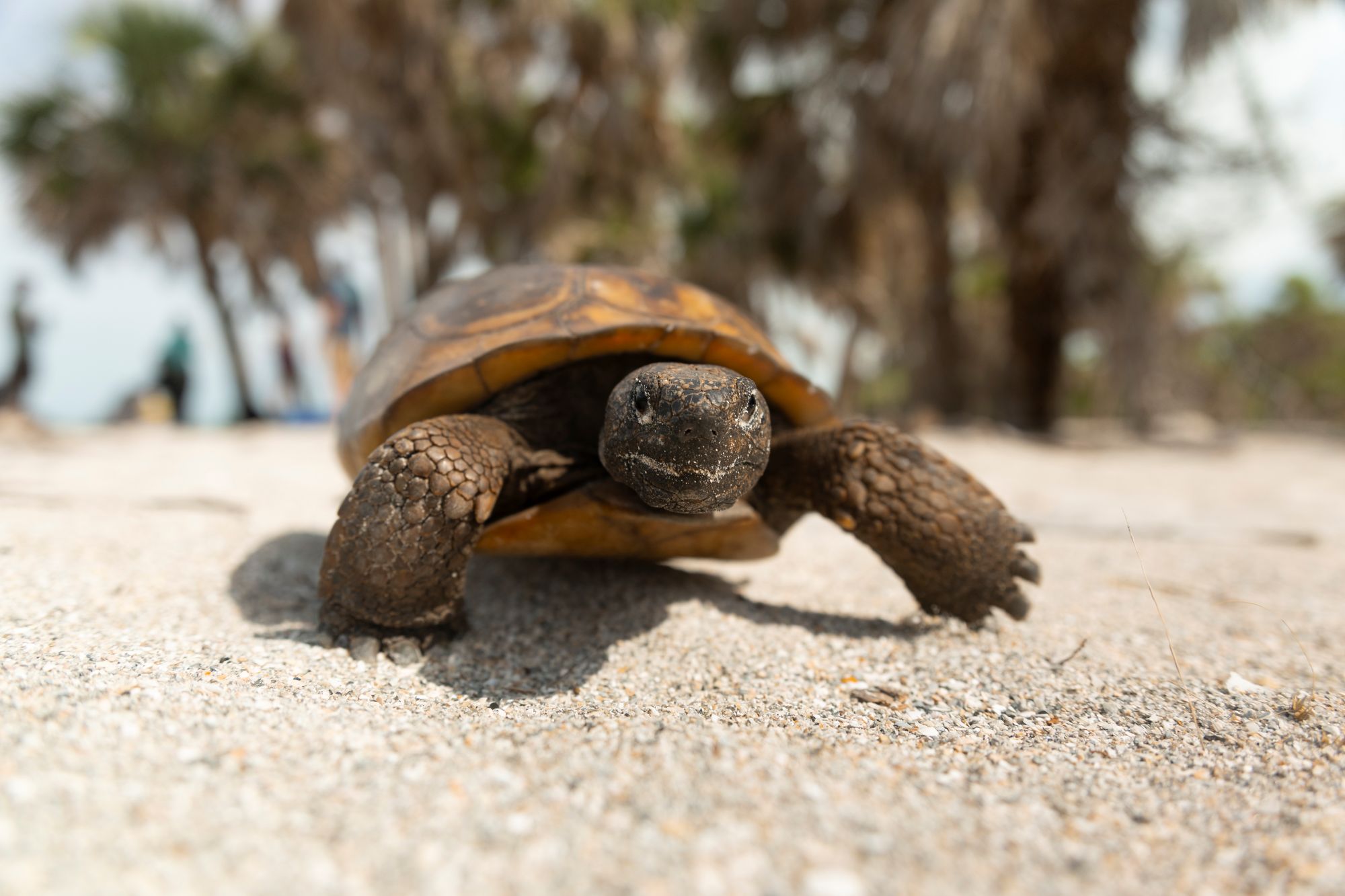
A gopher tortoise roaming Egmont Key. Photo by Penh Alicandro ’22
“There’s only so much you can learn by reading about things,” Goessling says. “When they [students] get to see this 15-pound, big, kind of gnarly, knobby animal in real life, it’s really grounding.”
Much of the research focuses on the level of individual organisms, holding a magnifying glass to behavior, physiology, temperature and reproduction. Goessling’s students conduct paid and independent thesis research. Many students conduct out-of-state research, and Goessling owns a house in southern Alabama where students can stay for free.
Karin Ebey, ’25, took several classes with Goessling and eventually co-authored published research. Ebey designed research questions and methods, placed GPS loggers on tortoises and assisted with analyses.
“I really appreciated being part of an incredible team. Dr. Goessling taught me so much about tortoises, ecology, and writing, and Dr. Hilton taught me so much about technology, statistics, and coding,” says Ebey.
Interdisciplinary research is important, Ebey says, because it gives you the tools to address complex questions. Ebey advises students to learn everything they can, even when it doesn’t appear to be directly related to their interests.
“No knowledge is wasted, and sometimes concepts and skills end up being applicable in surprising situations,” Ebey says.
Though Ebey studied biology, coding skills became helpful in asking useful questions when working on analyses with Hilton.
Though not universally true, some biologists collect vast amounts of data and don’t utilize it for years because they don’t know how to handle, analyze or ask questions about it, Hilton says.
Hilton and the students interested in computer and data science develop technological tools that identify individual tortoises and save a whole lot of time.
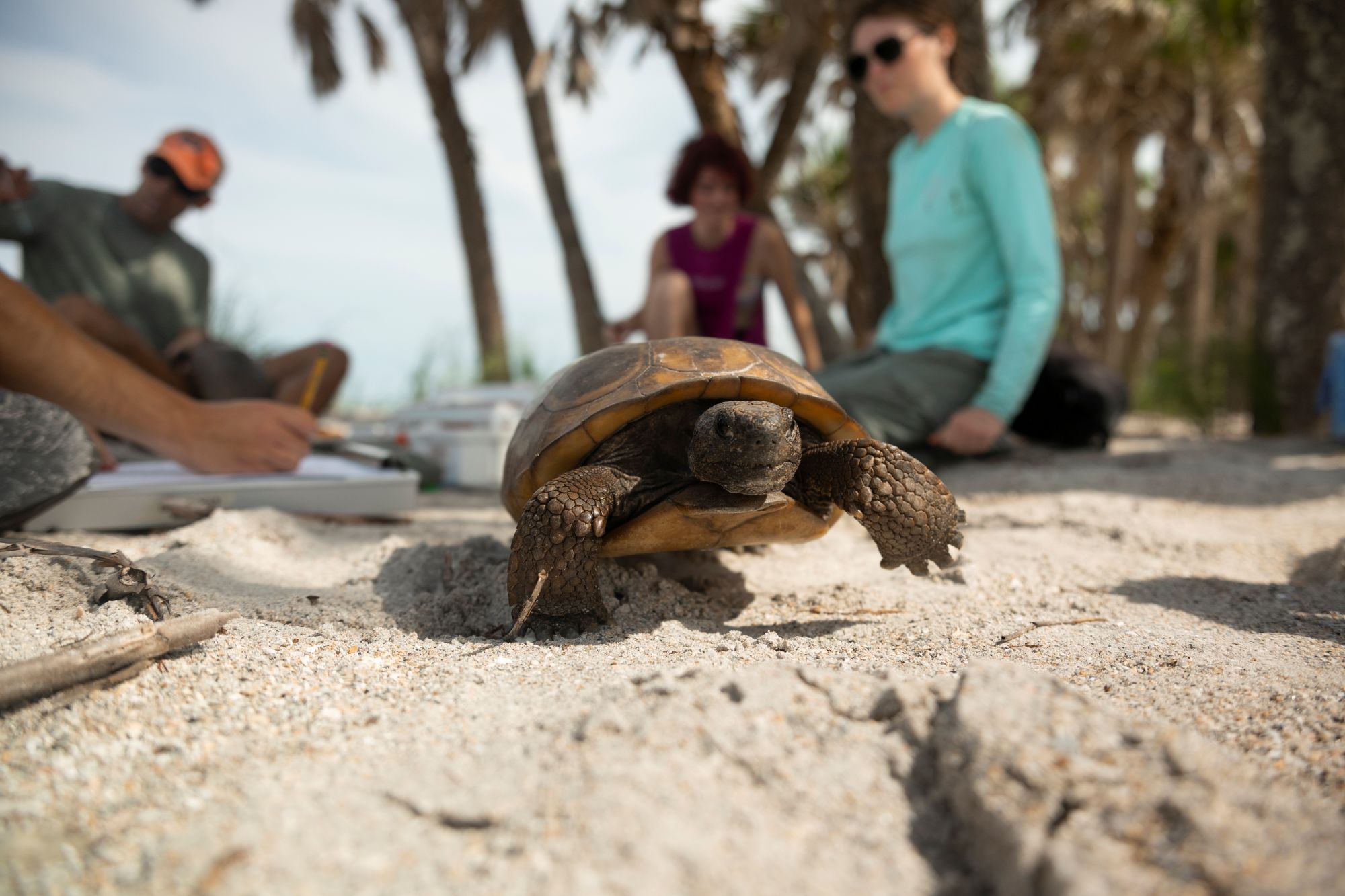
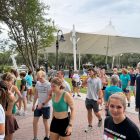
A gopher tortoise walks away from three student researchers. Photo by Penh Alicandro ’22
Gopher tortoises have recognizable patterns on their backs, Hilton says, so people can learn to identify them in the field. He figured they could train a machine to do the same. Humans looked at images of tortoises in comparison to the software’s identification to determine its accuracy. Hilton jokes that he has a high tolerance for “tediosity”–and he’d routinely check on his students working tedious assignments.
Once the researchers have identified an individual tortoise, they analyze its social network.
“There are certain animals that preferentially interact with each other and not with other tortoises. So you can think of it as like junior high, and they form cliques,” Hilton says.
Hilton says he is not a micromanager and he wants to treat his research students as colleagues. Mark Yamane, ’22, worked closely with Hilton on this research for his undergraduate thesis, and he’s now a master’s student in the Aquatic and Fishery Sciences program at the University of Washington.
“Machine learning is kind of like a tool and it can be applied to everything,” Yamane says. “There’s all this biology that you wouldn’t learn necessarily just within computer science.”
Yamane says Eckerd provided opportunities to get involved with other disciplines and develop new skills, which has made him a unique candidate for future opportunities.
The technology that Yamane played a foundational role in developing is still in use when appropriate for the research, Hilton says.
“These things rarely die,” Hilton adds. “If you build something useful, it’s going to continue to get used over and over.”