
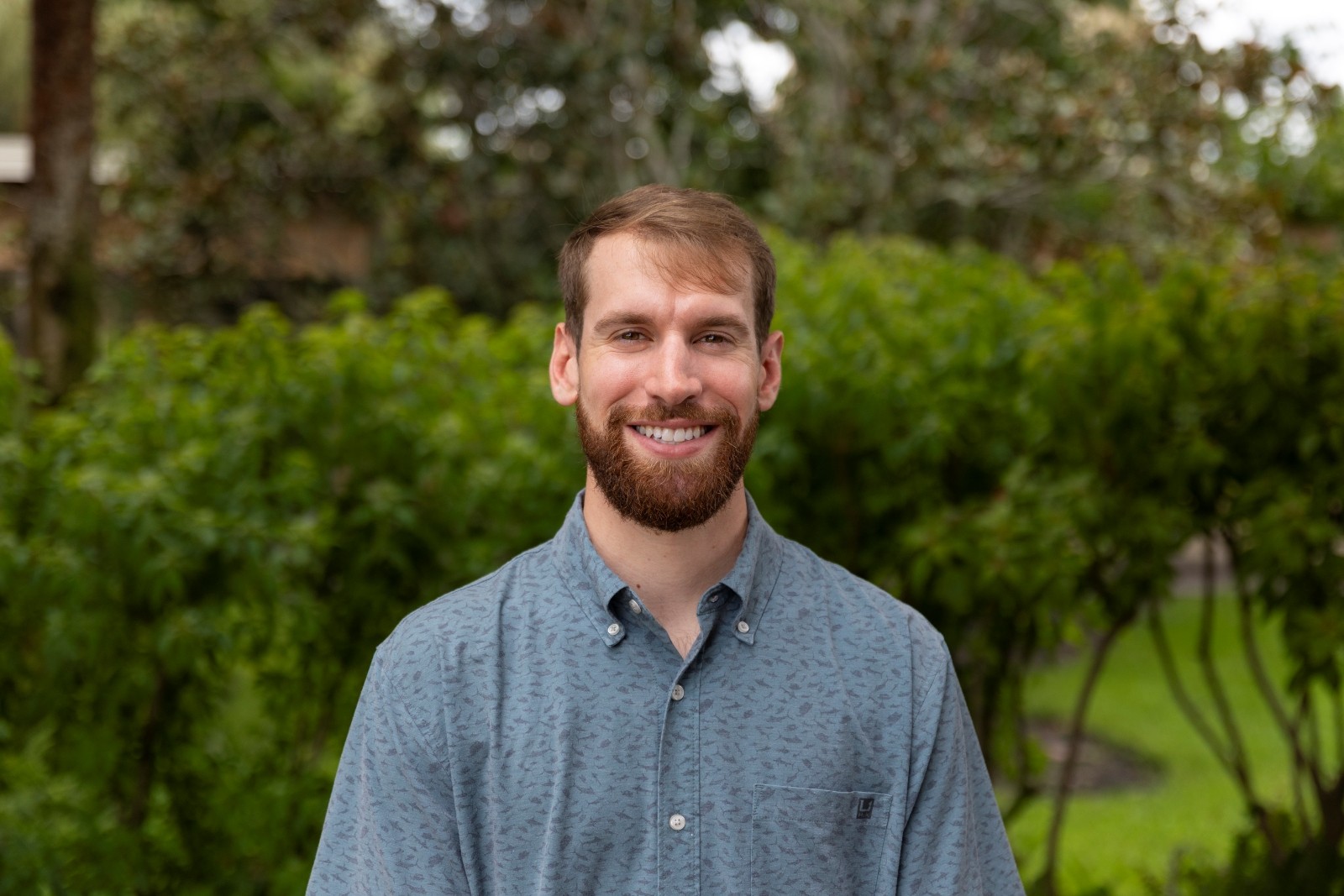
John Hlavin, Ph.D., is a new assistant professor of marine science at Eckerd College this fall. Photo by Penh Alicandro ’22
Students have already begun reaching out to Eckerd College’s newest marine science faculty member about a shark lab that doesn’t quite exist yet.
After the retirement of Professor Emeritus of Marine Science & Biology William A. Szelistowski, Ph.D., Eckerd College was looking for its next shark expert.
John Hlavin, Ph.D., will be the new assistant professor of marine science beginning this fall semester. Hlavin recently earned his doctorate in environmental science and policy from the University of Miami Rosenstiel School of Marine, Atmospheric, and Earth Science. His research background is in shark trophic ecology, or diet and resource use.
Hlavin first heard about Eckerd after a trip to the University of Notre Dame Environmental Research Center in Wisconsin. His mom began digging around online for her aspiring marine biologist son when she found the National Oceanic and Atmospheric Administration (NOAA) Ernest F. Hollings Undergraduate Scholarships, which Eckerd has earned more than any other college in the country. Hlavin earned this scholarship and attended orientation in Silver Spring, Maryland, as a rising college junior.
“I joke that, like, every third student at the orientation was an Eckerd student,” he says. “It was my first foray into the marine science world.”
At the conference, the stars began to align.
Hlavin’s former University of Notre Dame professor was there and wearing a T-shirt advertising that Notre Dame was hiring ecologists. Hlavin didn’t feel completely qualified to enter the faculty job market, but he went for it. He was encouraged by his advisor, Associate Professor and Director of the Shark Research and Conservation Program at the University of Miami, Catherine Macdonald, Ph.D., to apply to other faculty positions if he was going to dedicate the time to put together the application materials.
@marine.bio.john Three MUST DOs for aspiring marine biologists 👨🏻🔬 #marinebiology #shark #research #careeradvice ♬ Nocturne (Chopin) calm piano solo - もつ
John Hlavin, Ph.D., has more that 144,000 followers on TikTok.
Hlavin found that Eckerd had a retiring professor, Szelistowski, and the College wanted another shark expert.
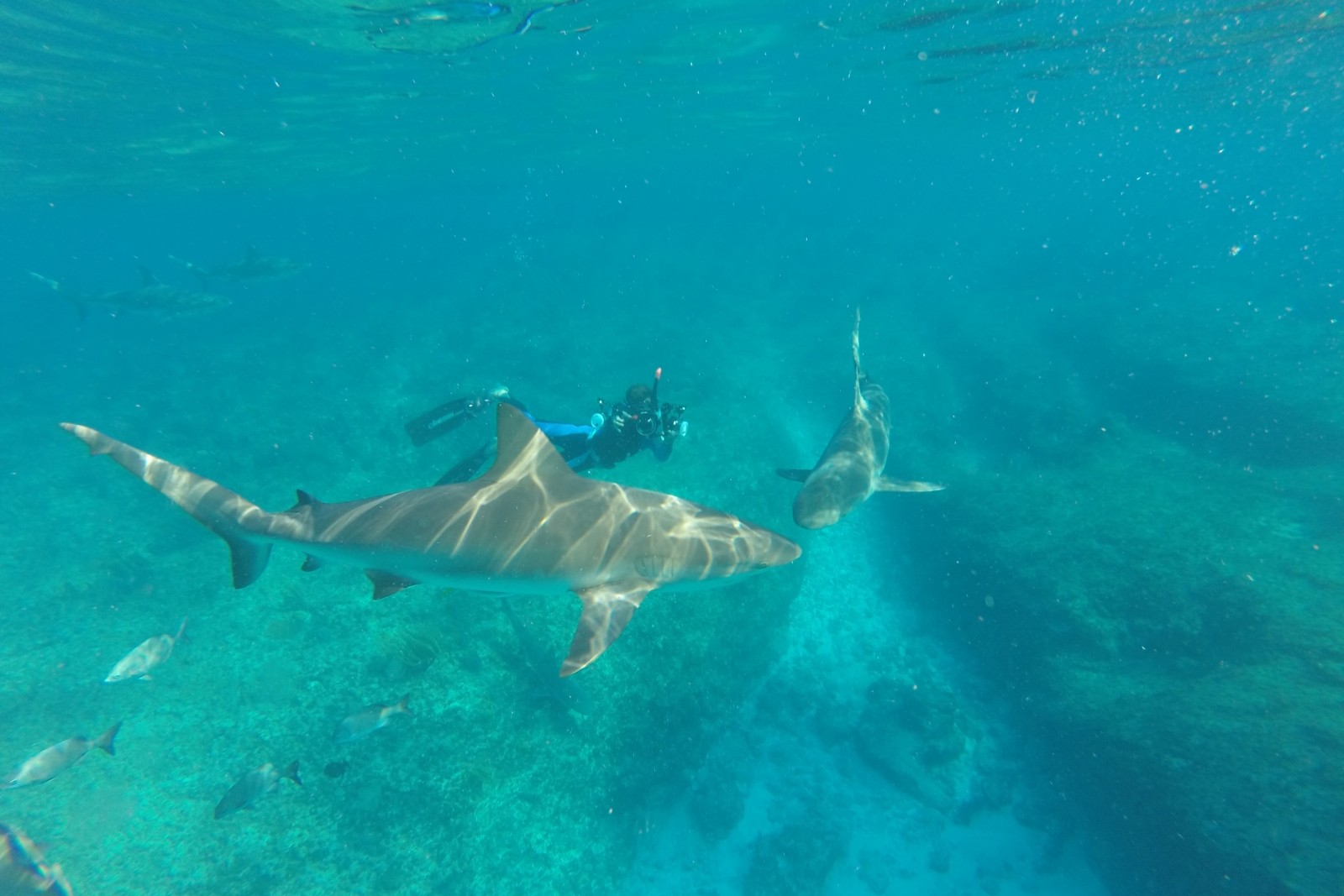
An Eckerd College student photographs Caribbean reef sharks at the the Bimini Shark Lab. Photo by Tristan Ogdahl ’20
“It sort of felt like a unicorn of an opportunity. I don’t know if I would ever come across another job posting that was specifically hiring for somebody with shark experience. It’s not a big field,” Hlavin says.
In addition to teaching courses including Principles of Ecology and Elasmobranch Biology and Management, Hlavin will set up a new lab group focusing on sharks, rays and other predatory fishes. Hlavin wants students involved in research projects and hands-on fieldwork once the lab is up and running.
“I’ve had a lot of students already reaching out to me, expressing interest in joining this lab that sort of doesn’t even exist yet,” he says. He’s telling students to keep in touch.
The great hammerhead shark, which is globally listed as critically endangered, is Hlavin’s favorite shark species. Their population in the U.S. is doing better than in some other countries, so Hlavin sees a unique opportunity here to advance research and compile data that are crucial for management elsewhere.
Making research findings accessible is significant to Hlavin, so he aims to publish his papers as open access, so readers don’t have to pay. In addition to formal research, he posts short-form videos on social media.
Talking candidly online, Hlavin says, may help break down the wall between scientists and the general public.
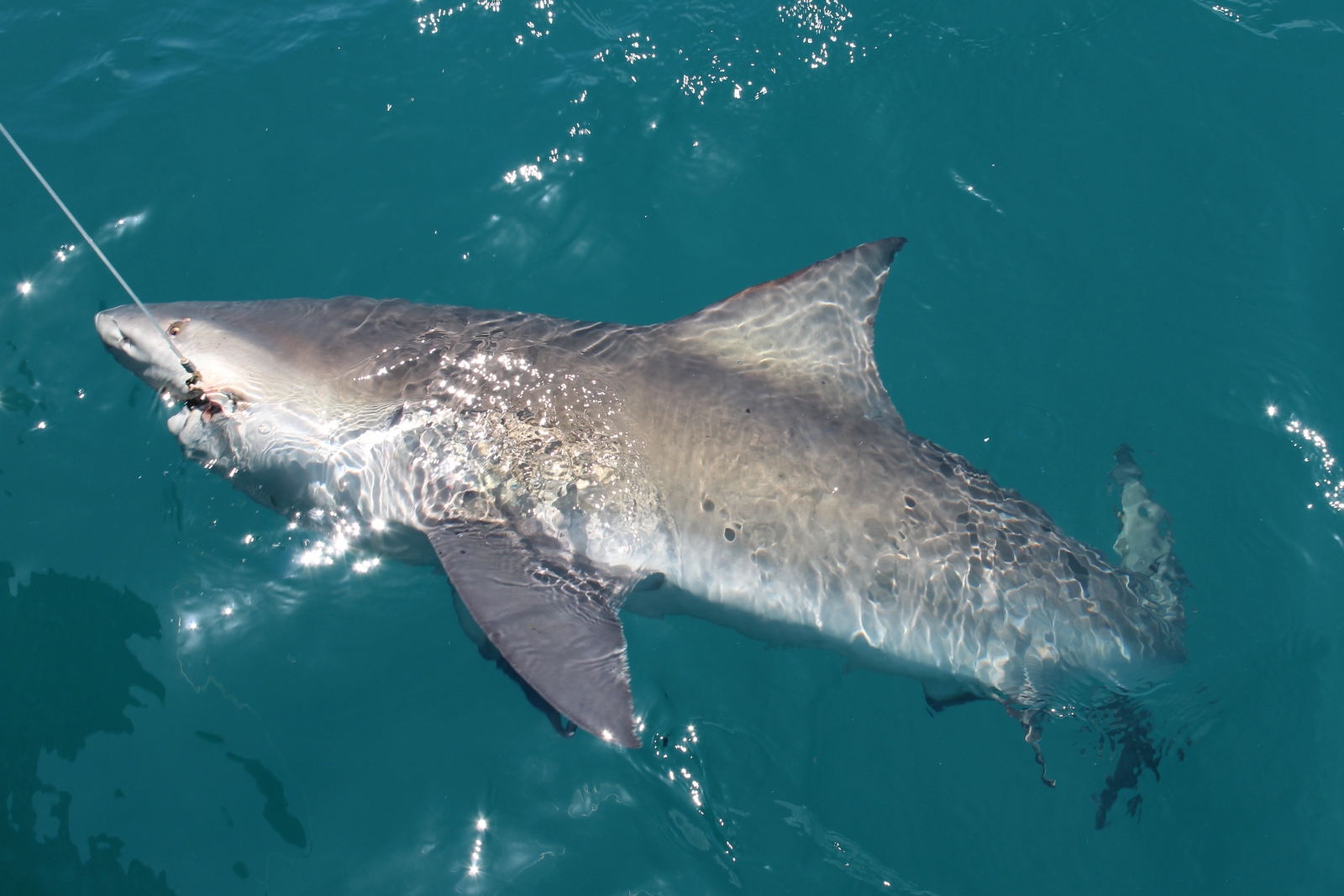
A bull shark is retrieved from the water for a dorsal fin measurement. Photo by William Szelistowski
“I think right now there’s a skepticism that scientists are very biased or they are out of touch with reality,” he says. “A lot of things like Shark Week, to be honest, aren’t necessarily the best, because they give people the perception that shark research is going out and looking for the biggest great white shark, when 99 percent of shark research isn’t,” he says.
His social media content has even led to collaborative opportunities with the Monterey Bay Aquarium and has provided a vessel to connect with younger generations, Hlavin says. Hlavin now has 144,000 followers and 5.4 million likes on TikTok.
In high school, Hlavin wanted to be an entrepreneur or inventor. Fish were generally in the picture. He had an idea for a mom-and-pop fish store that would be an experience to visit, with well-maintained tanks and an aesthetic look, rather than the “utilitarian” and tiny tanks seen in some pet shops.
“I always joke that I went from wanting to be on Shark Tank to wanting to be on Shark Week,” he says.
Outside of work, he enjoys scuba diving, reading sci-fi and fantasy books, spending time with his wife and two children and walking their dog Mufasa (“Moofie”).
In true Eckerd fashion, Hlavin recognizes the College’s interdisciplinary nature. Research, Hlavin says, is not the only way to have a meaningful career in marine science. We also need people in policy and law, education and communication.
“I’m dedicated to making sure that they [students] develop the skill sets that they need to be competitive and make a career in this field work, and show them that there’s so many different ways that can look.”