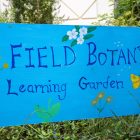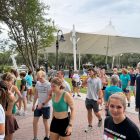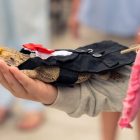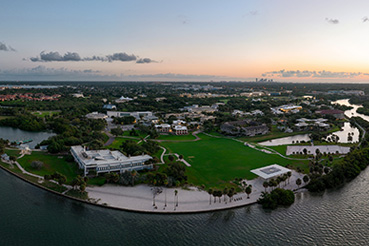

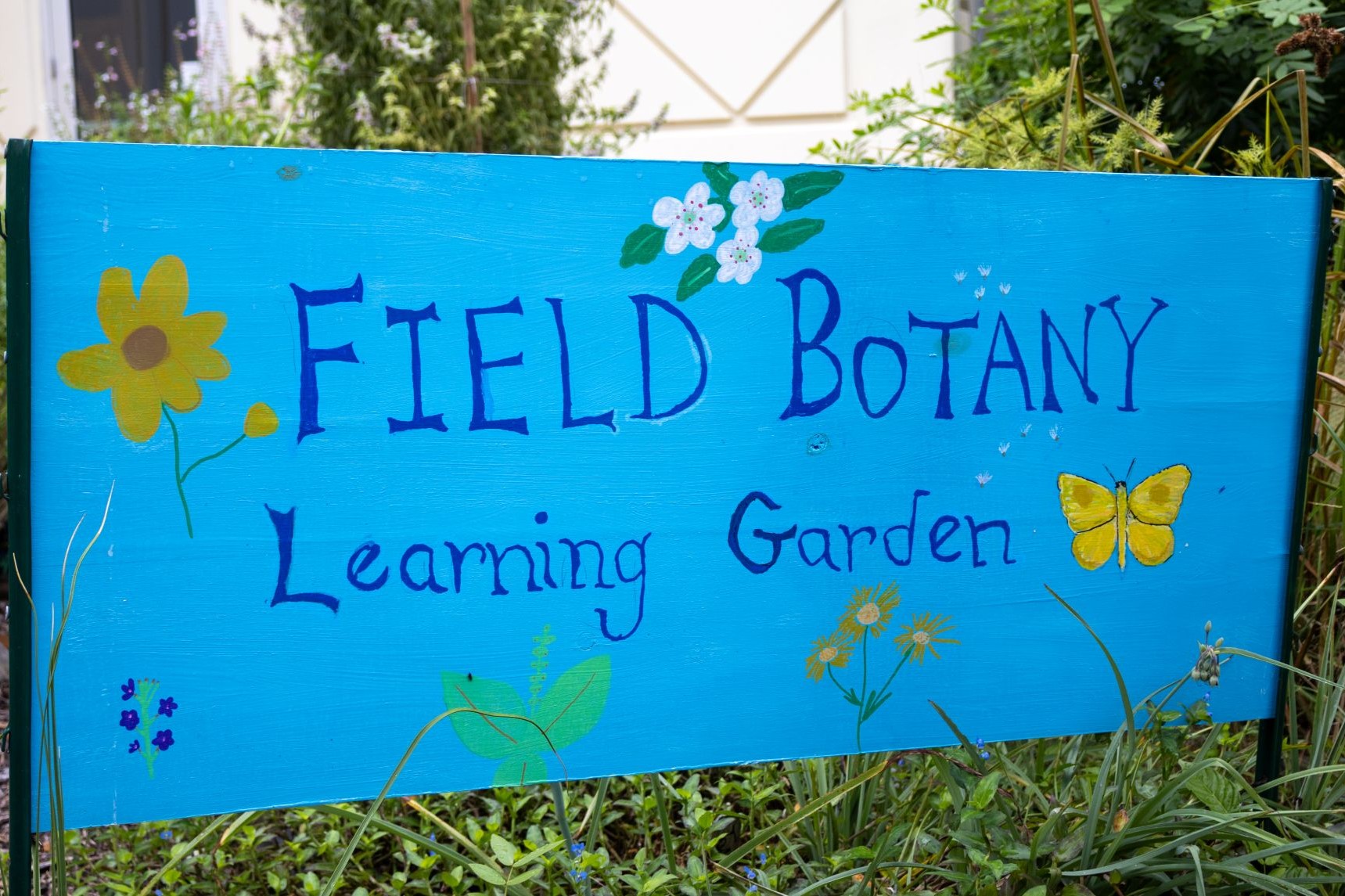
Eckerd has utilized previously barren space on the south side of the James Center to install a learning garden for Field Botany students. Photo courtesy of Madison DeVore ’25
“It was basically just a bare plot of earth when we started,” says Chemistry Instructor Benjamin Chemel, Ph.D.
Now, roughly 125 native plant species grow in that once-bare plot of land. Chemel collaborated with Visiting Assistant Professor of Theatre Antonia Krueger, Ph.D., and the Eckerd College Conservation Corps to convert a 500-square-foot space on campus into a botany learning garden.
The garden sits behind the James Center for Molecular and Life Sciences, where Chemel teaches Field Botany.
“I have found over the years that it makes it much more tangible and easy to master when they can see the things in real life,” Chemel says.
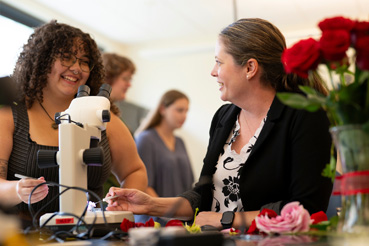
Chemel strives to give his students the skill set to identify plants anywhere in the world, not just Florida. Students learn to identify and dissect plants in Field Botany. They’ll focus on plant families, pattern recognition and using dichotomous keys, which is made easier with physical specimens instead of static pictures, Chemel says.
Approximately 125 native plant species are planted in the new garden. Photo courtesy of Madison DeVore ’25
Beach Verbena, Bahama Cassia and Gulf Coast Swallowwort are just a few of the plants students spot growing. The garden, full of vivid flowers and grass-like plants, is often buzzing with pollinators.
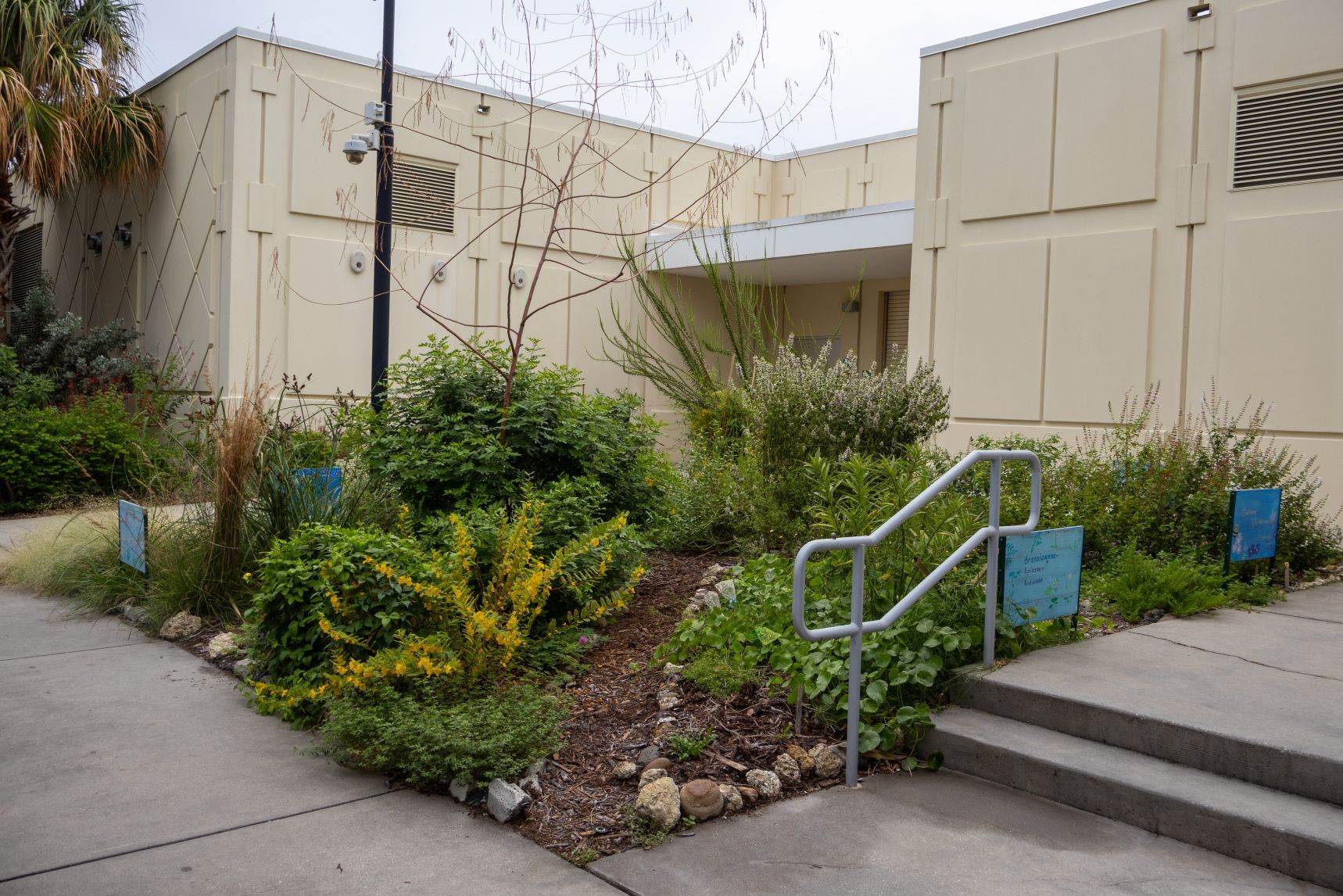
Plants in the garden include Beach Verbena, Bahama Cassia and Gulf Coast Swallowwort. Photo by Madison DeVore ’25
Students didn’t solely help with the planting, but they designed the signs labeling plant types and species.
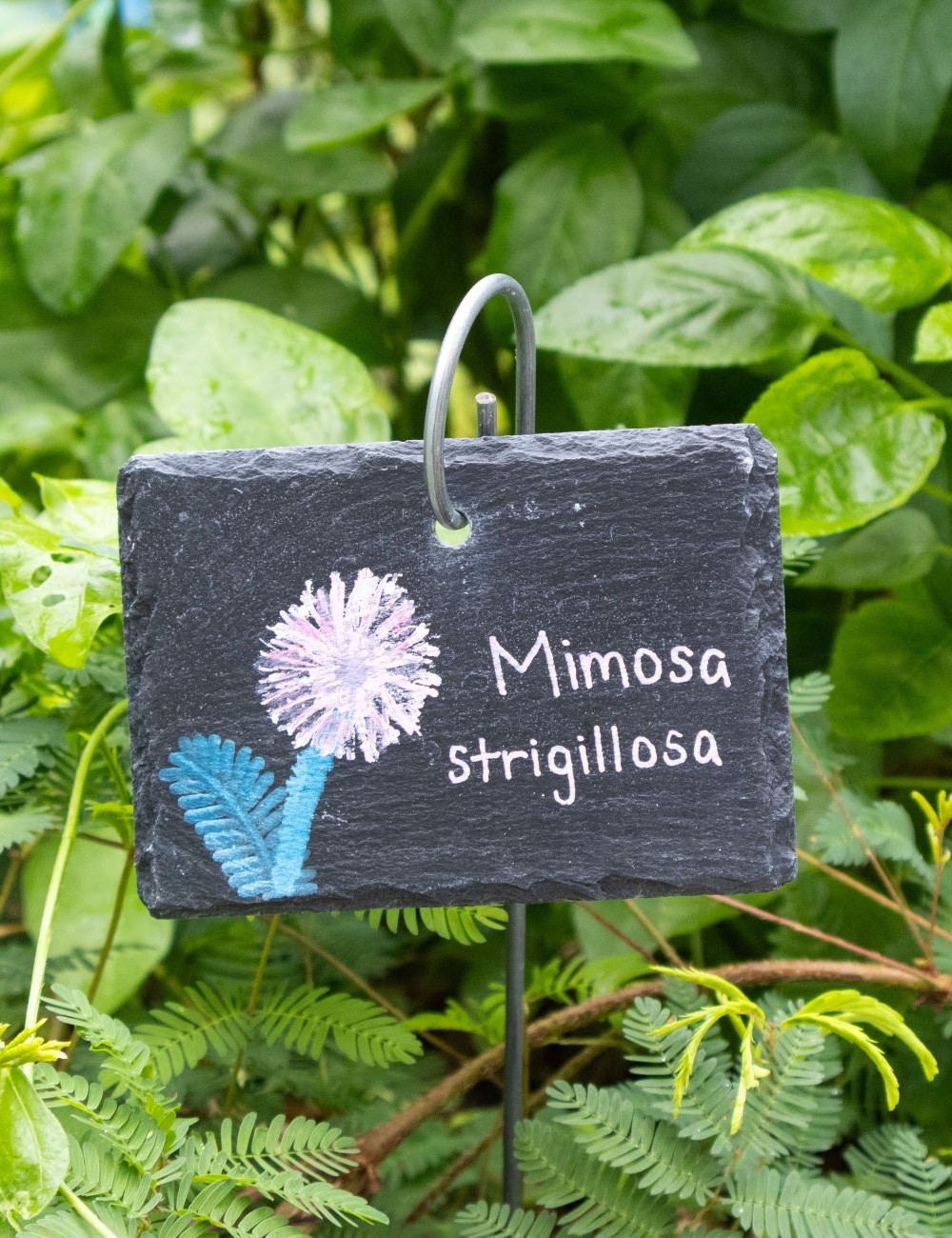
Krueger’s Arts and Crafts for Planet class painted plant markers to install in the garden. “Mimosa strigillosa,” reads a handmade sign for a fluffy sphere-shaped purple plant.
Krueger is passionate about helping students merge their interest in art and the environment. She wants students to see that there are more ways than one to care for the planet.
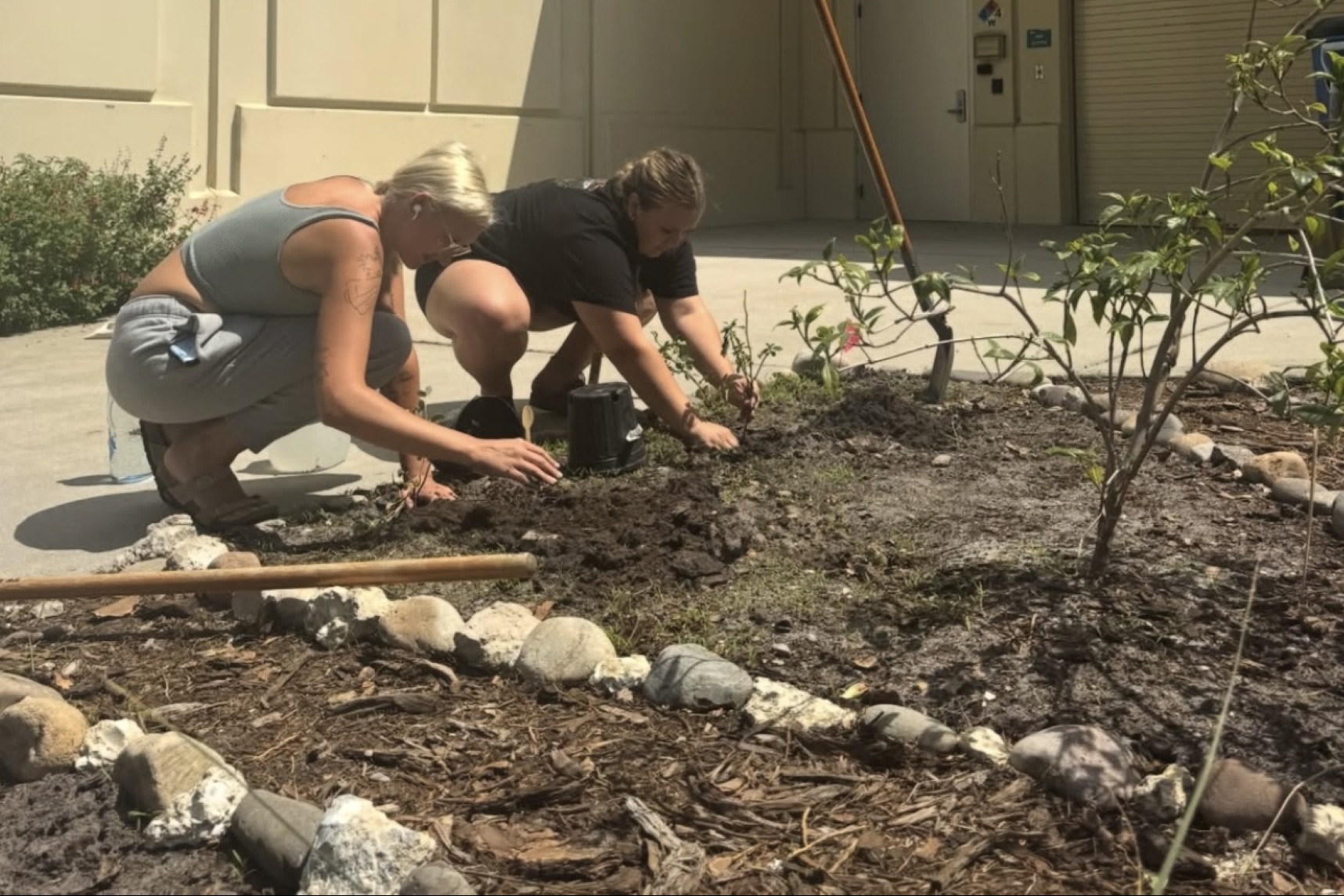
“A student who realizes they don’t want to go into marine science doesn’t need to stop loving the ocean,” Krueger says. “If a student has an interest in visual arts and marine science, they can talk to their professors and most likely there’s already some kind of collaboration going on.”
Eva Keller, a sophomore musical theatre student in the 2+2 BFA program with Eckerd and Circle in the Square Theatre School, made garden signs in Krueger’s class.
Originally from Palm Harbor, Florida, Eva has been involved in performance art since she was in fifth grade. She teaches at Tampa Bay Performing Arts Academy once a week—the very children’s theater she attended as a kid.
Eva recalls learning about specific plants, like graminoids, during the botany learning garden collaboration.
“I remember when it was about five inches tall and I was digging my hand in the dirt,” Eva says. “Now I walk over there and I’m like—it’s taller than I am!”