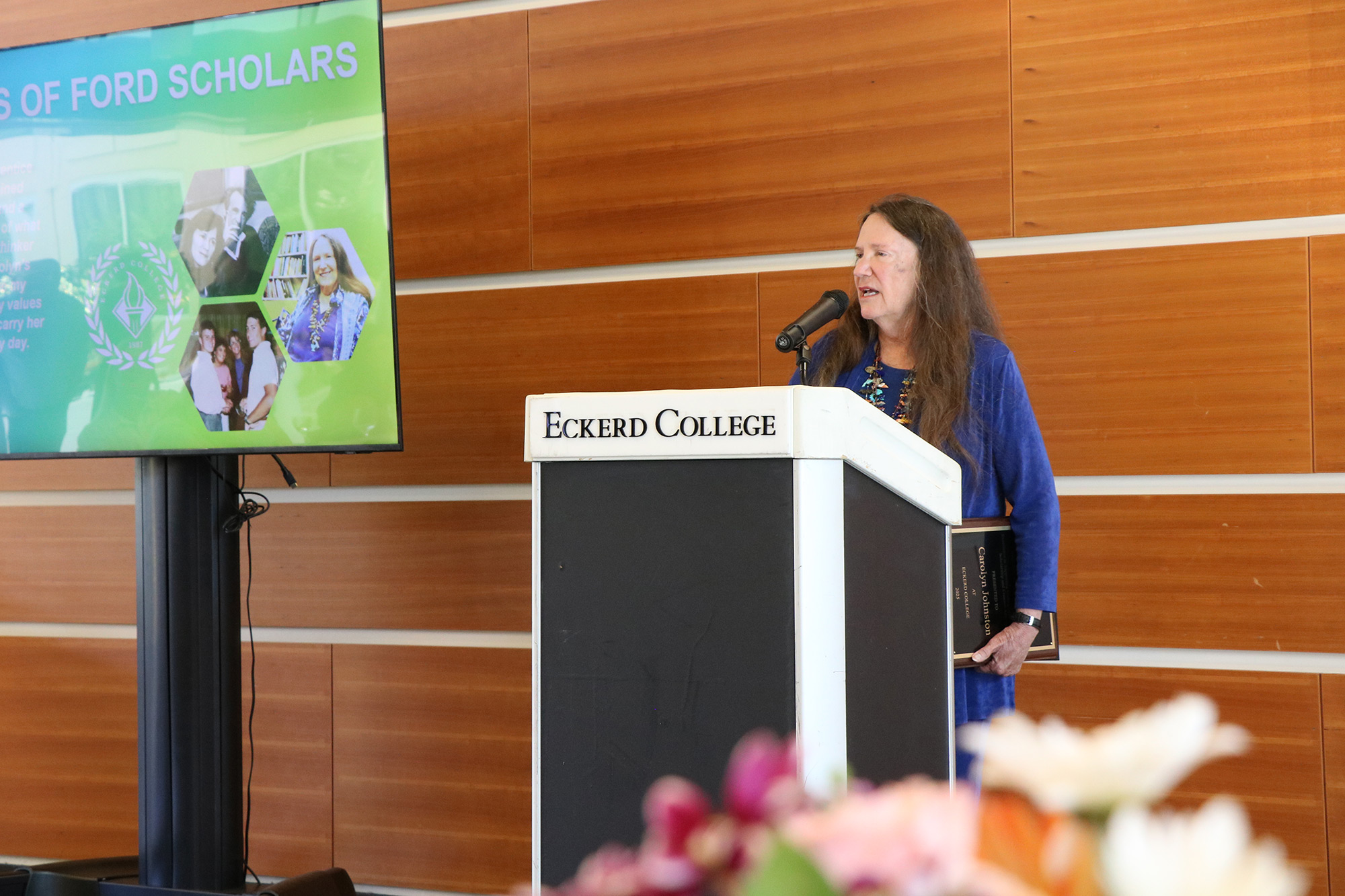
Carolyn Johnston, Ph.D., professor of history and American studies and the Elie Wiesel Professor of Humane Letters, speaks at a 2025 ceremony adding her name to the Johnston-Ford Scholars Program. Photo by Katie Willgohs ’21
Nearly five decades into her tenure at Eckerd College, Carolyn Johnston, Ph.D., professor of history and American studies, and the Elie Wiesel Professor of Humane Letters, published her sixth book, and her third focusing on the lives of Native American women.
Johnston spent more than a decade co-authoring the book, which examines what Western and Southern history looks like through the eyes of a wide range of contemporary and historical sources by Native American women. Having produced two prior publications focused on the Cherokee Nation, this latest tome, “Living Indigenous Feminism: Stories of Contemporary Native American Women”, includes historical research and historiography, poetry, interviews, biographies, memoirs, and stories from a wide swath of Indigenous nations.
“There had been literature written on it (Indigenous feminism) in Canada, Australia, New Zealand, but not at all in the U.S.,” says Johnston. “It was absent for a long time…there was very little literature on women, just a handful of books, and for many, many years, there weren’t a lot of books written by native people. What makes this book somewhat unique is not just because it’s a field that’s scant in terms of offerings, but also because one of the co-authors is Native American.”
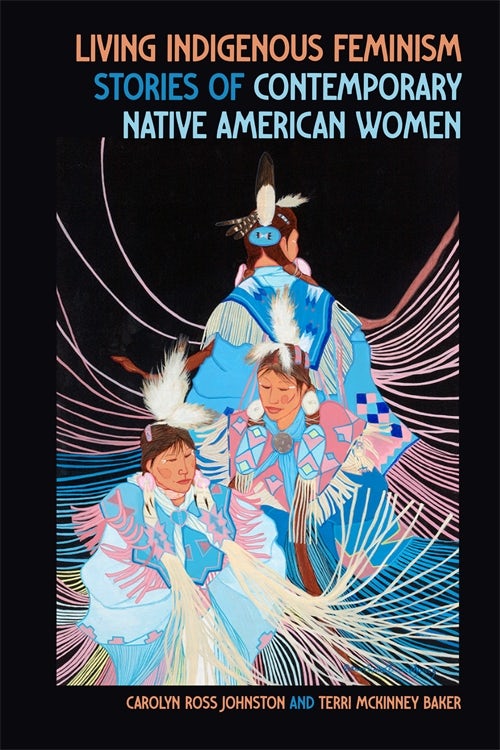
Living Indigenous Feminism: Stories of Contemporary Native American Women
Hilary Flower, Ph.D., associate professor of environmental studies, stepped far from her comfort zone to author “The Kite and the Snail.” Flower is a geologist, but her research into preservation, restoration, and water conservation in the Everglades led her to explore the adaptive nature of the Everglade snail kite, a bird that has shown uncommon resilience in the face of changing and shrinking environments.
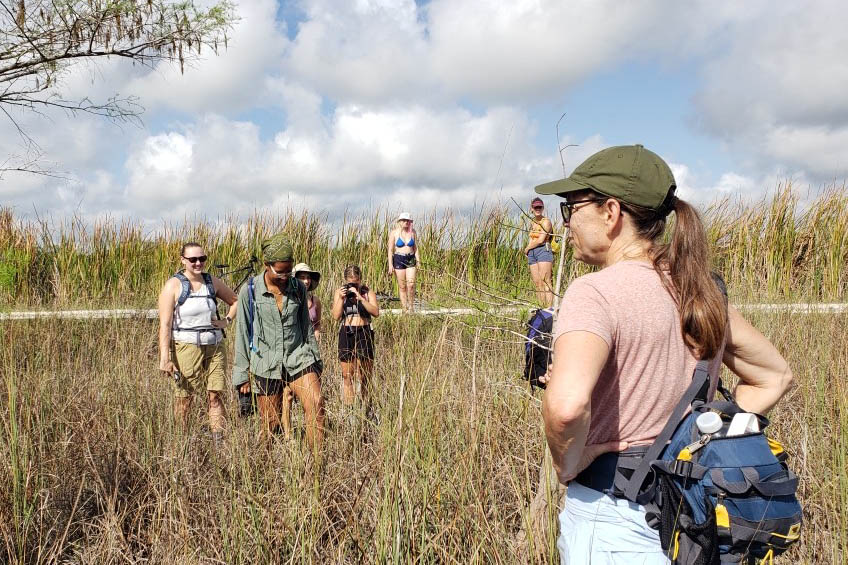
Associate Professor of Environmental Studies Hilary Flower (right) teaching in Big Cypress National Preserve. Photo: Judy McIlrath
“The snail kite was already a part of my classes at Eckerd because it’s so tightly tied to water,” Flower says. “When we’re getting restoration right, and the water is right, we have lots of snail kites, and when we’re not doing that, we don’t.”
The books demonstrate both the breadth of the Eckerd faculty’s scholarship and the depth of Johnston and Flower’s passionate research on their chosen topics.
For Johnston, her sixth book was also her first time working with a co-author. She navigated the writing process alongside her friend of nearly 30 years, Terri McKinney Baker, Ph.D., emeritus professor of English at Northeastern State University and a citizen of the Choctaw Nation. Baker passed away before the book’s publication, and Johnston dedicated the book to her honor.
“We were very much attuned in terms of our purposes, although our methodologies were different; she was in literature, I was in history,” says Johnston. “We had a wonderful friendship and were so engrossed in the topic. I really loved working with her, and it was just a wonderful experience to collaborate with Terri.”
Johnston highlights the “living feminism” that the Native American cultures that predated European arrival in the Americas featured. The gender roles of European societies differed significantly from those of the Indigenous peoples of the Americas, a topic that blends her work on the history of feminism with her research in Native American history.
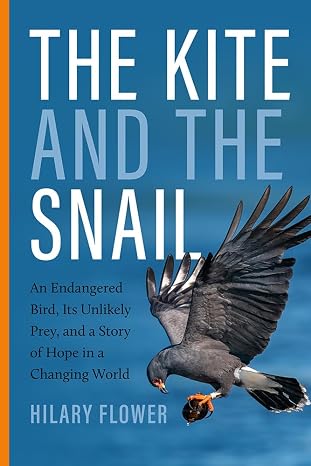
The Kite and the Snail
“In terms of Indigenous nations upon contact with the Europeans, gender roles were equal. Even though they had differentiated tasks, they (women) were not subordinated,” says Johnston.
Flower decided to write her first book during her sabbatical and chose the snail kite as a topic because of its interwoven relationship with the Everglades’ water ecology. Snail kites historically subsisted entirely on Florida apple snails, a species that is becoming increasingly rare as wetlands disappear. The Everglade snail kite population waned to fewer than 800 in the early 2000s, and their prospects seemed further diminished by the emergence of invasive exotic apple snails.
Snail kites have not only adapted to eating the larger invasive snails, but they are actively following those snail populations out of the Everglades. Efforts to GPS-tag and remotely track snail kites have shown the population growing back into the thousands, and also relocating north into more central regions of Florida, such as the restored Kissimmee River Valley and Lake Toho.
“You get so much bad news these days about imperiled species and wild places that are degraded and lost, and here was this species that had cheated extinction,” says Flower. “I think part of why I undertook the project was I wanted to have hope and grasp onto this species, and the snail kites are a very hopeful story.”
Flower’s book didn’t just give her the opportunity to expand her network of researchers and conservationists, but also allowed her to involve Eckerd students. Kait Kennedy ’24 and Zoe Sabadish ’24 joined Flower on some of her travels, and their thoughts and experiences are featured in the book.
Both Johnston and Flower are already underway on their next books, once again revealing the breadth of their expertise. Johnston is curating a reader that compiles selections from the best works of her mentor, the iconic historian, author, and professor Wayne Flynt, Ph.D.
Flower’s next foray is another animal-focused work; she is uniquely positioned as a member of the Florida Flamingo Working Group to write about both the history and the future of flamingos in Florida, including advocating for the flamingo to be named Florida’s state bird. She has been actively chronicling her work in this field in a series of columns published in the Tampa Bay Times.